The word events refers to things that happen at a particular time and place. We use this word every day when talking about meetings, celebrations, competitions, accidents, and important happenings. Imagine a school holding a sports day, a music show, and a science fair. These activities are all events because they happen at specific times and involve people.
The word is common in daily conversation, news reports, business communication, and academic writing. Learning synonyms of events is important because it helps English learners express ideas more clearly and avoid repeating the same word. It also helps content writers create engaging and professional content. In this article, you will learn the meaning of events, its pronunciation, history, grammar, connotations, and 30 useful synonyms with examples. You will also discover categories of synonyms, antonyms, and practical usage tips.
Meaning of Events
Events (Noun):
Things that happen or take place at a specific time and place.
Examples
- The city hosted several cultural events last month.
- Many important events changed the course of history.
Connotative Meaning
- Positive tone: celebrations, festivals, achievements, ceremonies.
- Negative tone: disasters, accidents, crises, conflicts.
- Neutral tone: occurrences, happenings, incidents, activities.
Etymology
- Origin: Latin eventus meaning “outcome” or “result.”
- Entered English through Old French evente and event.
- Original meaning: something that happens or occurs.
Short History of the Keyword
- Old English (450–1100): The exact word was not used; people used terms meaning happenings or occurrences.
- Middle English (1100–1500): The word entered English through French influence.
- Modern English (1500–Present): Event became a common term for significant happenings, gatherings, and occasions.
Pronunciation (US & UK – IPA)
US: /ɪˈvɛnts/
UK: /ɪˈvents/
Syllables
e-vents
Affixation Pattern of Events
Root: event
Prefix: None
Suffix: -s (plural marker)
Word Formation of the Keyword
- Event (Noun)
- Events (Plural Noun)
- Eventful (Adjective)
- Eventfully (Adverb)
- Eventfulness (Noun)
- Uneventful (Adjective)
- Uneventfully (Adverb)
- Uneventfulness (Noun)
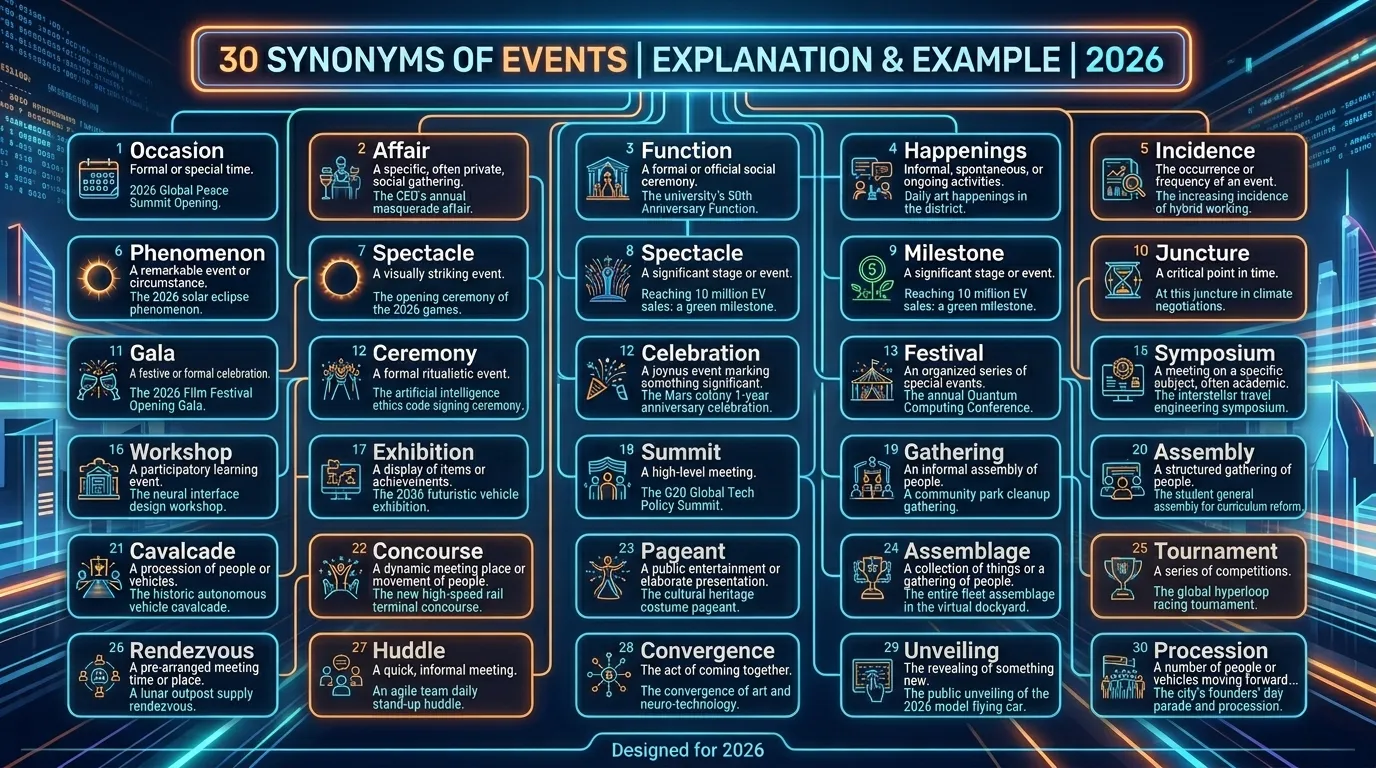
30 Synonyms of Events
1. Occurrences (Noun)
US: /əˈkɝːənsɪz/ | UK: /əˈkʌrənsɪz/
Meaning: Things that happen.
Examples:
- Several strange occurrences were reported.
- Such occurrences are rare.
2. Happenings (Noun)
US: /ˈhæpənɪŋz/ | UK: /ˈhæpənɪŋz/
Meaning: Things taking place.
Examples:
- The newspaper covers local happenings.
- Many exciting happenings occurred this week.
3. Incidents (Noun)
US: /ˈɪnsɪdənts/ | UK: /ˈɪnsɪdənts/
Meaning: Specific events, often unexpected.
Examples:
- The police investigated the incidents.
- Several incidents delayed traffic.
4. Occasions (Noun)
US: /əˈkeɪʒənz/ | UK: /əˈkeɪʒənz/
Meaning: Special events or times.
Examples:
- Birthdays are happy occasions.
- The hall hosts many occasions.
5. Activities (Noun)
US: /ækˈtɪvətiz/ | UK: /ækˈtɪvətiz/
Meaning: Actions or organized events.
Examples:
- School activities begin tomorrow.
- Outdoor activities are popular.
6. Affairs (Noun)
US: /əˈfɛrz/ | UK: /əˈfeəz/
Meaning: Important events or matters.
Examples:
- It was a formal affair.
- Community affairs attracted many guests.
7. Gatherings (Noun)
US: /ˈɡæðərɪŋz/ | UK: /ˈɡæðərɪŋz/
Meaning: Meetings of people.
Examples:
- Family gatherings are enjoyable.
- The gatherings lasted all weekend.
8. Functions (Noun)
US: /ˈfʌŋkʃənz/ | UK: /ˈfʌŋkʃənz/
Meaning: Formal social events.
Examples:
- The hotel hosts corporate functions.
- Charity functions raised money.
9. Ceremonies (Noun)
US: /ˈserəˌmoʊniz/ | UK: /ˈserɪməniz/
Meaning: Formal events with traditions.
Examples:
- Graduation ceremonies were held.
- Religious ceremonies attract visitors.
10. Celebrations (Noun)
US: /ˌseləˈbreɪʃənz/ | UK: /ˌselɪˈbreɪʃənz/
Meaning: Events marking happiness.
Examples:
- Wedding celebrations lasted three days.
- The celebrations were memorable.
11. Festivals (Noun)
US: /ˈfestəvəlz/ | UK: /ˈfestɪvəlz/
Meaning: Public celebrations.
Examples:
- Music festivals draw large crowds.
- The city hosts cultural festivals.
12. Programs (Noun)
US: /ˈproʊɡræmz/ | UK: /ˈprəʊɡræmz/
Meaning: Planned events or activities.
Examples:
- The school announced new programs.
- Weekend programs attracted families.
13. Proceedings (Noun)
US: /prəˈsidɪŋz/ | UK: /prəˈsiːdɪŋz/
Meaning: Activities during an event.
Examples:
- The proceedings began at noon.
- Guests enjoyed the proceedings.
14. Episodes (Noun)
US: /ˈepəˌsoʊdz/ | UK: /ˈepɪsəʊdz/
Meaning: Distinct events in a series.
Examples:
- The book describes historical episodes.
- Several episodes changed the story.
15. Developments (Noun)
US: /dɪˈveləpmənts/ | UK: /dɪˈveləpmənts/
Meaning: Important changes or events.
Examples:
- Recent developments surprised investors.
- New developments improved services.
16. Circumstances (Noun)
US: /ˈsɝːkəmstænsɪz/ | UK: /ˈsɜːkəmstənsɪz/
Meaning: Conditions surrounding events.
Examples:
- The circumstances were unusual.
- We considered all circumstances.
17. Cases (Noun)
US: /keɪsɪz/ | UK: /keɪsɪz/
Meaning: Particular events or situations.
Examples:
- Similar cases occurred before.
- These cases need attention.
18. Situations (Noun)
US: /ˌsɪtʃuˈeɪʃənz/ | UK: /ˌsɪtʃuˈeɪʃənz/
Meaning: Conditions or events requiring action.
Examples:
- Emergency situations require planning.
- Difficult situations teach lessons.
19. Encounters (Noun)
US: /ɪnˈkaʊntərz/ | UK: /ɪnˈkaʊntəz/
Meaning: Unexpected meetings or events.
Examples:
- Travelers shared interesting encounters.
- The encounters changed his views.
20. Experiences (Noun)
US: /ɪkˈspɪriənsɪz/ | UK: /ɪkˈspɪəriənsɪz/
Meaning: Events that affect a person.
Examples:
- Travel experiences broaden knowledge.
- Positive experiences build confidence.
21. Milestones (Noun)
US: /ˈmaɪlstoʊnz/ | UK: /ˈmaɪlstəʊnz/
Meaning: Important events or achievements.
Examples:
- Graduation is a major milestone.
- The company reached several milestones.
22. Ventures (Noun)
US: /ˈventʃərz/ | UK: /ˈventʃəz/
Meaning: Risky activities or events.
Examples:
- Their business ventures succeeded.
- New ventures require courage.
23. Engagements (Noun)
US: /ɪnˈɡeɪdʒmənts/ | UK: /ɪnˈɡeɪdʒmənts/
Meaning: Scheduled events or commitments.
Examples:
- She canceled her engagements.
- Business engagements filled the week.
24. Performances (Noun)
US: /pərˈfɔːrmənsɪz/ | UK: /pəˈfɔːmənsɪz/
Meaning: Entertainment events.
Examples:
- The performances impressed the audience.
- Evening performances sold out.
25. Competitions (Noun)
US: /ˌkɑːmpəˈtɪʃənz/ | UK: /ˌkɒmpəˈtɪʃənz/
Meaning: Events where people compete.
Examples:
- Sports competitions attracted fans.
- The competitions were intense.
26. Meetings (Noun)
US: /ˈmiːtɪŋz/ | UK: /ˈmiːtɪŋz/
Meaning: Organized gatherings.
Examples:
- Weekly meetings improve communication.
- The meetings ended early.
27. Sessions (Noun)
US: /ˈseʃənz/ | UK: /ˈseʃənz/
Meaning: Scheduled periods within an event.
Examples:
- Training sessions start tomorrow.
- Conference sessions were informative.
28. Shows (Noun)
US: /ʃoʊz/ | UK: /ʃəʊz/
Meaning: Public entertainment events.
Examples:
- The shows attracted tourists.
- Several shows were canceled.
29. Tournaments (Noun)
US: /ˈtʊrnəmənts/ | UK: /ˈtɔːnəmənts/
Meaning: Organized competitive events.
Examples:
- Tennis tournaments are popular.
- The tournaments lasted a week.
30. Exhibitions (Noun)
US: /ˌeksəˈbɪʃənz/ | UK: /ˌeksɪˈbɪʃənz/
Meaning: Public displays or events.
Examples:
- Art exhibitions attract visitors.
- The museum hosts exhibitions yearly.
Prototype Meaning
The most typical meaning of events is things that happen at a certain time and place. Most people imagine gatherings, celebrations, meetings, competitions, or important happenings involving people and activities.
Prototype Categorization
- General happenings: occurrences, happenings, incidents, episodes.
- Social events: gatherings, functions, ceremonies, celebrations.
- Public events: festivals, shows, exhibitions, performances.
- Business events: meetings, sessions, engagements, affairs.
- Achievement-related events: milestones, developments.
- Competitive events: competitions, tournaments.
- Personal experiences: encounters, experiences, situations.
Antonyms of Events
- Inactivity (Noun): lack of action or happenings.
- Stillness (Noun): complete absence of activity.
- Silence (Noun): lack of action or occurrence.
- Calm (Noun): peaceful state without major happenings.
- Nothingness (Noun): absence of events.
- Stagnation (Noun): lack of change or activity.
Short Questions and Answers
- What does events mean?
Events are things that happen at a particular time and place. - When should events be used?
Use it when talking about happenings, activities, celebrations, meetings, or important occasions. - Is events positive or negative?
It can be positive, negative, or neutral depending on the context. - How is it different from similar words?
Events is a broad term. Words like celebrations and ceremonies refer to specific types of events.
Conclusion
Learning the Synonyms of Events and Synonyms of Events is a great way to improve your English vocabulary. These alternative words help you express ideas more accurately in speaking and writing. They also make your content more interesting by reducing repetition. Understanding meanings, pronunciation, history, connotations, and categories helps you choose the best word for each situation. Whether you are an English learner, student, teacher, or content writer, expanding your knowledge of synonyms can strengthen communication skills and increase confidence. Make vocabulary practice a daily habit, and you will quickly become a more effective English user.

I’m Zahid Abbas, an educator, researcher, and digital publishing strategist with a passion for linguistics, grammar, and clear communication. As a content creator and SEO specialist, I craft research-driven, reader-focused content that empowers learners and makes knowledge accessible worldwide.