Fake means not real or not true. For example, a person may buy a watch that looks like a famous brand, but it is not made by that brand. The watch is fake. We use the word fake very often in daily English. We use it for things, people, news, smiles, stories, and more.
Learning synonyms for fake can help English learners use better words. It also helps writers avoid using the same word again and again. A good synonym can make a sentence more clear and exact. You will also see simple examples and word groups. This will help you choose the right word for each situation.
Meaning of Fake
Definition
Fake (adjective, noun, verb): something that is not real, true, or genuine.
Examples
- This bag is fake.
- He gave a fake smile.
- The website was fake.
- She tried to fake an illness.
Connotative Meaning
- Positive tone: Usually none. Fake is rarely positive.
- Negative tone: It can suggest lies, cheating, or dishonesty.
- Neutral tone: It can simply mean something is not real, such as a fake flower.
Etymology
- The exact origin of fake is not fully known.
- The verb fake appeared in English in the late 1700s.
- It was linked to the idea of making something look real when it was not.
- The word later became common in American and British English.
- Also read more about https://synonymspot.com/synonyms-of-make/
Short History of Fake
- Old English (450–1100): The modern word fake was not used in Old English. Words such as licgan and other words for lying or false things were used instead.
- Middle English (1100–1500): The modern word fake was still not common. English used words such as false and counterfeit.
- Modern English (1500–Present): Fake became an English word in the late 1700s. Its use grew over time. Today, it is common in speech, writing, news, and online content.
Pronunciation (US & UK – IPA)
US: /feɪk/ UK: /feɪk/
Syllables
fake
It has one syllable.
Affixation Pattern of Fake
- Root: fake
- Prefix: none
- Suffix: none
Word Formation of Fake
- fake — adjective, noun, verb
- faked — verb
- faking — verb
- fakes — noun or verb
- faker — noun, a person who fakes something
- fakery — noun, the act of making or using fake things
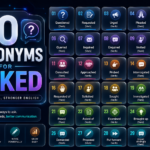
Synonyms of Fake
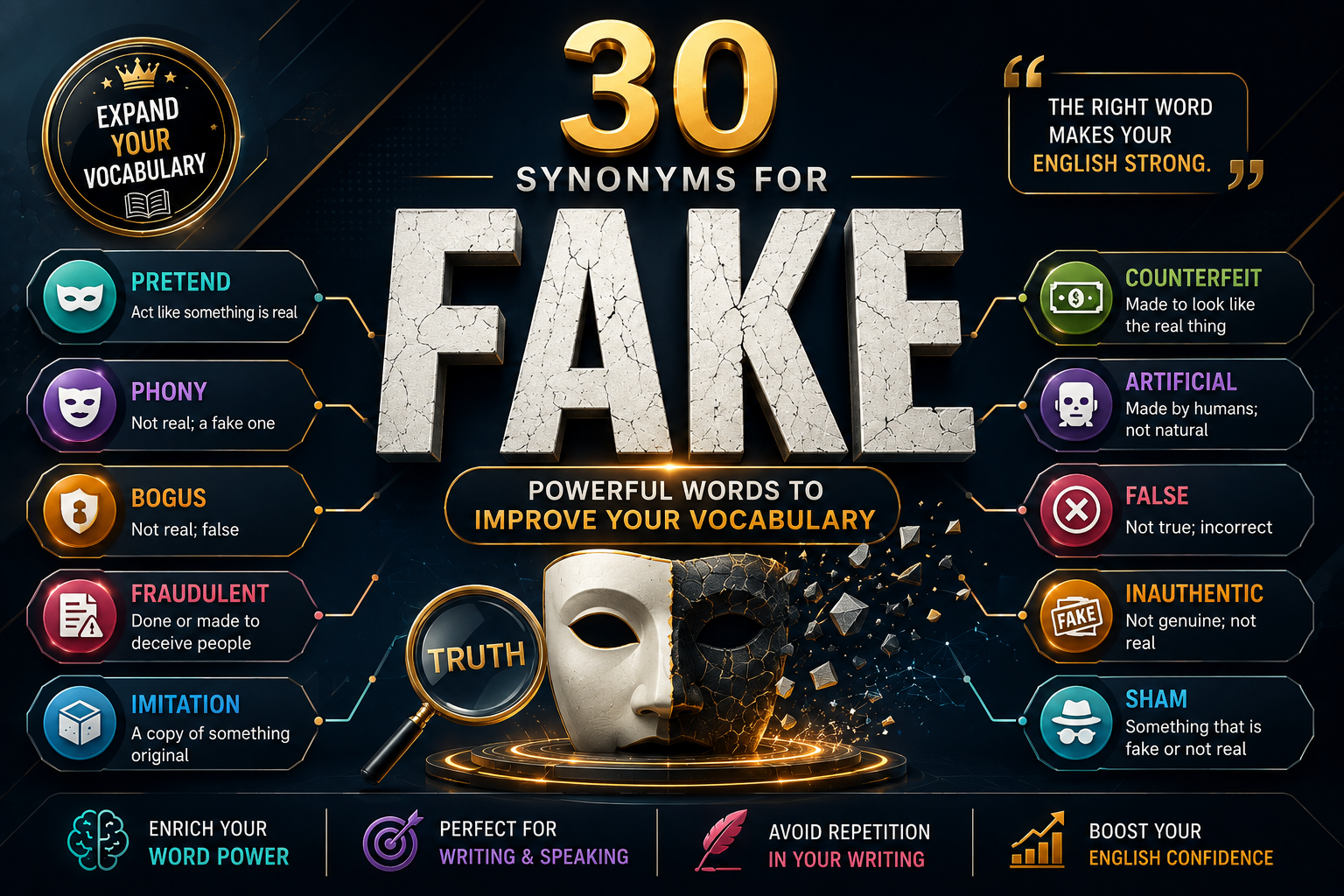
1. False (adjective)
US: /fɔːls/ | UK: /fɔːls/
Meaning: Not true or correct.
Examples:
- The story was false.
- He gave me false information.
2. Artificial (adjective)
US: /ˌɑːrtəˈfɪʃəl/ | UK: /ˌɑːtɪˈfɪʃəl/
Meaning: Made by people instead of being natural.
Examples:
- The flowers are artificial.
- She uses artificial light at night.
3. Counterfeit (adjective, noun, verb)
US: /ˈkaʊntərfɪt/ | UK: /ˈkaʊntəfɪt/
Meaning: Made to look like a real product, often to trick people.
Examples:
- The police found counterfeit money.
- He bought a counterfeit watch.
4. Imitation (adjective, noun)
US: /ˌɪməˈteɪʃən/ | UK: /ˌɪmɪˈteɪʃən/
Meaning: Made to look like something real or original.
Examples:
- She wore an imitation diamond.
- This is an imitation of a famous painting.
5. Fraudulent (adjective)
US: /ˈfrɔːdʒələnt/ | UK: /ˈfrɔːdjʊlənt/
Meaning: Involving cheating or dishonest actions.
Examples:
- The company used fraudulent documents.
- He made a fraudulent claim.
6. Bogus (adjective)
US: /ˈboʊɡəs/ | UK: /ˈbəʊɡəs/
Meaning: Not real or not true.
Examples:
- The email was bogus.
- They received a bogus offer.
7. Phony (adjective, noun)
US: /ˈfoʊni/ | UK: /ˈfəʊni/
Meaning: Not real or not honest.
Examples:
- He gave a phony excuse.
- The man was a phony.
8. Pretend (adjective, verb)
US: /prɪˈtend/ | UK: /prɪˈtend/
Meaning: To act as if something is true when it is not.
Examples:
- The children pretend to be doctors.
- He made a pretend phone call.
9. Deceptive (adjective)
US: /dɪˈseptɪv/ | UK: /dɪˈseptɪv/
Meaning: Made to make someone believe something that is not true.
Examples:
- The ad was deceptive.
- The picture was deceptive.
10. Misleading (adjective)
US: /mɪsˈliːdɪŋ/ | UK: /mɪsˈliːdɪŋ/
Meaning: Giving the wrong idea or impression.
Examples:
- The headline was misleading.
- The report gave misleading information.
11. Untrue (adjective)
US: /ʌnˈtruː/ | UK: /ʌnˈtruː/
Meaning: Not true.
Examples:
- The claim was untrue.
- That story is untrue.
12. Made-up (adjective)
US: /ˌmeɪd ˈʌp/ | UK: /ˌmeɪd ˈʌp/
Meaning: Created and not based on real facts.
Examples:
- He told a made-up story.
- The news was made-up.
13. Fabricated (adjective)
US: /ˈfæbrɪkeɪtɪd/ | UK: /ˈfæbrɪkeɪtɪd/
Meaning: Made up to look true.
Examples:
- The police found fabricated evidence.
- The report contained fabricated facts.
14. Forged (adjective)
US: /fɔːrdʒd/ | UK: /fɔːdʒd/
Meaning: Made as a false copy of something real.
Examples:
- The painting was forged.
- He used a forged signature.
15. Spurious (adjective)
US: /ˈspjʊriəs/ | UK: /ˈspjʊəriəs/
Meaning: False but made to seem real or true.
Examples:
- The study made a spurious claim.
- The article gave a spurious reason.
16. Sham (adjective, noun)
US: /ʃæm/ | UK: /ʃæm/
Meaning: Something that looks real but is not.
Examples:
- The deal was a sham.
- They held a sham meeting.
17. Pseudo (adjective)
US: /ˈsuːdoʊ/ | UK: /ˈsuːdəʊ/
Meaning: Seeming to be real or true but not really so.
Examples:
- He is a pseudo expert.
- The site gives pseudo facts.
18. Imitative (adjective)
US: /ˈɪmɪteɪtɪv/ | UK: /ˈɪmɪtətɪv/
Meaning: Made by copying another thing.
Examples:
- The design is imitative.
- He used an imitative style.
19. Simulated (adjective)
US: /ˈsɪmjəleɪtɪd/ | UK: /ˈsɪmjʊleɪtɪd/
Meaning: Made to look or feel like a real situation.
Examples:
- The students used a simulated test.
- The game has a simulated flight.
20. Synthetic (adjective)
US: /sɪnˈθetɪk/ | UK: /sɪnˈθetɪk/
Meaning: Made by people instead of coming from nature.
Examples:
- The shirt is made from synthetic material.
- The floor has a synthetic surface.
21. Insincere (adjective)
US: /ˌɪnsɪnˈsɪr/ | UK: /ˌɪnsɪnˈsɪə/
Meaning: Not honest or not showing real feelings.
Examples:
- Her apology sounded insincere.
- His smile seemed insincere.
22. Dishonest (adjective)
US: /dɪsˈɑːnɪst/ | UK: /dɪsˈɒnɪst/
Meaning: Not truthful or fair.
Examples:
- He was dishonest with his friends.
- The seller was dishonest.
23. Unauthentic (adjective)
US: /ˌʌnɔːˈθentɪk/ | UK: /ˌʌnɔːˈθentɪk/
Meaning: Not genuine or original.
Examples:
- The product was unauthentic.
- The website sold unauthentic items.
24. Inauthentic (adjective)
US: /ˌɪnɔːˈθentɪk/ | UK: /ˌɪnɔːˈθentɪk/
Meaning: Not real, true, or genuine.
Examples:
- His smile felt inauthentic.
- The post seemed inauthentic.
25. Concocted (adjective)
US: /kənˈkɑːktɪd/ | UK: /kənˈkɒktɪd/
Meaning: Made up, especially to trick someone.
Examples:
- He gave a concocted story.
- The excuse was concocted.
26. Invented (adjective)
US: /ɪnˈventɪd/ | UK: /ɪnˈventɪd/
Meaning: Created instead of being true or real.
Examples:
- The story was invented.
- She gave an invented name.
27. Fictional (adjective)
US: /ˈfɪkʃənəl/ | UK: /ˈfɪkʃənəl/
Meaning: Created for a story and not real.
Examples:
- Sherlock Holmes is a fictional character.
- The place in the book is fictional.
28. Imaginary (adjective)
US: /ɪˈmædʒəneri/ | UK: /ɪˈmædʒɪnəri/
Meaning: Existing only in the mind.
Examples:
- The child has an imaginary friend.
- The monster was imaginary.
29. Fraud (noun)
US: /frɔːd/ | UK: /frɔːd/
Meaning: A trick used to get money or gain something unfairly.
Examples:
- The company was accused of fraud.
- The online sale was a fraud.
30. Fake-out (noun)
US: /ˈfeɪk aʊt/ | UK: /ˈfeɪk aʊt/
Meaning: A trick that makes someone expect something that will not happen.
Examples:
- The player used a fake-out.
- His move was a clever fake-out.
Prototype Meaning
The most common meaning of fake is something that looks real but is not real. When people hear the word fake, they often think of a false product, false story, false name, or false feeling. The word can describe both things and actions.
Prototype Categorization
- Not true: false, untrue, misleading, fabricated
- Not genuine: phony, bogus, inauthentic, imitation
- Made to copy: counterfeit, forged, imitative
- Made by people: artificial, synthetic
- Not honest: dishonest, insincere, fraudulent
- Made for a story or the mind: fictional, imaginary, invented
- A trick: sham, fraud, fake-out
Antonyms of Fake
- Real (adjective): truly existing or genuine.
- True (adjective): based on facts.
- Genuine (adjective): real and not copied.
- Authentic (adjective): real and original.
- Original (adjective): made by the real creator.
- Honest (adjective): truthful and fair.
- Sincere (adjective): showing real feelings.
- Natural (adjective): not artificial or forced.
- Truth (noun): something that is true.
- Reality (noun): the real state of things.
Short Questions and Answers
What does fake mean?
- Fake means not real, true, or genuine.
When should fake be used?
- Use fake when something looks real but is not.
- You can also use it for false stories, false feelings, or false people.
Is fake positive or negative?
- Fake is usually negative.
- It often suggests lying or cheating.
- In some cases, it can simply mean “not real.”
How is fake different from similar words?
- Fake is a general word.
- Counterfeit is often used for fake products or money.
- False is often used for wrong information.
- Insincere is used for false feelings.
- Artificial means made by people, not nature.
- Fictional means created for a story.
Conclusion
Synonyms for fake can make your English stronger. The word fake is simple and useful, but synonyms for fake can give a more exact meaning. These words can help you write better sentences and speak with more confidence. Learning synonyms for fake also helps you avoid using the same word many times. Try to learn a few new words each day. Read them, say them, and use them in your own sentences. This practice can help you understand synonyms for fake and use them with ease.

I’m Zahid Abbas, an educator, researcher, and digital publishing strategist with a passion for linguistics, grammar, and clear communication. As a content creator and SEO specialist, I craft research-driven, reader-focused content that empowers learners and makes knowledge accessible worldwide.