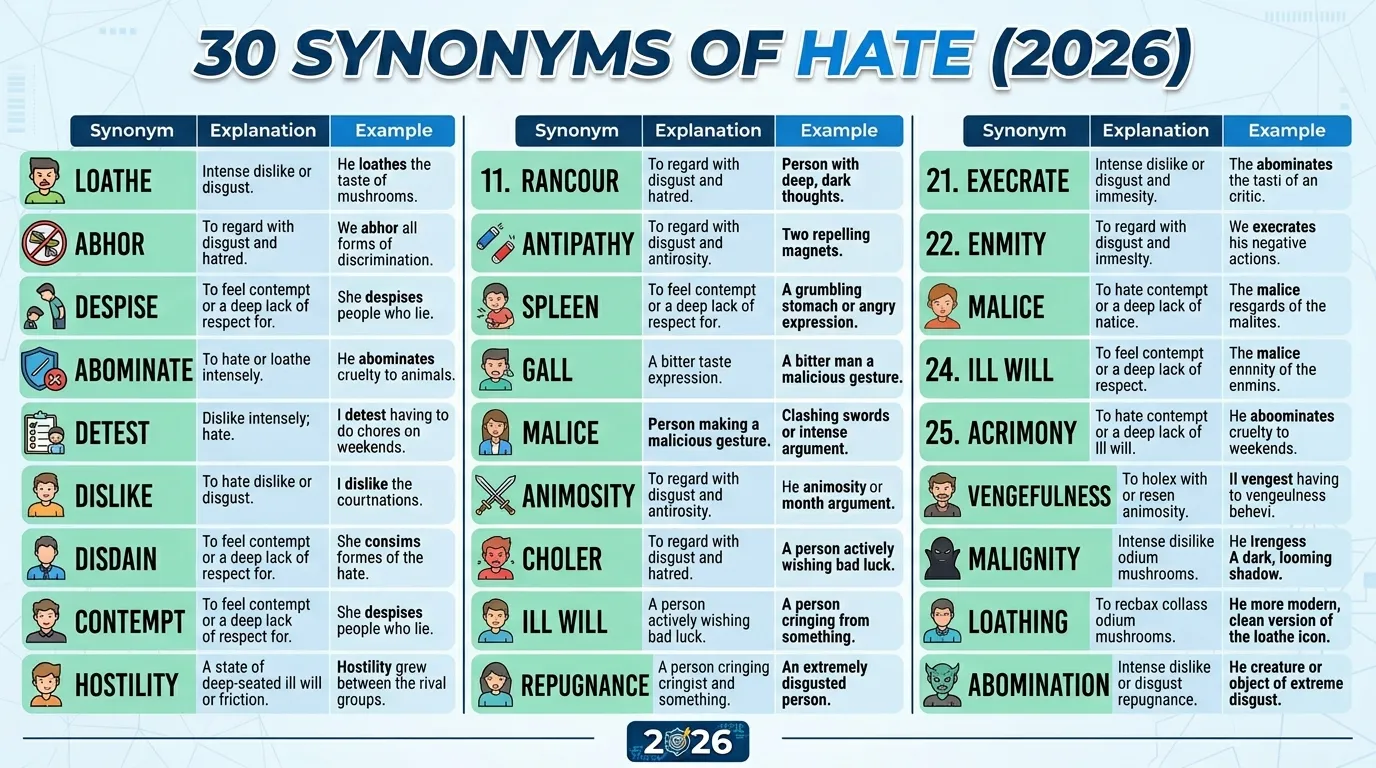
Hate is a strong emotion that means feeling intense dislike toward someone or something. Imagine a person who was treated unfairly for many years. Over time, that person may begin to hate the individual who caused the pain. This word is commonly used in everyday conversations, books, movies, and news reports because it expresses powerful negative feelings.
Learning synonyms of hate is important for English learners, students, writers, and content creators. Using different words instead of repeating the same one makes writing more interesting and precise. Some synonyms express mild dislike, while others show extreme hostility. This article explains the meaning of hate and explores 30 useful synonyms with examples. You will also learn its pronunciation, history, grammar, word formation, semantic categories, antonyms, and common usage questions to strengthen your English vocabulary.
Meaning of Hate
Hate (Verb/Noun):
To feel a very strong dislike, hostility, or anger toward a person, thing, idea, or situation.
Examples
- I hate waking up early on weekends.
- She hates dishonest behavior.
Connotative Meaning
- Positive tone: Rarely positive; may express strong opposition to something harmful.
- Negative tone: Strong dislike, hostility, resentment, or anger.
- Neutral tone: Sometimes used casually to mean “strongly dislike.”
Etymology
- Origin: Old English hatian
- Original Meaning: To hate, detest, or regard with hostility
- Source Language: Proto-Germanic hatajaną
Short History of Hate
- Old English (450–1100): Used as hatian, meaning to dislike strongly or be hostile toward.
- Middle English (1100–1500): The spelling evolved into forms closer to modern English.
- Modern English (1500–Present): Became a common word for strong dislike, hostility, and resentment.
Pronunciation (US & UK – IPA)
US: /heɪt/
UK: /heɪt/
Syllables
hate
Affixation Pattern of Hate
Root: hate
Prefix: None
Suffix: None
Word Formation of Hate
- hate (noun)
- hate (verb)
- hated (adjective)
- hated (verb, past tense)
- hateful (adjective)
- hatefully (adverb)
- hatefulness (noun)
- hater (noun)
- hating (verb, present participle)
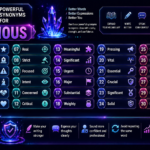
30 Synonyms of Hate
1. Detest (Verb)
US: /dɪˈtɛst/ | UK: /dɪˈtest/
Meaning: To dislike something very strongly.
Examples:
- I detest rude behavior.
- She detests wasting time.
2. Loathe (Verb)
US: /loʊð/ | UK: /ləʊð/
Meaning: To feel extreme dislike.
Examples:
- He loathes dishonesty.
- They loathe cruelty.
3. Despise (Verb)
US: /dɪˈspaɪz/ | UK: /dɪˈspaɪz/
Meaning: To look down on someone with strong dislike.
Examples:
- She despises corruption.
- I despise cheating.
4. Abhor (Verb)
US: /əbˈhɔːr/ | UK: /əbˈhɔː/
Meaning: To hate something because it is morally wrong.
Examples:
- Many people abhor violence.
- He abhors injustice.
5. Dislike (Verb)
US: /dɪsˈlaɪk/ | UK: /dɪsˈlaɪk/
Meaning: To not like something.
Examples:
- I dislike loud music.
- She dislikes cold weather.
6. Resent (Verb)
US: /rɪˈzent/ | UK: /rɪˈzent/
Meaning: To feel bitterness about something.
Examples:
- He resents unfair treatment.
- They resent criticism.
7. Scorn (Verb)
US: /skɔːrn/ | UK: /skɔːn/
Meaning: To treat with contempt.
Examples:
- She scorns dishonesty.
- They scorn bad leadership.
8. Abominate (Verb)
US: /əˈbɑːməneɪt/ | UK: /əˈbɒmɪneɪt/
Meaning: To hate intensely.
Examples:
- He abominates cruelty.
- I abominate corruption.
9. Reject (Verb)
US: /rɪˈdʒekt/ | UK: /rɪˈdʒekt/
Meaning: To refuse to accept.
Examples:
- She rejected the proposal.
- They reject violence.
10. Oppose (Verb)
US: /əˈpoʊz/ | UK: /əˈpəʊz/
Meaning: To disagree strongly.
Examples:
- Citizens oppose the law.
- We oppose discrimination.
11. Disdain (Verb)
US: /dɪsˈdeɪn/ | UK: /dɪsˈdeɪn/
Meaning: To consider unworthy of respect.
Examples:
- He disdains arrogance.
- She disdains dishonesty.
12. Spurn (Verb)
US: /spɜːrn/ | UK: /spɜːn/
Meaning: To reject with contempt.
Examples:
- She spurned the offer.
- He spurned advice.
13. Revile (Verb)
US: /rɪˈvaɪl/ | UK: /rɪˈvaɪl/
Meaning: To criticize harshly.
Examples:
- Critics reviled the decision.
- He was reviled publicly.
14. Condemn (Verb)
US: /kənˈdem/ | UK: /kənˈdem/
Meaning: To express strong disapproval.
Examples:
- Leaders condemned the attack.
- She condemned the action.
15. Vilify (Verb)
US: /ˈvɪləfaɪ/ | UK: /ˈvɪlɪfaɪ/
Meaning: To speak badly about someone.
Examples:
- The media vilified him.
- They vilified their opponent.
16. Disapprove (Verb)
US: /ˌdɪsəˈpruːv/ | UK: /ˌdɪsəˈpruːv/
Meaning: To think something is wrong.
Examples:
- Parents disapprove of smoking.
- I disapprove of cheating.
17. Mistrust (Verb)
US: /mɪsˈtrʌst/ | UK: /mɪsˈtrʌst/
Meaning: To have little trust.
Examples:
- People mistrust dishonest leaders.
- She mistrusts strangers.
18. Resentment (Noun)
US: /rɪˈzentmənt/ | UK: /rɪˈzentmənt/
Meaning: Bitter feelings caused by unfair treatment.
Examples:
- He felt resentment for years.
- Their resentment grew.
19. Hostility (Noun)
US: /hɑːˈstɪləti/ | UK: /hɒˈstɪləti/
Meaning: Unfriendly or aggressive feelings.
Examples:
- There was hostility between groups.
- Her hostility was obvious.
20. Antipathy (Noun)
US: /ænˈtɪpəθi/ | UK: /ænˈtɪpəθi/
Meaning: Strong dislike.
Examples:
- He felt antipathy toward corruption.
- Their antipathy remained.
21. Animosity (Noun)
US: /ˌænɪˈmɑːsəti/ | UK: /ˌænɪˈmɒsəti/
Meaning: Deep hostility.
Examples:
- Animosity divided the community.
- They showed animosity.
22. Aversion (Noun)
US: /əˈvɜːrʒən/ | UK: /əˈvɜːʃən/
Meaning: Strong dislike of something.
Examples:
- She has an aversion to risk.
- He has an aversion to noise.
23. Contempt (Noun)
US: /kənˈtempt/ | UK: /kənˈtempt/
Meaning: Lack of respect mixed with dislike.
Examples:
- He looked at them with contempt.
- Her contempt was clear.
24. Enmity (Noun)
US: /ˈenməti/ | UK: /ˈenmɪti/
Meaning: Deep hatred between people.
Examples:
- Enmity lasted for years.
- Old enmities returned.
25. Grudge (Noun)
US: /ɡrʌdʒ/ | UK: /ɡrʌdʒ/
Meaning: Long-lasting resentment.
Examples:
- He holds a grudge.
- She kept a grudge.
26. Malice (Noun)
US: /ˈmælɪs/ | UK: /ˈmælɪs/
Meaning: Desire to harm others.
Examples:
- The act was done with malice.
- There was no malice intended.
27. Bitterness (Noun)
US: /ˈbɪtərnəs/ | UK: /ˈbɪtənəs/
Meaning: Angry resentment.
Examples:
- Bitterness remained after the dispute.
- His bitterness grew.
28. Ill Will (Noun)
US: /ˌɪl ˈwɪl/ | UK: /ˌɪl ˈwɪl/
Meaning: Unfriendly feelings.
Examples:
- There was no ill will.
- Ill will damaged relations.
29. Repugnance (Noun)
US: /rɪˈpʌɡnəns/ | UK: /rɪˈpʌɡnəns/
Meaning: Strong disgust or dislike.
Examples:
- She felt repugnance toward cruelty.
- His repugnance was obvious.
30. Revulsion (Noun)
US: /rɪˈvʌlʃən/ | UK: /rɪˈvʌlʃən/
Meaning: Intense disgust and rejection.
Examples:
- The news caused revulsion.
- Many felt revulsion.
Prototype Meaning
The prototype meaning of hate is a very strong feeling of dislike or hostility toward someone or something. When people hear the word, they usually imagine intense anger, resentment, rejection, or emotional opposition.
Prototype Categorization
- Strong Dislike: detest, loathe, abhor, abominate
- Disapproval: condemn, disapprove, oppose, reject
- Contempt and Disrespect: disdain, scorn, despise, contempt
- Hostility and Conflict: hostility, animosity, enmity, malice
- Resentment and Bitterness: resent, resentment, bitterness, grudge
- Disgust and Rejection: repugnance, revulsion, aversion
Antonyms of Hate
- Love (Verb/Noun): Deep affection and care.
- Like (Verb): To find pleasant or enjoyable.
- Admire (Verb): To respect and appreciate.
- Cherish (Verb): To value greatly.
- Respect (Verb/Noun): High regard for someone or something.
- Appreciate (Verb): To recognize value.
- Adore (Verb): To love deeply.
- Esteem (Verb/Noun): To respect highly.
- Treasure (Verb): To hold dear.
- Value (Verb): To consider important.
Short Questions and Answers
- What does hate mean?
Hate means to feel very strong dislike or hostility toward someone or something. - When should hate be used?
It should be used when describing intense negative feelings, emotions, or opposition. - Is hate positive or negative?
Hate usually has a negative meaning because it expresses strong dislike or hostility. - How is it different from similar words?
Hate is stronger than words like dislike. Words such as loathe and detest are closer in intensity to hate.
Conclusion
Learning the Synonyms of Hate and Synonyms of Hate can greatly improve your English vocabulary. Different synonyms help express different levels of dislike, hostility, resentment, and disapproval. Using a variety of words strengthens both writing and speaking skills while preventing repetition. It also allows writers and learners to communicate emotions more accurately and effectively. Understanding pronunciation, history, connotation, and semantic categories makes vocabulary learning easier and more memorable. By practicing these synonyms regularly in conversations, reading, and writing, you can build greater confidence in English and develop a richer, more expressive vocabulary.

I’m Zahid Abbas, an educator, researcher, and digital publishing strategist with a passion for linguistics, grammar, and clear communication. As a content creator and SEO specialist, I craft research-driven, reader-focused content that empowers learners and makes knowledge accessible worldwide.