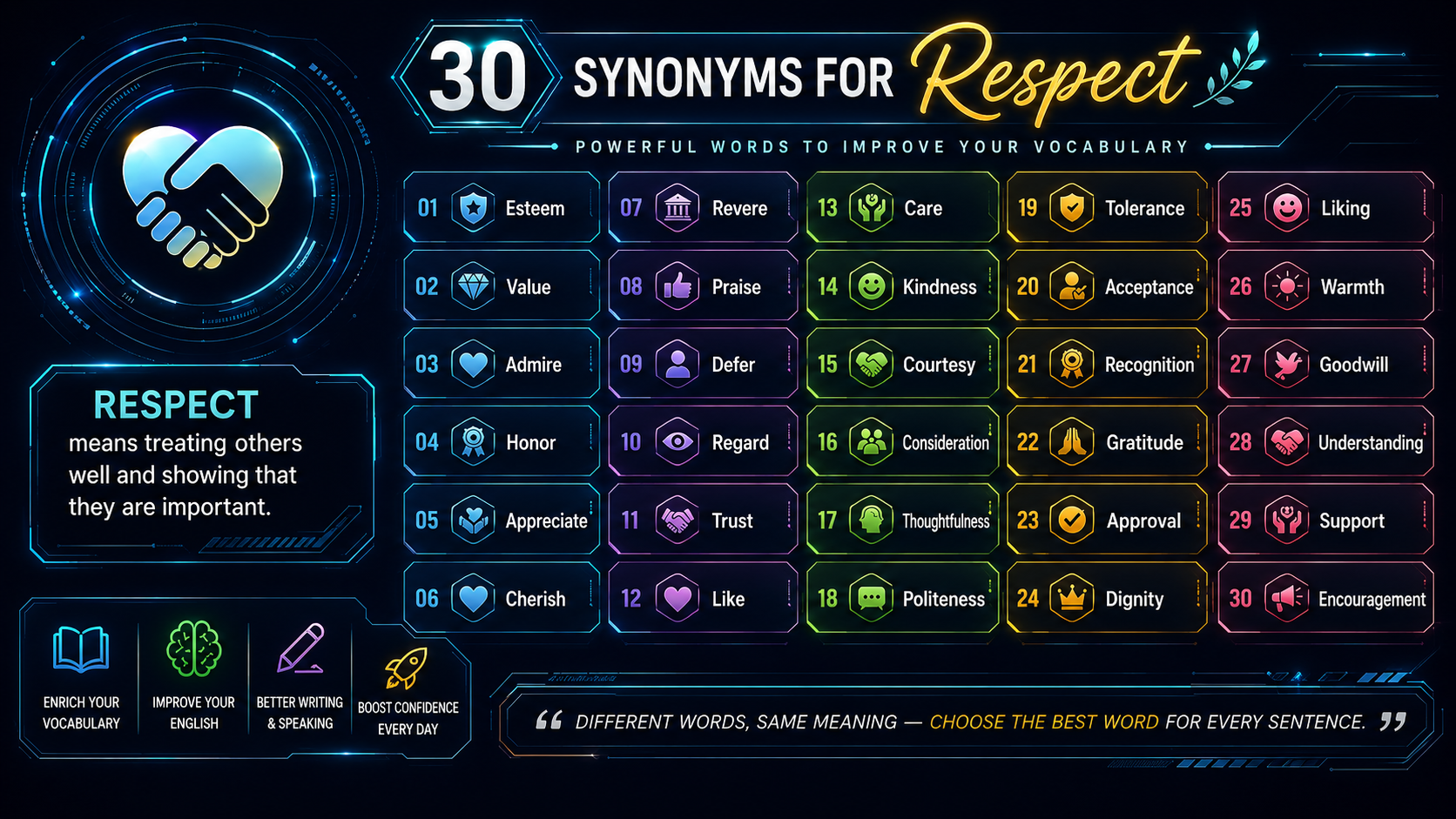
Respect means being kind and showing that someone is important. For example, a child listens when a teacher speaks. The child does not shout or make fun of the teacher. This shows respect. We use this word every day with family, friends, teachers, workers, and other people. Respect helps people live and work together in a good way. Learning Synonyms for Respect can help English learners learn more words. Words like honor, value, admire, care, and esteem can help you say the same idea in different ways. In this article, we will learn the meaning, history, pronunciation, and word forms of respect. We will also learn 30 Synonyms for Respect with easy meanings and simple examples. These words can help writers avoid using the same word again and make their writing clear, simple, and natural.
Meaning of Respect
Definition
Respect (Noun/Verb): A good feeling for someone, or to treat someone in a kind and polite way.
In easy words, respect means to value someone and treat them well.
Examples
- We should show respect to our parents.
- I respect my teacher because she helps me learn.
Connotative Meaning
- Positive tone: Respect has a good meaning. It shows kindness, care, and good manners.
- Negative tone: Respect is not usually negative, but someone may pretend to respect a person.
- Neutral tone: It can be neutral when we simply talk about how someone treats another
- person.
Etymology
Source language: The word respect comes from Latin.
Latin word: It comes from respectus.
- Old meaning: The word was linked to looking back, paying attention, or looking at something carefully.
Short History of Respect
- Old English (450–1100): The word respect was not used in the same form. English had other words for honor and good treatment.
- Middle English (1100–1500): The word came into English through French and Latin. It began to mean paying attention to someone or something.
- Modern English (1500–Present): Respect became a common English word. Today, it can mean honor, care, good treatment, or admiration.
- Learn more about https://synonymspot.com/synonym-of-conflict/
Pronunciation (US & UK – IPA)
US: /rɪˈspekt/ UK: /rɪˈspekt/
Syllables
re-spect
Affixation Pattern of Respect
Root: respect Prefix: None Suffix: None
Respect is a word that came from Latin and French forms. It does not have a common English prefix or suffix in its basic form.
Word Formation
- Respect — noun: a good feeling for someone.
- Respect — verb: to treat someone well.
- Respects — noun/verb: feelings of honor, or treats someone well.
- Respected — adjective/verb: treated with honor, or showed honor.
- Respecting — verb: showing honor or care.
- Respectful — adjective: showing respect.
- Respectfully — adverb: in a polite way.
- Respectable — adjective: good and worthy of respect.
- Respectfully — adverb: in a way that shows respect.
Synonyms of Respect
1. Honor (Noun/Verb)
US: /ˈɑːnər/ | UK: /ˈɒnə/
Meaning: To show that someone is important and good.
Examples:
- We honor our teachers.
- He showed honor to his parents.
2. Admire (Verb)
US: /ədˈmaɪr/ | UK: /ədˈmaɪə/
Meaning: To like and respect someone for something good they do.
Examples:
- I admire my mother.
- We admire her hard work.
3. Value (Verb)
US: /ˈvæljuː/ | UK: /ˈvæljuː/
Meaning: To think someone or something is important.
Examples:
- I value my friends.
- We value your help.
4. Esteem (Noun/Verb)
US: /ɪˈstiːm/ | UK: /ɪˈstiːm/
Meaning: A strong feeling that someone is good and important.
Examples:
- She is held in high esteem.
- I esteem my teacher.
5. Regard (Noun/Verb)
US: /rɪˈɡɑːrd/ | UK: /rɪˈɡɑːd/
Meaning: A feeling of care or respect for someone.
Examples:
- I have great regard for my teacher.
- We regard him as a good leader.
6. Appreciation (Noun)
US: /əˌpriːʃiˈeɪʃən/ | UK: /əˌpriːʃiˈeɪʃən/
Meaning: A feeling of being thankful for someone or something.
Examples:
- I showed my appreciation for her help.
- The students gave their teacher a gift as a sign of appreciation.
7. Recognition (Noun)
US: /ˌrekəɡˈnɪʃən/ | UK: /ˌrekəɡˈnɪʃən/
Meaning: Showing that someone did something good.
Examples:
- She got recognition for her work.
- The school gave him recognition for his effort.
8. Courtesy (Noun)
US: /ˈkɝːtəsi/ | UK: /ˈkɜːtəsi/
Meaning: Kind and polite behavior.
Examples:
- He spoke with courtesy.
- Please show courtesy to others.
9. Politeness (Noun)
US: /pəˈlaɪtnəs/ | UK: /pəˈlaɪtnəs/
Meaning: Good and kind manners.
Examples:
- Politeness is important at school.
- She spoke with politeness.
10. Honor (Noun)
US: /ˈɑːnər/ | UK: /ˈɒnə/
Meaning: A feeling of great respect.
Examples:
- It was an honor to meet her.
- He received an honor for his work.
11. Reverence (Noun)
US: /ˈrevərəns/ | UK: /ˈrevərəns/
Meaning: Very deep respect.
Examples:
- The people showed reverence for their elders.
- He spoke with reverence.
12. Deference (Noun)
US: /ˈdefərəns/ | UK: /ˈdefərəns/
Meaning: Showing respect by giving way to someone.
Examples:
- The child showed deference to the teacher.
- He spoke with deference to his elder.
13. Tribute (Noun)
US: /ˈtrɪbjuːt/ | UK: /ˈtrɪbjuːt/
Meaning: Words or actions that show respect.
Examples:
- The song was a tribute to her.
- They made a tribute for the brave worker.
14. Praise (Noun/Verb)
US: /preɪz/ | UK: /preɪz/
Meaning: Good words about someone or something.
Examples:
- The teacher praised the student.
- She got praise for her work.
15. Approval (Noun)
US: /əˈpruːvəl/ | UK: /əˈpruːvəl/
Meaning: A feeling that something is good or right.
Examples:
- Her parents gave their approval.
- He wanted his teacher’s approval.
16. Consideration (Noun)
US: /kənˌsɪdəˈreɪʃən/ | UK: /kənˌsɪdəˈreɪʃən/
Meaning: Care for another person’s feelings.
Examples:
- She showed consideration for her friend.
- Please show consideration for others.
17. Kindness (Noun)
US: /ˈkaɪndnəs/ | UK: /ˈkaɪndnəs/
Meaning: Being kind and good to others.
Examples:
- Her kindness made me happy.
- We should show kindness to everyone.
18. Courtesy (Noun)
US: /ˈkɝːtəsi/ | UK: /ˈkɜːtəsi/
Meaning: Being polite and kind.
Examples:
- He showed courtesy to the old man.
- Courtesy makes people feel good.
19. Dignity (Noun)
US: /ˈdɪɡnəti/ | UK: /ˈdɪɡnəti/
Meaning: The feeling that a person is worthy and important.
Examples:
- Everyone should be treated with dignity.
- She spoke with dignity.
20. Fame (Noun)
US: /feɪm/ | UK: /feɪm/
Meaning: Being known and liked by many people.
Examples:
- The singer became famous.
- His good work brought him fame.
21. Reputation (Noun)
US: /ˌrepjəˈteɪʃən/ | UK: /ˌrepjʊˈteɪʃən/
Meaning: What people think about someone.
Examples:
- He has a good reputation.
- She built a strong reputation at work.
22. Politeness (Noun)
US: /pəˈlaɪtnəs/ | UK: /pəˈlaɪtnəs/
Meaning: Using good and kind manners.
Examples:
- Politeness is a good habit.
- His politeness made everyone happy.
23. Trust (Noun/Verb)
US: /trʌst/ | UK: /trʌst/
Meaning: A strong belief that someone is good and honest.
Examples:
- I trust my parents.
- Trust is important in friendship.
24. Faith (Noun)
US: /feɪθ/ | UK: /feɪθ/
Meaning: Strong trust in someone or something.
Examples:
- I have faith in my teacher.
- She kept her faith in her friend.
25. Obedience (Noun)
US: /oʊˈbiːdiəns/ | UK: /əʊˈbiːdiəns/
Meaning: Doing what someone tells you to do.
Examples:
- The child showed obedience to his parents.
- Obedience is important in some rules.
26. Regard (Verb)
US: /rɪˈɡɑːrd/ | UK: /rɪˈɡɑːd/
Meaning: To think about someone in a certain way.
Examples:
- I regard her as a good friend.
- They regard him as a good leader.
27. Value (Noun)
US: /ˈvæljuː/ | UK: /ˈvæljuː/
Meaning: The importance or worth of someone or something.
Examples:
- Family has great value to me.
- We know the value of hard work.
28. Praise (Noun)
US: /preɪz/ | UK: /preɪz/
Meaning: Kind words that say someone did well.
Examples:
- The child got praise from her teacher.
- His hard work deserves praise.
29. Honor (Verb)
US: /ˈɑːnər/ | UK: /ˈɒnə/
Meaning: To show great respect to someone.
Examples:
- We honor brave people.
- They honored the teacher for her work.
30. Admiration (Noun)
US: /ˌædməˈreɪʃən/ | UK: /ˌædməˈreɪʃən/
Meaning: A strong feeling of liking and respect.
Examples:
- I have great admiration for my mother.
- Her work earned our admiration.
Prototype Meaning
The main meaning of respect is to treat someone well and show that they are important. When people hear the word respect, they often think about being kind, listening, using good manners, and caring about other people. For example, a child who listens to a parent shows respect. A worker who speaks kindly to a boss also shows respect. Respect can also mean having a good feeling about someone because of what they do or who they are.
Prototype Categorization
- Showing respect: honor, value, regard — use these when you show that someone is important.
- Strong respect: esteem, admiration, reverence — use these for a very strong feeling of respect.
- Being polite: courtesy, politeness, kindness — use these when talking about good manners.
- Good words: praise, appreciation, recognition — use these when you say or show that someone did well.
- Trust: trust, faith — use these when you believe someone is good or honest.
- Care for others: consideration, dignity — use these when you care about people’s feelings and worth.
- Public respect: tribute, honor, reputation — use these when respect is shown by many people or through public actions.
Antonyms of Respect
Disrespect (Noun/Verb)
Meaning: Bad or rude treatment of someone.
- We should never show disrespect to others.
Disregard (Noun/Verb)
Meaning: To not care about someone or something.
- He showed disregard for the rules.
Insult (Noun/Verb)
Meaning: Words or actions that hurt or offend someone.
- His words were an insult.
Rudeness (Noun)
Meaning: Bad or impolite behavior.
- Rudeness can hurt people’s feelings.
Contempt (Noun)
Meaning: A strong feeling that someone is not good or important.
- He showed contempt for the rule.
Ignorance (Noun)
Meaning: Not knowing or not caring about something.
- His ignorance of the rules caused a problem.
Short Questions and Answers
What does respect mean?
- Respect means treating someone well.
- It also means thinking that someone is important or good.
When should respect be used?
- Use respect when talking about kindness, good manners, or honor.
- Example: We should respect our parents.
Is respect positive or negative?
- Respect is usually a positive word.
- It shows care, kindness, and good manners.
How is respect different from similar words?
- Respect means treating someone well or thinking they are important.
- Honor means showing great respect.
- Admire means liking someone for something good they do.
- Value means thinking someone or something is important.
- Praise means saying good things about someone.
- Kindness means being good and caring toward others.
Is respect a noun or a verb?
- Respect can be both a noun and a verb.
- As a noun, it means a good feeling for someone.
- As a verb, it means to treat someone well.
What is the adjective form of respect?
- Respectful is an adjective.
- It means showing respect.
- Example: She is respectful to her teacher.
What is the opposite of respect?
- The main opposite is disrespect.
- It means treating someone in a bad or rude way.
Why is respect important?
Respect helps people live together well.
- It helps build good friendships.
- It also helps people feel safe and valued.
Can we show respect without words?
- Yes.
- We can listen, help others, wait our turn, and use good manners.
Why should English learners learn synonyms for respect?
- Synonyms help learners know more words.
- They help make writing better.
- They also help learners avoid using the same word many times.
Conclusion
Synonyms for Respect can help you improve your English. Synonyms for Respect include words like honor, admire, value, esteem, kindness, praise, courtesy, and appreciation. These words can help you talk about respect in different ways. Learning Synonyms for Respect can make your writing and speaking better. They can also help you avoid using the word respect again and again. When you learn Synonyms for Respect, you can choose the best word for each sentence. Try to learn one new synonym each day. Write a short sentence with it and read it aloud. With daily practice, your English vocabulary can grow step by step.

I’m Zahid Abbas, an educator, researcher, and digital publishing strategist with a passion for linguistics, grammar, and clear communication. As a content creator and SEO specialist, I craft research-driven, reader-focused content that empowers learners and makes knowledge accessible worldwide.