Justice is a word that means fairness, righteousness, and giving people what they deserve according to law or morality. Imagine a teacher carefully listening to both sides of a disagreement before making a decision. Most people would call that justice. We use this word in daily life, law, education, politics, and social discussions because fairness matters everywhere.
Learning synonyms of justice is important for English learners, students, writers, and content creators. Using different words instead of repeating the same term makes writing more interesting and professional. It also helps speakers express ideas more clearly in different situations.
In this article, you will learn the meaning of justice, its pronunciation, history, grammar, connotation, word formation, and 30 powerful synonyms with examples. You will also discover antonyms, semantic categories, and useful questions and answers to strengthen your English vocabulary.
Meaning of Justice
Justice (Noun):
Justice means fairness, moral rightness, and the proper treatment of people according to law, truth, or ethical principles.
Examples
- The judge worked hard to ensure justice for everyone involved.
- People protested peacefully to demand justice for the victims.
Connotative Meaning
- Positive tone: fairness, honesty, equality, integrity.
- Negative tone: can suggest punishment or legal consequences in some contexts.
- Neutral tone: a legal or moral principle applied without emotion.
Etymology
- Origin: Latin justitia
- Original meaning: righteousness, fairness, lawful conduct.
- Entered English through Old French justice.
Short History of the Keyword
- Old English (450–1100): The exact word was uncommon; concepts of fairness and law existed through native terms.
- Middle English (1100–1500): Justice entered English through French influence after the Norman Conquest.
- Modern English (1500–Present): Justice became a key legal, political, and moral term.
Pronunciation (US & UK – IPA)
- US: /ˈdʒʌstɪs/
- UK: /ˈdʒʌstɪs/
Syllables
jus-tice
Affixation Pattern of Justice
Root: just
Prefix: None
Suffix: -ice
Word Formation of Justice
- Justice (Noun)
- Just (Adjective)
- Justly (Adverb)
- Justify (Verb)
- Justified (Adjective/Verb)
- Justification (Noun)
- Unjust (Adjective)
- Unjustly (Adverb)
- Injustice (Noun)
- Justness (Noun)
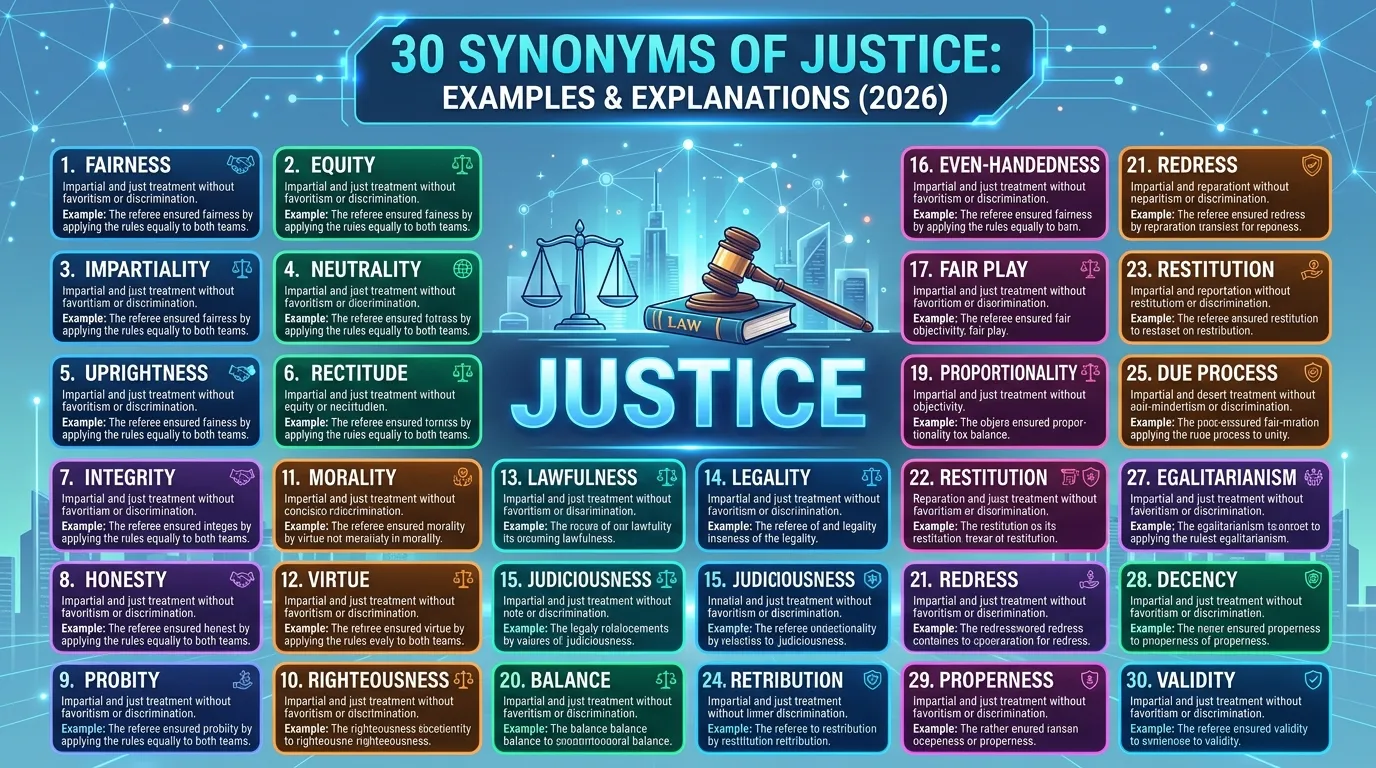
30 Synonyms of Justice
1. Fairness (Noun)
US: /ˈfernəs/ | UK: /ˈfeənəs/
Meaning: Equal and unbiased treatment of people.
Examples:
- Fairness is important in every workplace.
- The referee tried to maintain fairness during the match.
2. Equity (Noun)
US: /ˈekwəti/ | UK: /ˈekwəti/
Meaning: Fair treatment based on individual needs and circumstances.
Examples:
- The policy promotes equity in education.
- Equity helps create equal opportunities.
3. Impartiality (Noun)
US: /ˌɪmpɑːrʃiˈæləti/ | UK: /ɪmˌpɑːʃiˈæləti/
Meaning: Freedom from bias or favoritism.
Examples:
- Judges must show impartiality.
- Her impartiality earned public trust.
4. Righteousness (Noun)
US: /ˈraɪtʃəsnəs/ | UK: /ˈraɪtʃəsnəs/
Meaning: Moral correctness.
Examples:
- He acted with righteousness.
- Many religions value righteousness.
5. Integrity (Noun)
US: /ɪnˈteɡrəti/ | UK: /ɪnˈteɡrəti/
Meaning: Honesty and strong moral principles.
Examples:
- She is known for her integrity.
- Integrity builds trust.
6. Honesty (Noun)
US: /ˈɑːnəsti/ | UK: /ˈɒnəsti/
Meaning: Truthfulness and sincerity.
Examples:
- Honesty is the best policy.
- His honesty impressed everyone.
7. Rightfulness (Noun)
US: /ˈraɪtfəlnəs/ | UK: /ˈraɪtfəlnəs/
Meaning: Being morally or legally correct.
Examples:
- The court examined the rightfulness of the claim.
- Rightfulness matters in legal disputes.
8. Legality (Noun)
US: /liˈɡæləti/ | UK: /liˈɡæləti/
Meaning: Compliance with the law.
Examples:
- The legality of the contract was questioned.
- Lawyers reviewed its legality.
9. Lawfulness (Noun)
US: /ˈlɔːfəlnəs/ | UK: /ˈlɔːfəlnəs/
Meaning: Following legal rules.
Examples:
- Lawfulness supports social order.
- Citizens should value lawfulness.
10. Objectivity (Noun)
US: /ˌɑːbdʒekˈtɪvəti/ | UK: /ˌɒbdʒekˈtɪvəti/
Meaning: Judging facts without personal feelings.
Examples:
- Good journalists value objectivity.
- Objectivity improves decision-making.
11. Equality (Noun)
US: /iˈkwɑːləti/ | UK: /iˈkwɒləti/
Meaning: Equal status and rights.
Examples:
- Equality is a basic human right.
- Many movements fight for equality.
12. Fair Play (Noun)
US: /fer pleɪ/ | UK: /feə pleɪ/
Meaning: Honest and fair behavior.
Examples:
- Fair play is important in sports.
- The coach encouraged fair play.
13. Due Process (Noun)
US: /duː ˈprɑːses/ | UK: /djuː ˈprəʊses/
Meaning: Legal procedures that protect rights.
Examples:
- Every citizen deserves due process.
- The case followed due process.
14. Rectitude (Noun)
US: /ˈrektɪtuːd/ | UK: /ˈrektɪtjuːd/
Meaning: Moral honesty and correctness.
Examples:
- Her rectitude was admired.
- Rectitude guided his actions.
15. Virtue (Noun)
US: /ˈvɜːrtʃuː/ | UK: /ˈvɜːtʃuː/
Meaning: Good moral character.
Examples:
- Patience is a virtue.
- Virtue often leads to respect.
16. Moralness (Noun)
US: /ˈmɔːrəlnəs/ | UK: /ˈmɒrəlnəs/
Meaning: Quality of being morally right.
Examples:
- The moralness of the action was debated.
- Teachers discuss moralness with students.
17. Probity (Noun)
US: /ˈproʊbəti/ | UK: /ˈprəʊbəti/
Meaning: Strong honesty and integrity.
Examples:
- Public officials should show probity.
- Probity increases confidence.
18. Fair-mindedness (Noun)
US: /ˌferˈmaɪndɪdnəs/ | UK: /ˌfeəˈmaɪndɪdnəs/
Meaning: Willingness to judge fairly.
Examples:
- Her fair-mindedness solved the dispute.
- Leaders need fair-mindedness.
19. Neutrality (Noun)
US: /nuːˈtræləti/ | UK: /njuːˈtræləti/
Meaning: Not supporting either side.
Examples:
- Neutrality helps mediators.
- The organization maintained neutrality.
20. Judiciousness (Noun)
US: /dʒuˈdɪʃəsnəs/ | UK: /dʒuˈdɪʃəsnəs/
Meaning: Wise and fair judgment.
Examples:
- The manager showed judiciousness.
- Judiciousness prevented conflict.
21. Balance (Noun)
US: /ˈbæləns/ | UK: /ˈbæləns/
Meaning: A fair and equal state.
Examples:
- The law seeks balance.
- Balance helps resolve disputes.
22. Evenhandedness (Noun)
US: /ˌiːvənˈhændɪdnəs/ | UK: /ˌiːvənˈhændɪdnəs/
Meaning: Treating all sides equally.
Examples:
- The teacher displayed evenhandedness.
- Evenhandedness earns respect.
23. Reasonableness (Noun)
US: /ˈriːzənəblnəs/ | UK: /ˈriːzənəblnəs/
Meaning: Fair and sensible judgment.
Examples:
- The agreement showed reasonableness.
- Reasonableness helped both parties.
24. Correctness (Noun)
US: /kəˈrektnəs/ | UK: /kəˈrektnəs/
Meaning: State of being right.
Examples:
- They checked the correctness of the decision.
- Correctness is important in law.
25. Decency (Noun)
US: /ˈdiːsənsi/ | UK: /ˈdiːsənsi/
Meaning: Proper and moral behavior.
Examples:
- Decency requires respect.
- He acted with decency.
26. Honor (Noun)
US: /ˈɑːnər/ | UK: /ˈɒnə/
Meaning: High moral standards and respect.
Examples:
- Honor guided his choices.
- Soldiers value honor.
27. Ethics (Noun)
US: /ˈeθɪks/ | UK: /ˈeθɪks/
Meaning: Principles of right and wrong behavior.
Examples:
- Business ethics matter.
- Ethics shape decisions.
28. Morality (Noun)
US: /məˈræləti/ | UK: /məˈræləti/
Meaning: Standards of right and wrong.
Examples:
- Morality influences laws.
- The debate focused on morality.
29. Truthfulness (Noun)
US: /ˈtruːθfəlnəs/ | UK: /ˈtruːθfəlnəs/
Meaning: Quality of being truthful.
Examples:
- Truthfulness builds trust.
- Parents teach truthfulness.
30. Uprightness (Noun)
US: /ˈʌpraɪtnəs/ | UK: /ˈʌpraɪtnəs/
Meaning: Honest and moral behavior.
Examples:
- His uprightness was respected.
- Uprightness is valued in leaders.
Prototype Meaning
The most typical meaning of justice is fair treatment according to law, truth, and morality. When people hear the word, they often imagine a judge, a courtroom, balanced scales, or a fair decision where everyone receives equal treatment.
Prototype Categorization
- Legal Justice: legality, lawfulness, due process, correctness.
- Fair Treatment: fairness, equity, equality, balance, evenhandedness.
- Moral Justice: righteousness, virtue, morality, ethics, rectitude.
- Personal Character: integrity, honesty, honor, probity, uprightness.
- Objective Judgment: impartiality, objectivity, neutrality, judiciousness.
- Social Harmony: fair-mindedness, reasonableness, decency, fair play.
Antonyms of Justice
- Injustice (Noun): Unfair treatment or violation of rights.
- Bias (Noun): Unfair preference for one side.
- Partiality (Noun): Favoring one person or group.
- Corruption (Noun): Dishonest use of power.
- Dishonesty (Noun): Lack of truthfulness.
- Wrongdoing (Noun): Illegal or immoral behavior.
- Inequality (Noun): Lack of equal rights or opportunities.
- Unfairness (Noun): Absence of fairness.
- Oppression (Noun): Cruel or unjust treatment.
- Tyranny (Noun): Harsh and unjust rule.
Short Questions and Answers
- What does justice mean?Justice means fairness and giving people what is right according to law or morality.
- When should justice be used?Use justice when discussing fairness, rights, laws, ethics, or proper treatment.
- Is justice positive or negative?Justice usually has a positive meaning because it is associated with fairness and righteousness.
- How is it different from similar words?Justice is broader than fairness. Fairness focuses on equal treatment, while justice often includes legal and moral principles.
Conclusion
Justice is one of the most important words in English because it represents fairness, equality, honesty, and moral responsibility. Learning the Synonyms of Justice and Synonyms of Justice helps you express ideas more clearly in speaking and writing. It also prevents repetition and allows you to choose the most suitable word for legal, social, or ethical situations. Understanding pronunciation, history, connotation, and semantic categories strengthens your overall language skills. The more synonyms you learn, the richer your vocabulary becomes. Make vocabulary practice a daily habit, and you will gain greater confidence in English communication, academic writing, and professional content creation.

I’m Zahid Abbas, an educator, researcher, and digital publishing strategist with a passion for linguistics, grammar, and clear communication. As a content creator and SEO specialist, I craft research-driven, reader-focused content that empowers learners and makes knowledge accessible worldwide.