The word party is one of the most common words in English. It usually refers to a social gathering where people meet, celebrate, eat, talk, dance, or enjoy activities together. Imagine a group of friends meeting to celebrate a birthday. Everyone is happy, sharing food, and having fun. This event is a party.
People use the word party in everyday conversations, books, movies, and social media. It can also refer to a political group or a person involved in an agreement.
Learning synonyms of party is important for English learners and content writers because it helps improve vocabulary and makes speaking and writing more interesting. Using different words prevents repetition and allows writers to express ideas more clearly. In this article, you will learn the meaning of party, its pronunciation, history, grammar, connotations, and 30 useful synonyms with examples.
Meaning of Party
Party (Noun):
A gathering of people for celebration, entertainment, or a special purpose.
Examples
- We had a party for my sister’s birthday.
- Many friends came to the party last night.
Connotative Meaning
- Positive tone: celebration, enjoyment, friendship, happiness
- Negative tone: noisy event, disorderly gathering, excessive behavior
- Neutral tone: a group of people meeting for a specific purpose
Etymology
- Origin: Old French partie
- Source Language: Latin partire
- Original Meaning: “to divide” or “a portion”
Short History of the Keyword
- Old English (450–1100): The exact word was not commonly used; similar ideas were expressed through words meaning gathering or group.
- Middle English (1100–1500): Borrowed from Old French as partie, meaning a side, group, or portion.
- Modern English (1500–Present): Expanded to mean social gatherings, political organizations, and people involved in legal agreements.
Pronunciation (US & UK – IPA)
US: /ˈpɑːrti/
UK: /ˈpɑːti/
Syllables
par-ty
Affixation Pattern of Party
Root: party
Prefix: None
Suffix: None
Word Formation of Party
- Party (Noun)
- Parties (Plural Noun)
- Partygoer (Noun)
- Partying (Verb/Gerund)
- Party-like (Adjective)
- Partyer (Noun)
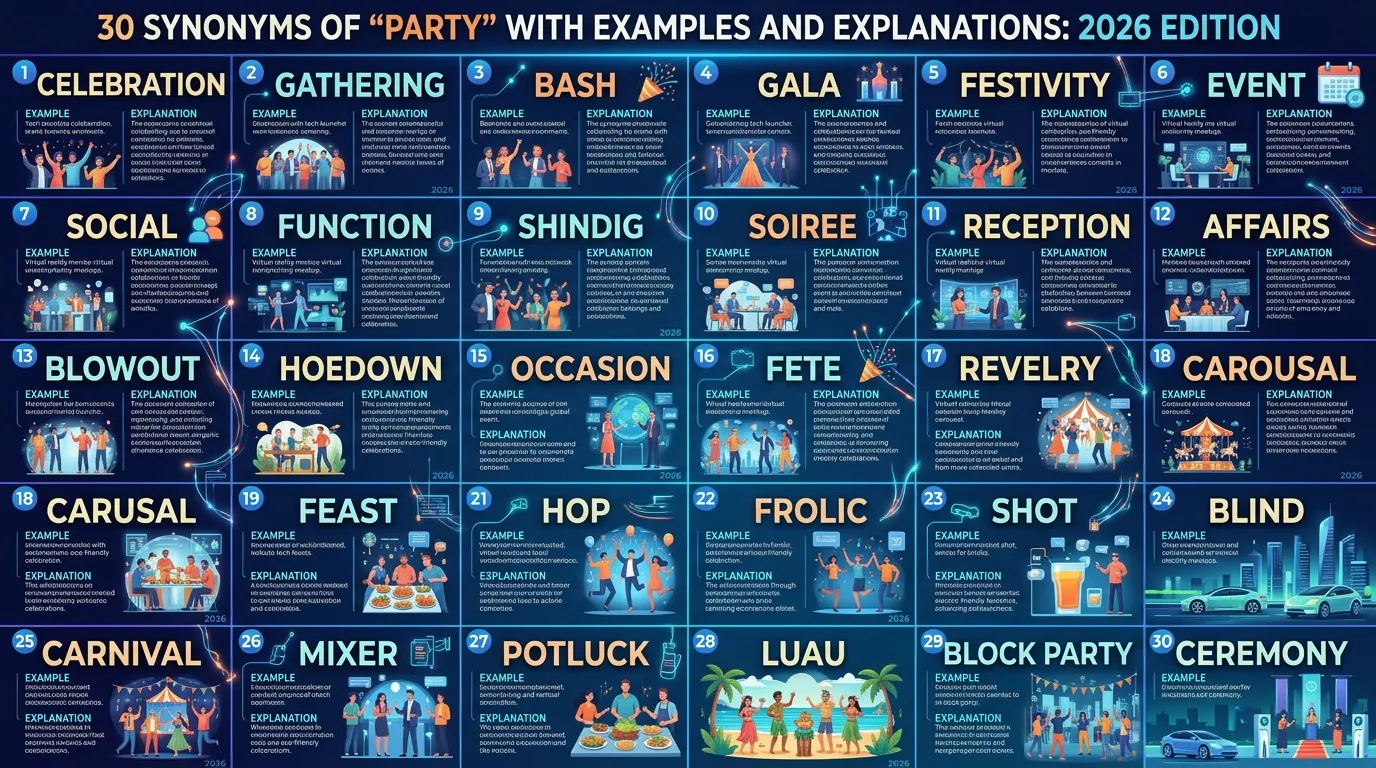
30 Synonyms of Party
1. Celebration (Noun)
US: /ˌseləˈbreɪʃən/ | UK: /ˌselɪˈbreɪʃən/
Meaning: An event held to honor or enjoy something special.
Examples:
- The wedding celebration lasted all day.
- We planned a celebration for the team’s success.
2. Gathering (Noun)
US: /ˈɡæðərɪŋ/ | UK: /ˈɡæðərɪŋ/
Meaning: A group of people meeting together.
Examples:
- The family gathering was enjoyable.
- Many guests attended the gathering.
3. Event (Noun)
US: /ɪˈvent/ | UK: /ɪˈvent/
Meaning: An organized occasion.
Examples:
- The event attracted many visitors.
- It was a successful community event.
4. Function (Noun)
US: /ˈfʌŋkʃən/ | UK: /ˈfʌŋkʃən/
Meaning: A formal social occasion.
Examples:
- The company function was elegant.
- She attended a charity function.
5. Reception (Noun)
US: /rɪˈsepʃən/ | UK: /rɪˈsepʃən/
Meaning: A formal gathering to welcome people.
Examples:
- The wedding reception was beautiful.
- Guests enjoyed the reception.
6. Festivity (Noun)
US: /feˈstɪvəti/ | UK: /feˈstɪvəti/
Meaning: An activity related to celebration.
Examples:
- Holiday festivities filled the town.
- The festivities continued until midnight.
7. Festival (Noun)
US: /ˈfestɪvəl/ | UK: /ˈfestɪvəl/
Meaning: A public celebration or event.
Examples:
- The music festival was exciting.
- Thousands attended the festival.
8. Bash (Noun)
US: /bæʃ/ | UK: /bæʃ/
Meaning: An informal and lively party.
Examples:
- They threw a birthday bash.
- The bash lasted all night.
9. Get-Together (Noun)
US: /ˈɡet təˌɡeðər/ | UK: /ˈɡet təˌɡeðə/
Meaning: An informal meeting of friends or family.
Examples:
- We had a weekend get-together.
- The get-together was relaxing.
10. Social (Noun)
US: /ˈsoʊʃəl/ | UK: /ˈsəʊʃəl/
Meaning: A social gathering.
Examples:
- The church social was enjoyable.
- Everyone attended the social.
11. Banquet (Noun)
US: /ˈbæŋkwət/ | UK: /ˈbæŋkwɪt/
Meaning: A large formal meal.
Examples:
- The banquet honored the winners.
- Guests enjoyed the banquet.
12. Feast (Noun)
US: /fiːst/ | UK: /fiːst/
Meaning: A large meal for celebration.
Examples:
- The feast included many dishes.
- Families gathered for the feast.
13. Gala (Noun)
US: /ˈɡeɪlə/ | UK: /ˈɡɑːlə/
Meaning: A grand social event.
Examples:
- The charity gala raised money.
- She wore a dress to the gala.
14. Soiree (Noun)
US: /swɑːˈreɪ/ | UK: /ˈswɑːreɪ/
Meaning: An elegant evening gathering.
Examples:
- They hosted a musical soiree.
- The soiree was sophisticated.
15. Mixer (Noun)
US: /ˈmɪksər/ | UK: /ˈmɪksə/
Meaning: An event where people meet and socialize.
Examples:
- Students attended the mixer.
- The mixer encouraged networking.
16. Reunion (Noun)
US: /riˈjuːnjən/ | UK: /riˈjuːniən/
Meaning: A meeting of people after a long time apart.
Examples:
- The school reunion was memorable.
- Friends met at the reunion.
17. Meet-Up (Noun)
US: /ˈmiːt ʌp/ | UK: /ˈmiːt ʌp/
Meaning: An informal gathering.
Examples:
- We organized a meet-up online.
- The meet-up attracted many members.
18. Assembly (Noun)
US: /əˈsembli/ | UK: /əˈsembli/
Meaning: A group meeting for a purpose.
Examples:
- The assembly discussed plans.
- Students attended the assembly.
19. Congregation (Noun)
US: /ˌkɑːŋɡrɪˈɡeɪʃən/ | UK: /ˌkɒŋɡrɪˈɡeɪʃən/
Meaning: A gathering of people.
Examples:
- The congregation filled the hall.
- A large congregation attended.
20. Convocation (Noun)
US: /ˌkɑːnvəˈkeɪʃən/ | UK: /ˌkɒnvəˈkeɪʃən/
Meaning: A formal assembly.
Examples:
- The university held a convocation.
- Graduates attended the convocation.
21. Ceremony (Noun)
US: /ˈserəˌmoʊni/ | UK: /ˈserɪməni/
Meaning: A formal event with traditions.
Examples:
- The award ceremony was inspiring.
- Many guests attended the ceremony.
22. Occasion (Noun)
US: /əˈkeɪʒən/ | UK: /əˈkeɪʒən/
Meaning: A special event or time.
Examples:
- It was a happy occasion.
- The occasion brought everyone together.
23. Shindig (Noun)
US: /ˈʃɪndɪɡ/ | UK: /ˈʃɪndɪɡ/
Meaning: A lively informal party.
Examples:
- They hosted a fun shindig.
- The shindig was full of music.
24. Blowout (Noun)
US: /ˈbloʊaʊt/ | UK: /ˈbləʊaʊt/
Meaning: A large and exciting celebration.
Examples:
- They planned a birthday blowout.
- The blowout attracted many guests.
25. Jamboree (Noun)
US: /ˌdʒæmbəˈriː/ | UK: /ˌdʒæmbəˈriː/
Meaning: A large festive gathering.
Examples:
- Scouts attended the jamboree.
- The jamboree was energetic.
26. Carnival (Noun)
US: /ˈkɑːrnɪvəl/ | UK: /ˈkɑːnɪvəl/
Meaning: A public celebration with entertainment.
Examples:
- The carnival attracted tourists.
- Children loved the carnival.
27. Ball (Noun)
US: /bɔːl/ | UK: /bɔːl/
Meaning: A formal dance event.
Examples:
- The royal ball was elegant.
- Guests danced at the ball.
28. Entertainment (Noun)
US: /ˌentərˈteɪnmənt/ | UK: /ˌentəˈteɪnmənt/
Meaning: Activities that provide enjoyment.
Examples:
- The entertainment pleased everyone.
- Music was the main entertainment.
29. Merrymaking (Noun)
US: /ˈmeriˌmeɪkɪŋ/ | UK: /ˈmeriˌmeɪkɪŋ/
Meaning: Joyful celebration and fun.
Examples:
- Holiday merrymaking filled the streets.
- The merrymaking continued late.
30. Affair (Noun)
US: /əˈfer/ | UK: /əˈfeə/
Meaning: A social event or gathering.
Examples:
- The charity affair was successful.
- It was a formal affair.
Prototype Meaning
The most typical meaning of party is a social gathering where people come together to celebrate, have fun, share food, talk, dance, or enjoy activities. When most people hear the word, they imagine friends and family meeting for a happy occasion such as a birthday, wedding, or holiday celebration.
Prototype Categorization
- Formal Events: banquet, gala, reception, ceremony, ball, function
- Informal Gatherings: bash, get-together, meet-up, shindig, mixer
- Large Public Celebrations: festival, carnival, jamboree
- General Gatherings: gathering, event, occasion, assembly, congregation
- Food-Centered Events: feast, banquet
- Celebratory Activities: festivity, merrymaking, celebration
Antonyms of Party
- Isolation (Noun): the state of being alone
- Separation (Noun): the act of moving apart
- Solitude (Noun): being by oneself
- Loneliness (Noun): feeling alone
- Privacy (Noun): freedom from social contact
- Withdrawal (Noun): removing oneself from a group
- Dispersal (Noun): scattering of people
- Division (Noun): separation into parts
Short Questions and Answers
- What does party mean?
Party means a gathering of people for celebration, enjoyment, or a special purpose. - When should party be used?
Use party when talking about social events, celebrations, gatherings, or groups involved in activities. - Is party positive or negative?
It is usually positive, but it can be negative if it refers to a noisy or troublesome gathering. - How is it different from similar words?
Party is a broad term. Words like gala, banquet, and festival describe more specific types of gatherings.
Conclusion
Learning the Synonyms of Party and its synonyms is an excellent way to strengthen your English vocabulary. Different synonyms help you describe events more accurately and make your writing more interesting. They also help you avoid repeating the same word again and again. Understanding pronunciation, history, connotation, and usage gives you a deeper knowledge of the language. Whether you are a student, writer, teacher, or English learner, these vocabulary words can improve both speaking and writing skills. Try using a new synonym each day in conversations and sentences. Regular practice will build confidence and help you communicate more naturally and effectively in English.

I’m Zahid Abbas, an educator, researcher, and digital publishing strategist with a passion for linguistics, grammar, and clear communication. As a content creator and SEO specialist, I craft research-driven, reader-focused content that empowers learners and makes knowledge accessible worldwide.