Kindness is one of the most important qualities in human life. It means being caring, helpful, and considerate toward others. Imagine a student helping a classmate understand a difficult lesson or a stranger holding the door open for someone carrying heavy bags. These simple actions show kindness in everyday life.
The word kindness is commonly used because people often talk about good behavior, compassion, and generosity. Learning synonyms of kindness helps English learners express ideas more clearly and avoid repeating the same word. It also helps writers create richer and more engaging content.
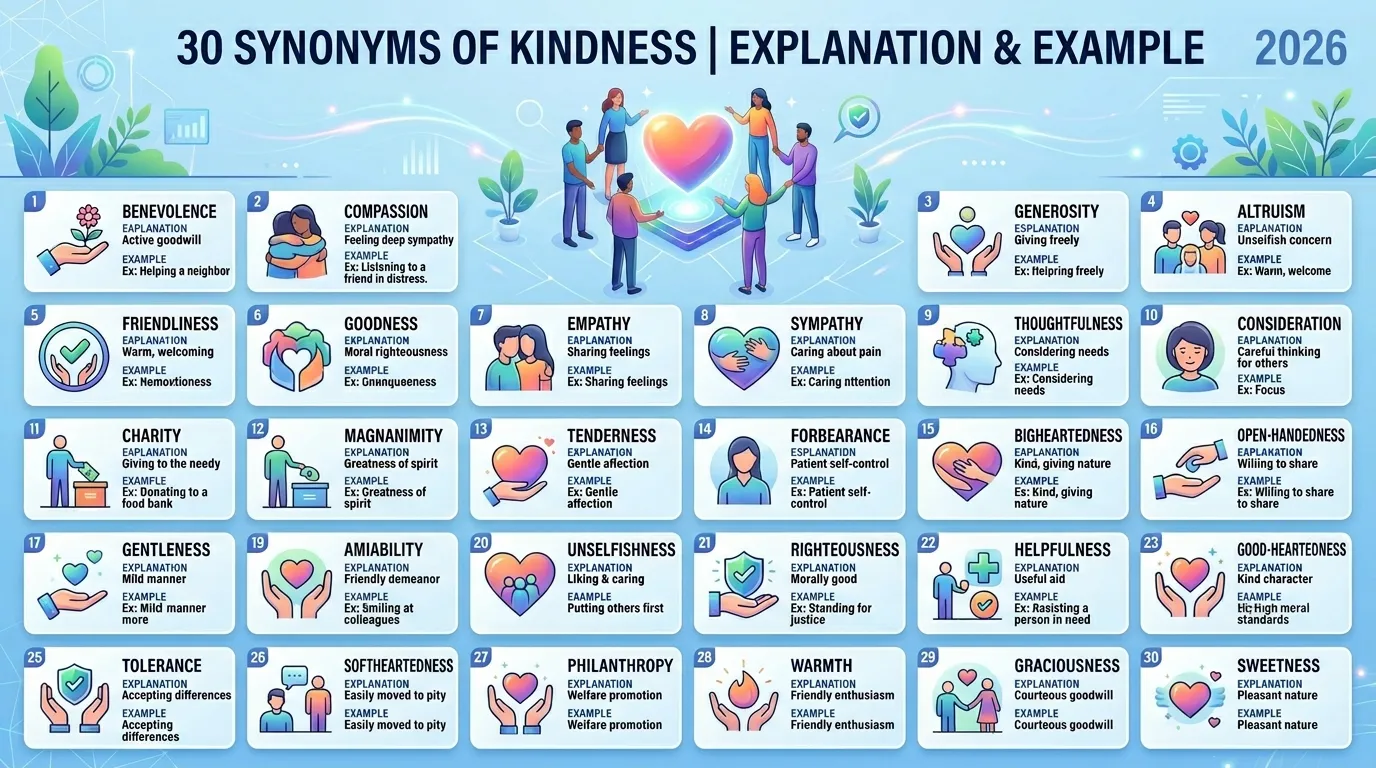
In this article, you will learn the meaning of kindness, its pronunciation, history, grammar, connotations, and word formation. You will also discover 30 powerful synonyms of kindness with meanings and examples, along with antonyms, categories, and useful questions and answers.
Meaning of Kindness
Kindness (Noun):
Kindness means the quality of being friendly, caring, generous, and helpful toward other people.
Examples
- Her kindness made everyone feel welcome.
- A small act of kindness can brighten someone’s day.
Connotative Meaning
- Positive tone: Caring, compassionate, generous, warm-hearted.
- Negative tone: Usually none, though excessive kindness may sometimes suggest weakness.
- Neutral tone: Polite, considerate behavior without strong emotional meaning.
Etymology
- Origin: Old English
- Derived from: gecynd meaning “nature, race, family, natural character”
- Original meaning: Acting according to one’s natural and good nature
Short History of the Keyword
- Old English (450–1100): Referred to natural character and good nature.
- Middle English (1100–1500): Developed the meaning of benevolence and goodwill.
- Modern English (1500–Present): Widely used to describe caring and generous behavior toward others.
Pronunciation (US & UK – IPA)
US: /ˈkaɪnd.nəs/
UK: /ˈkaɪnd.nəs/
Syllables
kind-ness
Affixation Pattern of Kindness
Root: kind
Prefix: None
Suffix: -ness
Word Formation of Kindness
- Kind (Adjective)
- Kindness (Noun)
- Kindly (Adverb)
- Kindhearted (Adjective)
- Kindheartedness (Noun)
- Unkind (Adjective)
- Unkindness (Noun)
- Kindlier (Adjective/Comparative)
- Kindliest (Adjective/Superlative)
30 Synonyms of Kindness
1. Compassion (Noun)
US: /kəmˈpæʃ.ən/ | UK: /kəmˈpæʃ.ən/
Meaning: Deep concern for the suffering of others.
Examples:
- She showed compassion to the injured animal.
- Compassion helps people support those in need.
2. Benevolence (Noun)
US: /bəˈnev.ə.ləns/ | UK: /bəˈnev.ə.ləns/
Meaning: A desire to do good for others.
Examples:
- His benevolence improved many lives.
- The charity was founded on benevolence.
3. Generosity (Noun)
US: /ˌdʒen.əˈrɑː.sə.t̬i/ | UK: /ˌdʒen.əˈrɒs.ə.ti/
Meaning: Willingness to give or share freely.
Examples:
- Her generosity inspired the community.
- They appreciated his generosity.
4. Charity (Noun)
US: /ˈtʃer.ə.t̬i/ | UK: /ˈtʃær.ə.ti/
Meaning: Kind help given to people in need.
Examples:
- The charity helped poor families.
- She donated money as an act of charity.
5. Goodness (Noun)
US: /ˈɡʊd.nəs/ | UK: /ˈɡʊd.nəs/
Meaning: Moral excellence and kindness.
Examples:
- Everyone admired her goodness.
- His goodness touched many hearts.
6. Warmth (Noun)
US: /wɔːrmθ/ | UK: /wɔːmθ/
Meaning: Friendly and affectionate behavior.
Examples:
- She greeted us with warmth.
- His warmth made guests comfortable.
7. Friendliness (Noun)
US: /ˈfrend.li.nəs/ | UK: /ˈfrend.li.nəs/
Meaning: Being pleasant and welcoming.
Examples:
- Her friendliness attracted many friends.
- The staff showed great friendliness.
8. Consideration (Noun)
US: /kənˌsɪd.əˈreɪ.ʃən/ | UK: /kənˌsɪd.əˈreɪ.ʃən/
Meaning: Thoughtfulness toward others.
Examples:
- Thank you for your consideration.
- Consideration improves relationships.
9. Thoughtfulness (Noun)
US: /ˈθɔːt.fəl.nəs/ | UK: /ˈθɔːt.fəl.nəs/
Meaning: Careful attention to other people’s needs.
Examples:
- Her thoughtful gift showed thoughtfulness.
- Thoughtfulness strengthens friendships.
10. Mercy (Noun)
US: /ˈmɝː.si/ | UK: /ˈmɜː.si/
Meaning: Compassion shown toward someone.
Examples:
- The judge showed mercy.
- They prayed for mercy.
11. Humanity (Noun)
US: /hjuːˈmæn.ə.t̬i/ | UK: /hjuːˈmæn.ə.ti/
Meaning: Compassionate treatment of people.
Examples:
- Humanity should guide our actions.
- The volunteers showed great humanity.
12. Sympathy (Noun)
US: /ˈsɪm.pə.θi/ | UK: /ˈsɪm.pə.θi/
Meaning: Feelings of care for another person’s suffering.
Examples:
- She expressed sympathy after the loss.
- We offered our sympathy.
13. Empathy (Noun)
US: /ˈem.pə.θi/ | UK: /ˈem.pə.θi/
Meaning: Understanding another person’s feelings.
Examples:
- Empathy helps people connect.
- Good leaders show empathy.
14. Helpfulness (Noun)
US: /ˈhelp.fəl.nəs/ | UK: /ˈhelp.fəl.nəs/
Meaning: Being ready to help others.
Examples:
- Her helpfulness was appreciated.
- The team’s helpfulness solved problems.
15. Altruism (Noun)
US: /ˈæl.tru.ɪ.zəm/ | UK: /ˈæl.tru.ɪ.zəm/
Meaning: Selfless concern for others.
Examples:
- Altruism benefits society.
- His actions reflected altruism.
16. Gentleness (Noun)
US: /ˈdʒen.təl.nəs/ | UK: /ˈdʒen.təl.nəs/
Meaning: Soft and kind behavior.
Examples:
- She treated the child with gentleness.
- Gentleness can calm fears.
17. Tenderness (Noun)
US: /ˈten.dɚ.nəs/ | UK: /ˈten.də.nəs/
Meaning: Loving and gentle care.
Examples:
- He spoke with tenderness.
- Tenderness strengthens families.
18. Courtesy (Noun)
US: /ˈkɝː.t̬ə.si/ | UK: /ˈkɜː.tə.si/
Meaning: Polite and respectful behavior.
Examples:
- Courtesy is important at work.
- She thanked him out of courtesy.
19. Civility (Noun)
US: /səˈvɪl.ə.t̬i/ | UK: /səˈvɪl.ə.ti/
Meaning: Polite and respectful conduct.
Examples:
- Civility improves discussions.
- The meeting was handled with civility.
20. Goodwill (Noun)
US: /ˌɡʊdˈwɪl/ | UK: /ˌɡʊdˈwɪl/
Meaning: Friendly and helpful feelings.
Examples:
- The event created goodwill.
- Goodwill encourages cooperation.
21. Caring (Noun)
US: /ˈker.ɪŋ/ | UK: /ˈkeə.rɪŋ/
Meaning: Showing concern for others.
Examples:
- Her caring improved morale.
- Caring builds trust.
22. Concern (Noun)
US: /kənˈsɝːn/ | UK: /kənˈsɜːn/
Meaning: Care and interest in others’ well-being.
Examples:
- He showed concern for his friend.
- Their concern was genuine.
23. Kindheartedness (Noun)
US: /ˌkaɪndˈhɑːr.t̬ɪd.nəs/ | UK: /ˌkaɪndˈhɑː.tɪd.nəs/
Meaning: A naturally kind and caring nature.
Examples:
- Her kindheartedness inspired everyone.
- People admired his kindheartedness.
24. Magnanimity (Noun)
US: /ˌmæɡ.nəˈnɪm.ə.t̬i/ | UK: /ˌmæɡ.nəˈnɪm.ə.ti/
Meaning: Generous and forgiving behavior.
Examples:
- His magnanimity ended the conflict.
- The winner showed magnanimity.
25. Grace (Noun)
US: /ɡreɪs/ | UK: /ɡreɪs/
Meaning: Polite and kind behavior.
Examples:
- She accepted criticism with grace.
- Grace earns respect.
26. Hospitality (Noun)
US: /ˌhɑː.spɪˈtæl.ə.t̬i/ | UK: /ˌhɒs.pɪˈtæl.ə.ti/
Meaning: Friendly treatment of guests.
Examples:
- Their hospitality was wonderful.
- Visitors appreciated the hospitality.
27. Niceness (Noun)
US: /ˈnaɪs.nəs/ | UK: /ˈnaɪs.nəs/
Meaning: Pleasant and kind behavior.
Examples:
- Her niceness impressed everyone.
- Niceness creates positive feelings.
28. Selflessness (Noun)
US: /ˈself.ləs.nəs/ | UK: /ˈself.ləs.nəs/
Meaning: Putting others before yourself.
Examples:
- Selflessness is admirable.
- Her selflessness helped many people.
29. Understanding (Noun)
US: /ˌʌn.dɚˈstæn.dɪŋ/ | UK: /ˌʌn.dəˈstæn.dɪŋ/
Meaning: Sympathy and awareness of others’ feelings.
Examples:
- Thank you for your understanding.
- Understanding improves communication.
30. Good-heartedness (Noun)
US: /ˌɡʊdˈhɑːr.t̬ɪd.nəs/ | UK: /ˌɡʊdˈhɑː.tɪd.nəs/
Meaning: A naturally kind and generous character.
Examples:
- Everyone loved her good-heartedness.
- His good-heartedness was well known.
Prototype Meaning
The prototype meaning of kindness is helping others with a caring and friendly attitude. When people hear the word, they usually imagine someone offering support, showing compassion, sharing resources, or treating others with respect and understanding.
Prototype Categorization
- Compassion and Care: Compassion, Empathy, Sympathy, Mercy, Humanity
- Generosity and Giving: Generosity, Charity, Altruism, Selflessness, Benevolence
- Friendliness and Warmth: Friendliness, Warmth, Goodwill, Hospitality, Niceness
- Respect and Politeness: Courtesy, Civility, Grace, Consideration
- Gentle Behavior: Gentleness, Tenderness, Caring, Understanding
- Moral Goodness: Goodness, Kindheartedness, Good-heartedness, Magnanimity
Antonyms of Kindness
- Cruelty (Noun): Intentional harm or suffering toward others.
- Harshness (Noun): Severe or unpleasant behavior.
- Meanness (Noun): Unkind and selfish behavior.
- Hostility (Noun): Unfriendly or aggressive attitude.
- Rudeness (Noun): Lack of politeness and respect.
- Indifference (Noun): Lack of concern for others.
- Selfishness (Noun): Caring only about oneself.
- Coldness (Noun): Lack of warmth and affection.
- Malice (Noun): Desire to harm others.
- Unkindness (Noun): Absence of kindness.
Short Questions and Answers
- What does kindness mean?Kindness means being caring, friendly, generous, and helpful toward other people.
- When should kindness be used?Use kindness when describing helpful actions, compassionate behavior, or positive treatment of others.
- Is kindness positive or negative?Kindness usually has a strongly positive meaning because it describes caring and beneficial behavior.
- How is it different from similar words?Kindness is a broad term. Words like compassion focus on understanding suffering, while generosity focuses on giving and sharing.
Conclusion
Kindness is a powerful word that describes caring, helpful, and considerate behavior. Learning the Synonyms of Kindness and Synonyms of Kindness can greatly improve your English vocabulary. It allows you to express ideas more accurately in writing and speaking while avoiding repetition. Understanding related words such as compassion, generosity, empathy, and goodwill helps you communicate with greater precision and confidence. Studying pronunciation, history, connotation, and word formation also deepens your language knowledge. The more synonyms you learn and practice, the stronger your vocabulary becomes. Make vocabulary learning a daily habit, and you will gradually become a more confident English speaker, writer, and communicator.

I’m Zahid Abbas, an educator, researcher, and digital publishing strategist with a passion for linguistics, grammar, and clear communication. As a content creator and SEO specialist, I craft research-driven, reader-focused content that empowers learners and makes knowledge accessible worldwide.