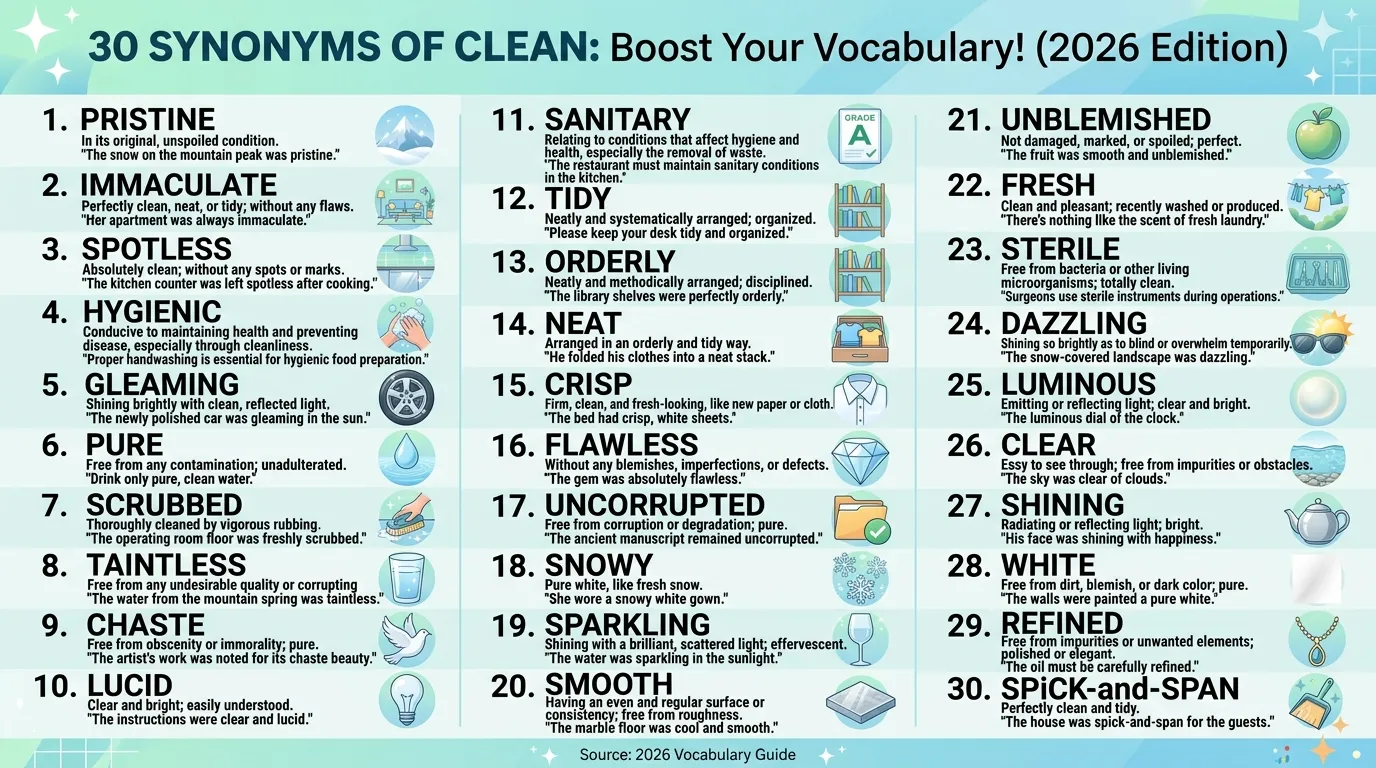
The word clean means free from dirt, stains, germs, or unwanted things. Imagine you spend the afternoon cleaning your room. After putting everything in its place, dusting the shelves, and sweeping the floor, the room feels fresh, neat, and comfortable. In this situation, the word clean fits perfectly.
Clean is one of the most commonly used words in English. People use it when talking about homes, clothes, food, health, writing, and even behavior.
Learning synonyms of clean is important for English learners, students, content writers, and professionals. Using different words instead of repeating the same one makes speaking and writing more interesting and effective. In this article, you will learn the meaning of clean, its pronunciation, history, grammar, connotations, and 30 powerful synonyms with examples. You will also discover categories of synonyms, antonyms, and useful questions and answers.
Meaning of Clean
Definition
Clean (Adjective):
Free from dirt, dust, stains, germs, or anything unwanted; neat, pure, or tidy.
Examples
- The kitchen is clean after the family finished washing the dishes.
- She always keeps her desk clean and organized.
Connotative Meaning
- Positive tone: Fresh, healthy, pure, organized, attractive.
- Negative tone: Can sometimes suggest being overly strict or obsessed with order.
- Neutral tone: Simply free from dirt or contamination.
Etymology
- Source Language: Old English
- Original Form: clæne
- Original Meaning: Pure, clear, free from dirt or guilt
Short History of the Keyword
- Old English (450–1100): Clæne meant pure, innocent, and free from dirt.
- Middle English (1100–1500): The spelling gradually changed to clene.
- Modern English (1500–Present): The word became clean and gained broader meanings related to hygiene, neatness, and purity.
Pronunciation (US & UK – IPA)
- US: /kliːn/
- UK: /kliːn/
Syllables
clean
Affixation Pattern of Clean
- Root: clean
- Prefix: None
- Suffix: None
Word Formation of the Keyword
- Clean (Adjective) – free from dirt
- Clean (Verb) – remove dirt
- Cleaner (Noun) – person or product that cleans
- Cleaner (Adjective) – more clean
- Cleanest (Adjective) – most clean
- Cleanliness (Noun) – state of being clean
- Cleanly (Adverb) – in a clean manner
- Unclean (Adjective) – not clean
Synonyms of Clean
1. Tidy (Adjective)
US: /ˈtaɪdi/ | UK: /ˈtaɪdi/
Meaning: Neat and well organized.
Examples:
- Her room is always tidy.
- He keeps his books in a tidy arrangement.
2. Neat (Adjective)
US: /niːt/ | UK: /niːt/
Meaning: Orderly and clean in appearance.
Examples:
- She has a neat workspace.
- The garden looks neat and attractive.
3. Spotless (Adjective)
US: /ˈspɑːtləs/ | UK: /ˈspɒtləs/
Meaning: Completely free from dirt or marks.
Examples:
- The floor was spotless.
- His white shirt remained spotless.
4. Pristine (Adjective)
US: /ˈprɪstiːn/ | UK: /ˈprɪstiːn/
Meaning: Perfectly clean and untouched.
Examples:
- The beach looked pristine.
- The museum preserved the artifact in pristine condition.
5. Immaculate (Adjective)
US: /ɪˈmækjələt/ | UK: /ɪˈmækjələt/
Meaning: Extremely clean and flawless.
Examples:
- The hotel room was immaculate.
- She wore an immaculate uniform.
6. Pure (Adjective)
US: /pjʊr/ | UK: /pjʊə/
Meaning: Free from contamination.
Examples:
- The village has pure water.
- Pure air is important for health.
7. Fresh (Adjective)
US: /freʃ/ | UK: /freʃ/
Meaning: Clean and pleasant.
Examples:
- The room smelled fresh.
- Fresh sheets covered the bed.
8. Hygienic (Adjective)
US: /haɪˈdʒiːnɪk/ | UK: /haɪˈdʒiːnɪk/
Meaning: Promoting health and cleanliness.
Examples:
- The restaurant follows hygienic practices.
- Hospitals must remain hygienic.
9. Sanitized (Adjective)
US: /ˈsænɪtaɪzd/ | UK: /ˈsænɪtaɪzd/
Meaning: Cleaned to remove germs.
Examples:
- The equipment was sanitized.
- Workers sanitized the tables.
10. Sterile (Adjective)
US: /ˈsterəl/ | UK: /ˈsteraɪl/
Meaning: Completely free from bacteria.
Examples:
- Doctors use sterile tools.
- The laboratory remained sterile.
11. Orderly (Adjective)
US: /ˈɔːrdərli/ | UK: /ˈɔːdəli/
Meaning: Arranged in a neat way.
Examples:
- The files are orderly.
- She keeps an orderly desk.
12. Organized (Adjective)
US: /ˈɔːrɡənaɪzd/ | UK: /ˈɔːɡənaɪzd/
Meaning: Properly arranged.
Examples:
- The office is organized.
- His notes are organized well.
13. Polished (Adjective)
US: /ˈpɑːlɪʃt/ | UK: /ˈpɒlɪʃt/
Meaning: Smooth and shining after cleaning.
Examples:
- The table was polished.
- Polished shoes looked elegant.
14. Gleaming (Adjective)
US: /ˈɡliːmɪŋ/ | UK: /ˈɡliːmɪŋ/
Meaning: Shining brightly.
Examples:
- The car was gleaming.
- Gleaming windows reflected sunlight.
15. Shiny (Adjective)
US: /ˈʃaɪni/ | UK: /ˈʃaɪni/
Meaning: Bright and reflective.
Examples:
- The floor looked shiny.
- He wore shiny black shoes.
16. Sparkling (Adjective)
US: /ˈspɑːrklɪŋ/ | UK: /ˈspɑːklɪŋ/
Meaning: Very clean and bright.
Examples:
- The kitchen was sparkling.
- Sparkling glass decorated the room.
17. Unsullied (Adjective)
US: /ʌnˈsʌlid/ | UK: /ʌnˈsʌlid/
Meaning: Not spoiled or stained.
Examples:
- The fabric remained unsullied.
- She maintained an unsullied reputation.
18. Unblemished (Adjective)
US: /ʌnˈblemɪʃt/ | UK: /ʌnˈblemɪʃt/
Meaning: Without marks or flaws.
Examples:
- The wall was unblemished.
- The athlete had an unblemished record.
19. Clear (Adjective)
US: /klɪr/ | UK: /klɪə/
Meaning: Free from impurities.
Examples:
- The water is clear.
- Clear glass covered the frame.
20. Washed (Adjective)
US: /wɑːʃt/ | UK: /wɒʃt/
Meaning: Cleaned with water.
Examples:
- The clothes are washed.
- Washed vegetables are ready to cook.
21. Purified (Adjective)
US: /ˈpjʊrəfaɪd/ | UK: /ˈpjʊərɪfaɪd/
Meaning: Made clean by removing impurities.
Examples:
- The water was purified.
- Purified air improved comfort.
22. Refined (Adjective)
US: /rɪˈfaɪnd/ | UK: /rɪˈfaɪnd/
Meaning: Made pure or improved.
Examples:
- Refined sugar is common.
- The process refined the material.
23. Wholesome (Adjective)
US: /ˈhoʊlsəm/ | UK: /ˈhəʊlsəm/
Meaning: Healthy and clean.
Examples:
- The family enjoys wholesome food.
- The movie offers wholesome entertainment.
24. Freshened (Adjective)
US: /ˈfreʃənd/ | UK: /ˈfreʃənd/
Meaning: Made cleaner and more pleasant.
Examples:
- The room was freshened with flowers.
- Freshened air entered through the window.
25. Trim (Adjective)
US: /trɪm/ | UK: /trɪm/
Meaning: Neat and tidy in appearance.
Examples:
- The hedge looked trim.
- He wore a trim suit.
26. Shipshape (Adjective)
US: /ˈʃɪpʃeɪp/ | UK: /ˈʃɪpʃeɪp/
Meaning: Very neat and orderly.
Examples:
- Everything is shipshape.
- The cabin remained shipshape.
27. Presentable (Adjective)
US: /prɪˈzentəbəl/ | UK: /prɪˈzentəbəl/
Meaning: Clean enough to create a good impression.
Examples:
- The room looks presentable now.
- Wear something presentable.
28. Well-kept (Adjective)
US: /ˌwel ˈkept/ | UK: /ˌwel ˈkept/
Meaning: Properly maintained and clean.
Examples:
- The garden is well-kept.
- They live in a well-kept home.
29. Unsoiled (Adjective)
US: /ʌnˈsɔɪld/ | UK: /ʌnˈsɔɪld/
Meaning: Not dirty or stained.
Examples:
- The dress remained unsoiled.
- The pages were unsoiled.
30. Mint (Adjective)
US: /mɪnt/ | UK: /mɪnt/
Meaning: In excellent and clean condition.
Examples:
- The car is in mint condition.
- The book looks mint.
Prototype Meaning
The prototype meaning of clean is something free from dirt, dust, stains, or germs. When people hear the word, they often imagine a freshly washed room, spotless clothes, or a tidy environment that feels safe, healthy, and pleasant.
Prototype Categorization
- Physical Cleanliness: spotless, pristine, immaculate, sanitized, sterile, washed
- Neatness and Organization: tidy, neat, orderly, organized, shipshape, trim
- Purity: pure, purified, refined, clear, unsullied
- Shining Appearance: polished, gleaming, shiny, sparkling
- Maintenance and Condition: well-kept, presentable, mint
- Health and Wellness: hygienic, wholesome, fresh
Antonyms of Clean
- Dirty (Adjective): Covered with dirt.
- Messy (Adjective): Untidy and disorganized.
- Filthy (Adjective): Extremely dirty.
- Polluted (Adjective): Contaminated by harmful substances.
- Contaminated (Adjective): Made impure or unsafe.
- Stained (Adjective): Marked by dirt or spots.
- Unhygienic (Adjective): Not clean or healthy.
- Cluttered (Adjective): Filled with disorderly objects.
- Soiled (Adjective): Made dirty.
- Grimy (Adjective): Covered with dirt or grease.
Short Questions and Answers
- What does clean mean?Clean means free from dirt, germs, stains, or unwanted substances.
- When should clean be used?Use clean when describing something that is tidy, pure, hygienic, or free from dirt.
- Is clean positive or negative?Clean usually has a positive meaning because it suggests health, order, and freshness.
- How is it different from similar words?Clean is a general word. Synonyms like spotless, pristine, and hygienic provide more specific meanings.
Conclusion
Learning the Synonyms of Clean and Synonyms of Clean can greatly improve your English vocabulary. Instead of repeating the same word, you can choose from many alternatives such as tidy, spotless, pristine, or hygienic depending on the situation. This makes writing more engaging and professional. Understanding pronunciation, history, connotation, and usage also helps learners use the word correctly in speaking and writing. Expanding your vocabulary strengthens communication skills, reduces repetition, and increases confidence in English. Make vocabulary practice a daily habit, and try using a new synonym of clean each day to improve your fluency and expression.

I’m Zahid Abbas, an educator, researcher, and digital publishing strategist with a passion for linguistics, grammar, and clear communication. As a content creator and SEO specialist, I craft research-driven, reader-focused content that empowers learners and makes knowledge accessible worldwide.