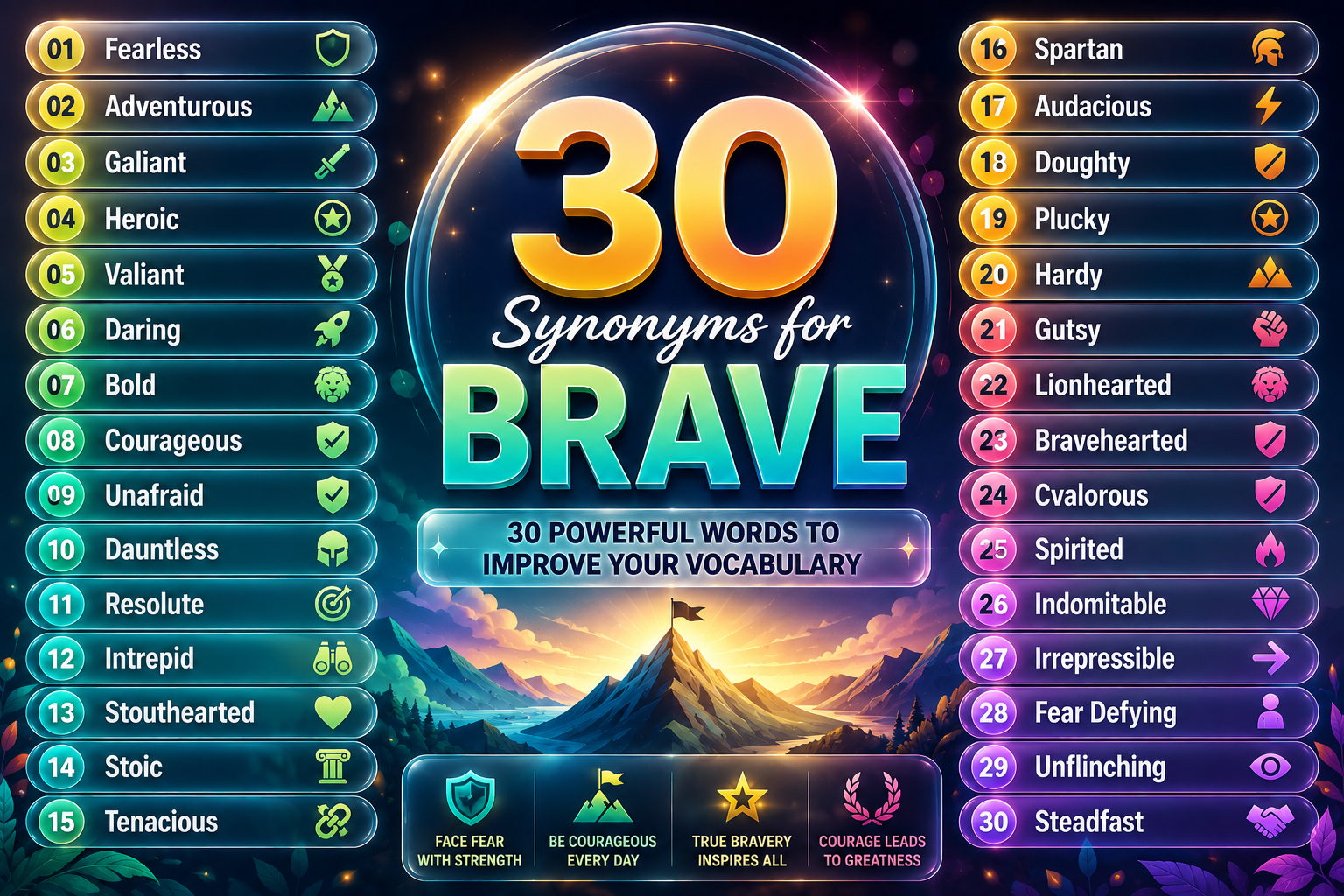
Brave means not being afraid to do something hard or scary. For example, a child may feel scared to go to the doctor but still goes inside and stays calm. We can say the child is brave. We use brave when someone faces fear, danger, or a hard task. Learning Synonyms for Brave can help English learners learn more words and make their writing clear and less repetitive.In this article, we will learn the meaning of brave, its history, word type, pronunciation, and word forms. We will also learn 30 Synonyms for Brave with simple meanings and easy examples. These words will help you choose the right word when you speak or write.
Meaning of Brave
Definition
Brave (Adjective): Not afraid to face something hard, scary, or dangerous.
In easy words, brave means doing something even when you feel afraid.
Examples
- The brave girl helped her friend.
- He was brave during the storm.
Connotative Meaning
- Positive tone: Brave has a very good meaning. It can show strength, courage, and confidence.
- Negative tone: Brave is usually not negative. But someone may call a risky action brave even when it was not wise.
- Neutral tone: The word can be neutral when we simply say that someone faced fear.
Etymology
- Source: Brave came into English through French.
- French: It is linked to the Old French word brave.
- Old meaning: It was linked to being bold, strong, or fine.
- Over time, the word became linked more closely with courage.
Short History of Brave
- Old English (450–1100): The modern word brave was not common in Old English. English had other words for being bold and strong.
- Middle English (1100–1500): Brave came into English through French. It was used for bold or fine people and things.
- Modern English (1500–Present): Brave became a common word for a person who faces fear or danger with courage.
- Learn about https://synonymspot.com/synonyms-for-walk/
Pronunciation (US & UK – IPA)
US: /breɪv/ UK: /breɪv/
Syllables
brave
Affixation Pattern of Brave
Root: brave Prefix: None Suffix: None
Brave is a basic word. It does not have a prefix or suffix in its basic form.
Word Formation of Brave
- Brave — adjective: not afraid.
- Bravely — adverb: in a brave way.
- Bravery — noun: the quality of being brave.
- Brave — verb: to face something hard or dangerous.
- Braved — verb: faced something hard or dangerous.
- Braving — verb: facing something hard or dangerous.
Synonyms of Brave
1. Courageous (Adjective)
US: /kəˈreɪdʒəs/ | UK: /kəˈreɪdʒəs/
Meaning: Brave when facing fear or danger.
Examples:
- The courageous boy helped the man.
- She was courageous during the storm.
2. Bold (Adjective)
US: /boʊld/ | UK: /bəʊld/
Meaning: Not afraid to take action.
Examples:
- She made a bold choice.
- He was bold enough to speak first.
3. Fearless (Adjective)
US: /ˈfɪrləs/ | UK: /ˈfɪələs/
Meaning: Not afraid.
Examples:
- The fearless girl entered the room.
- He looked fearless during the game.
4. Daring (Adjective)
US: /ˈderɪŋ/ | UK: /ˈdeərɪŋ/
Meaning: Willing to do something risky or hard.
Examples:
- The boy made a daring move.
- It was a daring rescue.
5. Valiant (Adjective)
US: /ˈvæliənt/ | UK: /ˈvæliənt/
Meaning: Very brave, especially in a hard fight or task.
Examples:
- The valiant soldier helped others.
- She made a valiant effort.
6. Heroic (Adjective)
US: /hɪˈroʊɪk/ | UK: /hɪˈrəʊɪk/
Meaning: Very brave like a hero.
Examples:
- He made a heroic effort.
- Her heroic act saved a child.
7. Gallant (Adjective)
US: /ˈɡælənt/ | UK: /ˈɡælənt/
Meaning: Brave and kind.
Examples:
- The gallant man helped the child.
- He made a gallant effort.
8. Adventurous (Adjective)
US: /ədˈventʃərəs/ | UK: /ədˈventʃərəs/
Meaning: Ready to try new or exciting things.
Examples:
- She is adventurous and likes new places.
- He has an adventurous spirit.
9. Fearless (Adjective)
US: /ˈfɪrləs/ | UK: /ˈfɪələs/
Meaning: Showing no fear.
Examples:
- The fearless player kept going.
- She was fearless in the race.
10. Stouthearted (Adjective)
US: /ˌstaʊtˈhɑːrtɪd/ | UK: /ˌstaʊtˈhɑːtɪd/
Meaning: Strong and brave.
Examples:
- The stouthearted man did not give up.
- She was stouthearted in a hard time.
11. Intrepid (Adjective)
US: /ɪnˈtrepɪd/ | UK: /ɪnˈtrepɪd/
Meaning: Very brave and ready for danger.
Examples:
- The intrepid explorer went into the forest.
- The intrepid team kept moving.
12. Audacious (Adjective)
US: /ɔːˈdeɪʃəs/ | UK: /ɔːˈdeɪʃəs/
Meaning: Very bold and brave.
Examples:
- He made an audacious choice.
- She had an audacious plan.
13. Plucky (Adjective)
US: /ˈplʌki/ | UK: /ˈplʌki/
Meaning: Brave even when small or weak.
Examples:
- The plucky child kept trying.
- She was a plucky little girl.
14. Resolute (Adjective)
US: /ˈrezəluːt/ | UK: /ˈrezəluːt/
Meaning: Strong and ready to keep going.
Examples:
- He stayed resolute during the hard time.
- She was resolute and did not quit.
15. Strong (Adjective)
US: /strɔːŋ/ | UK: /strɒŋ/
Meaning: Having power or courage.
Examples:
- She stayed strong during the problem.
- He is strong and brave.
16. Confident (Adjective)
US: /ˈkɑːnfɪdənt/ | UK: /ˈkɒnfɪdənt/
Meaning: Feeling sure that you can do something.
Examples:
- She felt confident before the test.
- He was confident enough to speak.
17. Fear-Resistant (Adjective)
US: /fɪr rɪˈzɪstənt/ | UK: /fɪə rɪˈzɪstənt/
Meaning: Able to stay calm when afraid.
Examples:
- The fear-resistant player stayed calm.
- He was fear-resistant during the hard task.
18. Unafraid (Adjective)
US: /ˌʌnəˈfreɪd/ | UK: /ˌʌnəˈfreɪd/
Meaning: Not scared.
Examples:
- She was unafraid to ask a question.
- He was unafraid of the dark.
19. Adventurous (Adjective)
US: /ədˈventʃərəs/ | UK: /ədˈventʃərəs/
Meaning: Happy to try new and exciting things.
Examples:
- The adventurous boy climbed the hill.
- She likes adventurous trips.
20. Daring (Adjective)
US: /ˈderɪŋ/ | UK: /ˈdeərɪŋ/
Meaning: Brave enough to take a risk.
Examples:
- He made a daring jump.
- It was a daring plan.
21. Boldhearted (Adjective)
US: /ˈboʊldˌhɑːrtɪd/ | UK: /ˈbəʊldˌhɑːtɪd/
Meaning: Having a brave heart.
Examples:
- The boldhearted girl spoke up.
- He was boldhearted and strong.
22. Hardy (Adjective)
US: /ˈhɑːrdi/ | UK: /ˈhɑːdi/
Meaning: Strong and able to deal with hard things.
Examples:
- The hardy man worked in the cold.
- These hardy workers did not give up.
23. Stalwart (Adjective)
US: /ˈstɔːlwərt/ | UK: /ˈstɔːlwət/
Meaning: Strong, loyal, and brave.
Examples:
- He was a stalwart friend.
- The stalwart worker stayed to help.
24. Heroic (Adjective)
US: /hɪˈroʊɪk/ | UK: /hɪˈrəʊɪk/
Meaning: Showing great courage.
Examples:
- She made a heroic choice.
- His heroic act helped many people.
25. Unflinching (Adjective)
US: /ʌnˈflɪntʃɪŋ/ | UK: /ʌnˈflɪntʃɪŋ/
Meaning: Staying strong without showing fear.
Examples:
- He gave an unflinching answer.
- She stayed unflinching during the hard time.
26. Dauntless (Adjective)
US: /ˈdɔːntləs/ | UK: /ˈdɔːntləs/
Meaning: Very brave and not easily scared.
Examples:
- The dauntless team kept going.
- She was dauntless in the face of danger.
27. Lionhearted (Adjective)
US: /ˈlaɪənˌhɑːrtɪd/ | UK: /ˈlaɪənˌhɑːtɪd/
Meaning: Very brave.
Examples:
- The lionhearted hero helped the people.
- She was lionhearted and strong.
28. Spirited (Adjective)
US: /ˈspɪrɪtɪd/ | UK: /ˈspɪrɪtɪd/
Meaning: Full of energy and courage.
Examples:
- The spirited girl tried again.
- He gave a spirited answer.
29. Game (Adjective)
US: /ɡeɪm/ | UK: /ɡeɪm/
Meaning: Ready and brave enough to do something hard.
Examples:
- Are you game for a new challenge?
- She was game to try again.
30. Courageous (Adjective)
US: /kəˈreɪdʒəs/ | UK: /kəˈreɪdʒəs/
Meaning: Very brave when facing fear.
Examples:
- The courageous child helped his friend.
- She was courageous during the storm.
Prototype Meaning
The main meaning of brave is doing something even when you are afraid. When people hear the word brave, they often think of a person who faces danger, fear, or a hard task. A brave person may feel scared, but they do not let fear stop them. For example, a child may be afraid to speak in front of a class but still stand up and speak. That child is being brave.
Prototype Categorization
- Basic brave words: courageous, bold, fearless, unafraid — use these for people who face fear.
- Very brave: valiant, heroic, dauntless, intrepid, lionhearted — use these for very strong acts of courage.
- Ready to take risks: daring, audacious, adventurous, game — use these when someone is ready to try something risky or new.
- Strong in hard times: resolute, stouthearted, stalwart, hardy — use these when someone stays strong during a hard time.
- Brave and full of energy: plucky, spirited, boldhearted — use these when someone keeps trying with courage.
- Calm and strong: unflinching, fearless, confident — use these when someone does not let fear stop them.
Antonyms of Brave
Afraid (Adjective)
Meaning: Feeling fear.
- The child was afraid of the dark.
Scared (Adjective)
Meaning: Feeling fear or worry.
- She was scared during the storm.
Fearful (Adjective)
Meaning: Full of fear.
- He felt fearful in the dark room.
Cowardly (Adjective)
Meaning: Not brave.
- His cowardly act hurt his team.
Timid (Adjective)
Meaning: Shy and easily afraid.
- The timid child did not speak.
Nervous (Adjective)
Meaning: Worried or afraid about something.
- I felt nervous before the test.
Short Questions and Answers
What does brave mean?
- Brave means not letting fear stop you.
- A brave person can face hard or scary things.
When should brave be used?
- Use brave when someone faces fear, danger, or a hard task.
- Example: The brave boy helped his friend.
Is brave positive or negative?
- Brave is usually a positive word.
- It shows courage and strength.
How is brave different from similar words?
- Brave means facing fear.
- Bold means ready to take action.
- Fearless means not showing fear.
- Courageous means very brave.
- Daring means ready to take a risk.
- Heroic means very brave like a hero.
Is brave an adjective or a verb?
- Brave is mainly an adjective.
- Example: She is brave.
- It can also be a verb.
- Example: He braved the storm.
What is the noun form of brave?
- The noun form is bravery.
- It means the quality of being brave.
- Example: Her bravery helped others.
Which Word Is the Adverb Form of Brave?
- The adverb is bravely.
- It means in a brave way.
- Example: She bravely faced the problem.
What is the opposite of brave?
- Common opposites are afraid, scared, fearful, cowardly, timid, and nervous.
Why should English learners learn synonyms for brave?
- They help you learn more words.
- They help you avoid using brave too many times.
- They can make your writing better.
Can brave be used for children?
- Yes.
- Example: The brave child helped her friend.
Can brave be used for animals?
- Yes.
- Example: The brave dog protected the boy.
Conclusion
Synonyms for Brave can help you improve your English. Brave means facing fear and doing something hard even when you feel scared. Words like courageous, bold, fearless, daring, heroic, unafraid, and valiant can help you talk about courage in different ways. Synonyms for Brave can make your writing clearer and more interesting. They can also help you avoid using the same word many times.Learning Synonyms for Brave can make speaking and writing easier. You do not need to learn all 30 words in one day. Start with two or three words, learn their meanings, and write short sentences. Use these words in daily English. With practice, your vocabulary will grow, and you will feel more confident.

I’m Zahid Abbas, an educator, researcher, and digital publishing strategist with a passion for linguistics, grammar, and clear communication. As a content creator and SEO specialist, I craft research-driven, reader-focused content that empowers learners and makes knowledge accessible worldwide.