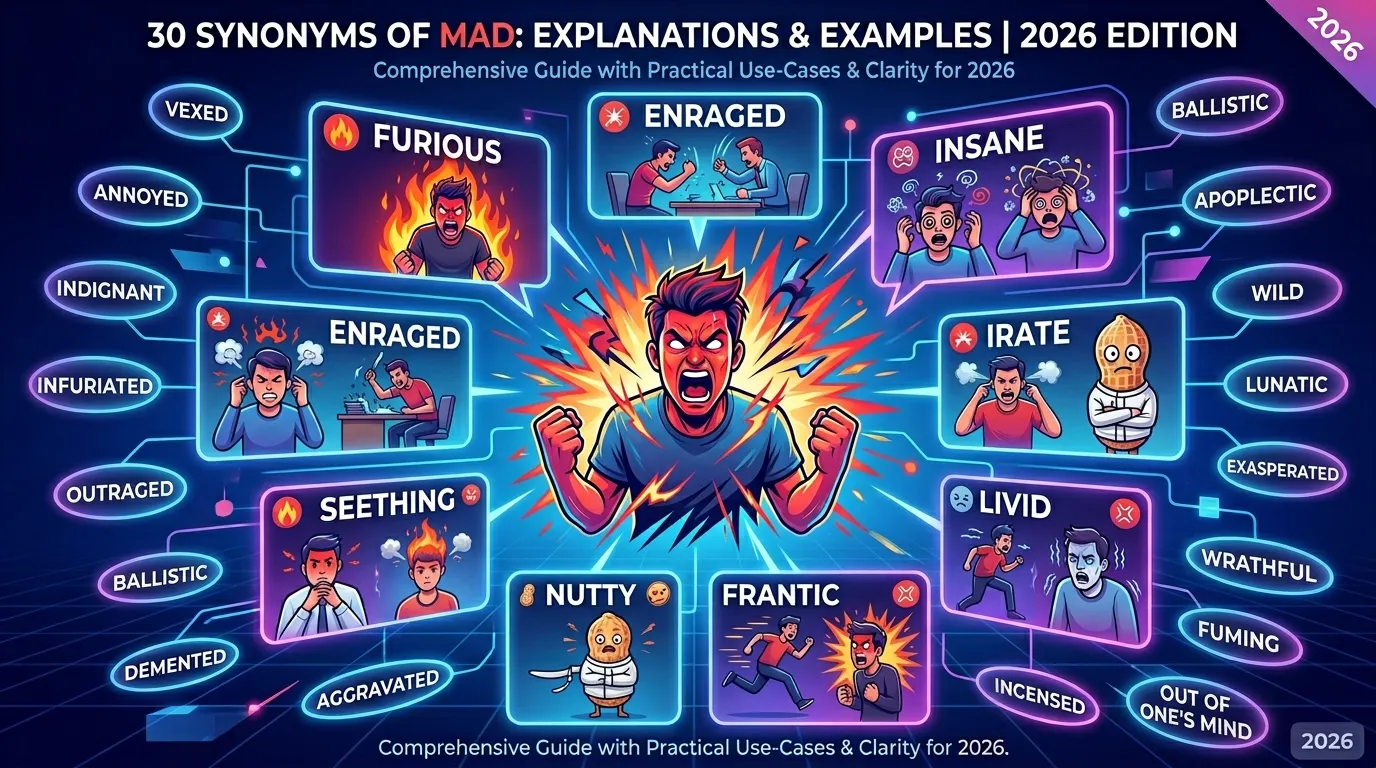
The word mad is commonly used to describe strong anger, frustration, or emotional excitement. Imagine waiting in traffic for hours while running late for an important meeting. You may feel mad because of the delay. In another situation, someone may say they are “mad about music,” meaning they love it very much.
People use this word often in daily conversations, movies, books, and social media because it expresses strong feelings clearly and quickly. However, repeating the same word again and again can make speaking and writing sound dull.
Learning synonyms of mad helps English learners improve vocabulary and communicate emotions more accurately. It also helps writers choose the right tone for stories, essays, and conversations. In this article, you will learn the meaning of mad, its pronunciation, history, grammar, and 30 useful synonyms with examples and semantic categories.
Meaning of Mad
Definition
Mad (adjective): feeling very angry, upset, emotionally excited, or mentally disturbed.
Examples
- She became mad after hearing the bad news.
- He was mad about football as a child.
Connotative Meaning
- Positive tone: passionate, excited, enthusiastic
- Negative tone: angry, aggressive, mentally unstable
- Neutral tone: emotionally intense
Etymology
- From Old English gemǣdde meaning “insane” or “out of mind”
- Related to old Germanic language roots connected with confusion or strong emotion
Short History:
- Old English (450–1100): used mainly to mean insane or mentally disturbed
- Middle English (1100–1500): expanded to include anger and uncontrolled emotion
- Modern English (1500–Present): widely used for anger, excitement, and enthusiasm
Pronunciation (US & UK – IPA)
- US: /mæd/
- UK: /mæd/
Syllables
- mad
Affixation Pattern of Mad
- Root: mad
- Prefix: none
- Suffix: none
Word Formation:
- mad (adjective)
- madly (adverb)
- madness (noun)
- maddening (adjective/verb)
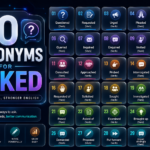
30 Synonyms of Mad
1. Angry (adjective)
US: /ˈæŋɡri/ | UK: /ˈæŋɡri/
Meaning: feeling strong displeasure
Examples:
- She felt angry after the argument.
- He sounded angry on the phone.
2. Furious (adjective)
US: /ˈfjʊriəs/ | UK: /ˈfjʊəriəs/
Meaning: extremely angry
Examples:
- The coach became furious.
- She gave him a furious look.
3. Irritated (adjective)
US: /ˈɪrɪteɪtɪd/ | UK: /ˈɪrɪteɪtɪd/
Meaning: slightly angry or annoyed
Examples:
- He felt irritated by the noise.
- She sounded irritated during class.
4. Annoyed (adjective)
US: /əˈnɔɪd/ | UK: /əˈnɔɪd/
Meaning: mildly angry
Examples:
- I was annoyed by the delay.
- She looked annoyed.
5. Enraged (adjective)
US: /ɪnˈreɪdʒd/ | UK: /ɪnˈreɪdʒd/
Meaning: filled with intense anger
Examples:
- The customer became enraged.
- He felt enraged after the insult.
6. Upset (adjective)
US: /ʌpˈsɛt/ | UK: /ʌpˈset/
Meaning: emotionally disturbed or unhappy
Examples:
- She felt upset after the meeting.
- He looked deeply upset.
7. Cross (adjective)
US: /krɔːs/ | UK: /krɒs/
Meaning: slightly angry
Examples:
- Mom sounded cross today.
- He became cross with his friend.
8. Agitated (adjective)
US: /ˈædʒəteɪtɪd/ | UK: /ˈædʒɪteɪtɪd/
Meaning: nervous and angry
Examples:
- She appeared agitated.
- He became agitated during discussion.
9. Frustrated (adjective)
US: /ˈfrʌstreɪtɪd/ | UK: /frʌˈstreɪtɪd/
Meaning: upset because something failed
Examples:
- Students felt frustrated.
- He grew frustrated with the task.
10. Resentful (adjective)
US: /rɪˈzɛntfəl/ | UK: /rɪˈzentfəl/
Meaning: angry because of unfair treatment
Examples:
- She became resentful.
- He felt resentful toward his boss.
11. Bitter (adjective)
US: /ˈbɪtər/ | UK: /ˈbɪtə/
Meaning: angry and unhappy for a long time
Examples:
- He remained bitter after losing.
- She sounded bitter in the interview.
12. Outraged (adjective)
US: /ˈaʊtreɪdʒd/ | UK: /ˈaʊtreɪdʒd/
Meaning: shocked and angry
Examples:
- Citizens were outraged.
- She felt outraged by the decision.
13. Offended (adjective)
US: /əˈfɛndɪd/ | UK: /əˈfendɪd/
Meaning: hurt or angry because of disrespect
Examples:
- He felt offended by the joke.
- She looked offended.
14. Temperamental (adjective)
US: /ˌtɛmpərəˈmɛntl/ | UK: /ˌtempərəˈmentl/
Meaning: easily becoming angry
Examples:
- The actor was temperamental.
- She has a temperamental personality.
15. Hostile (adjective)
US: /ˈhɑːstaɪl/ | UK: /ˈhɒstaɪl/
Meaning: showing strong anger or opposition
Examples:
- The crowd became hostile.
- He gave a hostile reply.
16. Aggressive (adjective)
US: /əˈɡrɛsɪv/ | UK: /əˈɡresɪv/
Meaning: ready to attack or argue
Examples:
- The player became aggressive.
- She used an aggressive tone.
17. Heated (adjective)
US: /ˈhiːtɪd/ | UK: /ˈhiːtɪd/
Meaning: full of anger or emotion
Examples:
- They had a heated debate.
- The discussion became heated.
18. Wrathful (adjective)
US: /ˈræθfəl/ | UK: /ˈrɒθfəl/
Meaning: full of extreme anger
Examples:
- He gave a wrathful stare.
- She sounded wrathful.
19. Madcap (adjective)
US: /ˈmædkæp/ | UK: /ˈmædkæp/
Meaning: wildly playful or reckless
Examples:
- They planned a madcap adventure.
- His ideas seemed madcap.
20. Crazy (adjective)
US: /ˈkreɪzi/ | UK: /ˈkreɪzi/
Meaning: mentally unstable or wildly excited
Examples:
- He went crazy with excitement.
- She sounded crazy with anger.
21. Insane (adjective)
US: /ɪnˈseɪn/ | UK: /ɪnˈseɪn/
Meaning: mentally unstable or irrational
Examples:
- The idea sounded insane.
- He acted insane during the fight.
22. Wild (adjective)
US: /waɪld/ | UK: /waɪld/
Meaning: uncontrolled or intense
Examples:
- The crowd went wild.
- He became wild with anger.
23. Livid (adjective)
US: /ˈlɪvɪd/ | UK: /ˈlɪvɪd/
Meaning: extremely angry
Examples:
- She was absolutely livid.
- He looked livid after the mistake.
24. Fuming (adjective)
US: /ˈfjuːmɪŋ/ | UK: /ˈfjuːmɪŋ/
Meaning: showing strong anger
Examples:
- Dad came home fuming.
- She was fuming after the call.
25. Irate (adjective)
US: /aɪˈreɪt/ | UK: /aɪˈreɪt/
Meaning: very angry
Examples:
- The customer became irate.
- He sent an irate email.
26. Sore (adjective)
US: /sɔːr/ | UK: /sɔː/
Meaning: upset or angry
Examples:
- She felt sore about losing.
- He remained sore for days.
27. Raging (adjective)
US: /ˈreɪdʒɪŋ/ | UK: /ˈreɪdʒɪŋ/
Meaning: showing violent anger
Examples:
- He was raging after the game.
- A raging argument began.
28. Infuriated (adjective)
US: /ɪnˈfjʊrieɪtɪd/ | UK: /ɪnˈfjʊərieɪtɪd/
Meaning: made extremely angry
Examples:
- She felt infuriated by the lie.
- He looked infuriated.
29. Passionate (adjective)
US: /ˈpæʃənət/ | UK: /ˈpæʃənət/
Meaning: showing strong feelings or enthusiasm
Examples:
- She is passionate about art.
- He gave a passionate speech.
30. Obsessed (adjective)
US: /əbˈsɛst/ | UK: /əbˈsest/
Meaning: thinking too much about something
Examples:
- He is obsessed with cars.
- She became obsessed with music.
Prototype Meaning
The most common meaning of mad is feeling angry because of something upsetting or unfair. People usually imagine someone shouting, arguing, or reacting emotionally after becoming frustrated.
Prototype Categorization
- Mild anger: annoyed, irritated, cross
- Strong anger: furious, enraged, livid
- Emotional frustration: upset, frustrated, bitter
- Mental instability or excitement: out of control, insane, wild
Antonyms of Mad
- Calm (adjective): peaceful and relaxed
- Happy (adjective): feeling pleasure or joy
- Peaceful (adjective): free from anger or stress
- Satisfied (adjective): pleased with something
- Gentle (adjective): kind and not aggressive
Short Questions and Answers
What does mad mean?
- It means feeling angry, upset, emotionally excited, or mentally disturbed.
When should mad be used?
- Use it when describing strong emotions such as anger, frustration, or excitement.
Is mad positive or negative?
- It can be both positive and negative depending on context.
How is it different from similar words?
- “Mad” can describe anger or excitement, while words like “furious” mainly describe strong anger.
Conclusion
Learning synonyms of mad and synonyms of mad improves vocabulary and emotional expression. It helps English learners describe different levels of anger, excitement, frustration, and passion more clearly. Using varied synonyms also avoids repetition and makes speaking and writing more natural and engaging. These words are useful in conversations, storytelling, essays, and professional communication. They help writers express emotions with greater precision and stronger tone. Practice learning and using new words every day. Small daily vocabulary habits can greatly improve your English confidence, fluency, and communication skills over time.

I’m Zahid Abbas, an educator, researcher, and digital publishing strategist with a passion for linguistics, grammar, and clear communication. As a content creator and SEO specialist, I craft research-driven, reader-focused content that empowers learners and makes knowledge accessible worldwide.