The word highlight means to make something important, noticeable, or easy to see. Imagine a student using a yellow marker on important lines in a book before an exam. The student highlights the key points to remember them better. People also use the word when talking about the best part of an event, movie, speech, or sports game.
The word highlight is common in education, business, media, writing, and everyday conversations. Learning synonyms of highlight helps English learners improve vocabulary and express ideas more clearly. It also helps content writers avoid repetition and create stronger writing. In this article, you will learn the meaning of highlight, its pronunciation, history, grammar, and 30 useful synonyms with meanings and examples. You will also explore categories, antonyms, and short questions to improve your English communication skills.
Meaning of Highlight
Definition
Highlight (verb/noun): to make something important, noticeable, or easy to see.
Examples
- The teacher asked students to highlight important sentences.
- The final goal was the highlight of the match.
Connotative Meaning
- Positive tone: importance, success, attention, excellence
- Negative tone: too much focus, exaggeration
- Neutral tone: drawing attention to something
Etymology
- From the words “high” and “light”
- Originally connected to bright areas in paintings and art
- Later used for important moments or emphasis
Short History:
- Old English (450–1100): words related to “light” meant brightness
- Middle English (1100–1500): artistic uses of light became common
- Modern English (1500–Present): “highlight” developed meanings related to emphasis and importance
Pronunciation (US & UK – IPA)
- US: /ˈhaɪˌlaɪt/
- UK: /ˈhaɪlaɪt/
Syllables
- high-light
Affixation Pattern of Highlight
- Root: light
- Prefix: high-
- Suffix: none
Word Formation:
- highlight (noun)
- highlight (verb)
- highlighted (adjective/verb)
- highlighting (noun/verb)
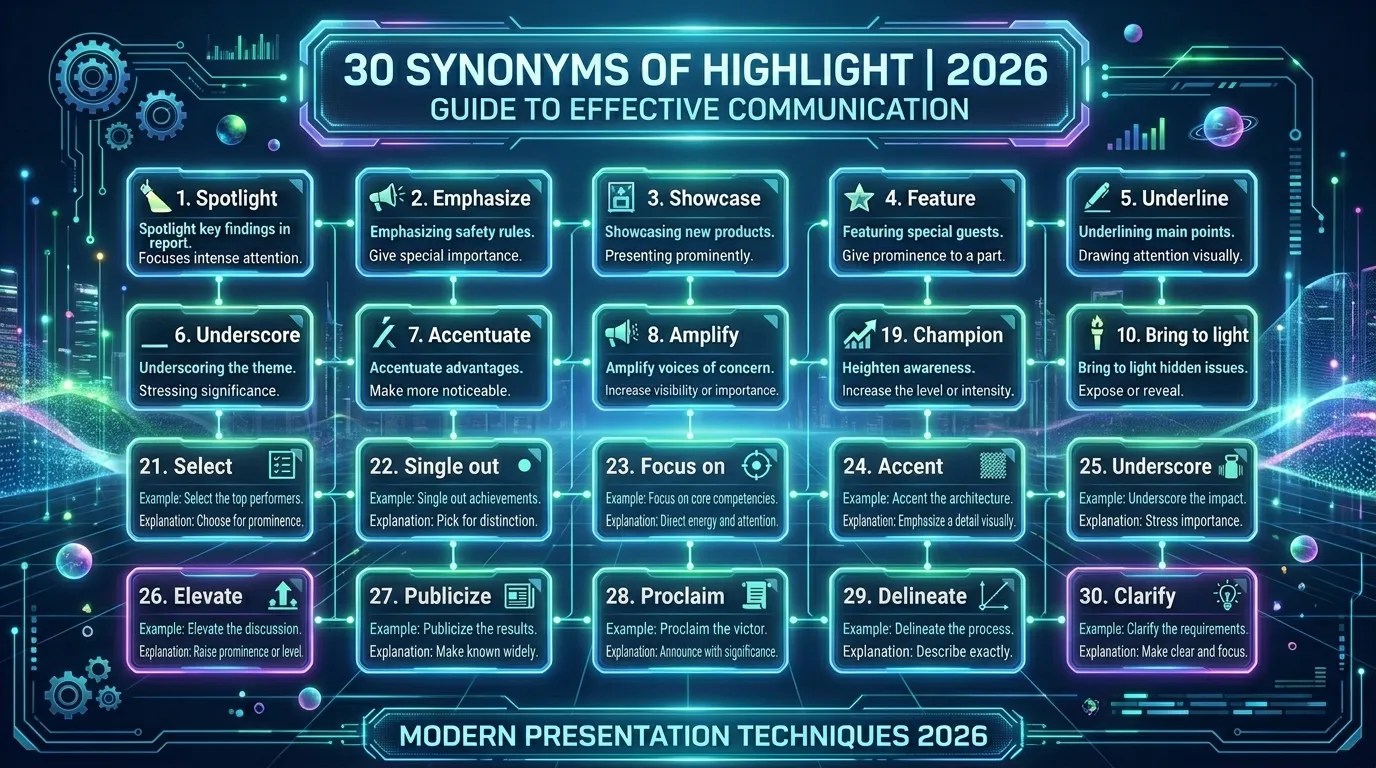
30 Synonyms of Highlight
1. Emphasize (verb)
US: /ˈɛmfəˌsaɪz/ | UK: /ˈemfəsaɪz/
Meaning: to give special importance to something
Examples:
- The speaker emphasized safety rules.
- Teachers often emphasize grammar.
2. Stress (verb)
US: /strɛs/ | UK: /stres/
Meaning: to strongly point out something important
Examples:
- She stressed the need for practice.
- The report stressed teamwork.
3. Underline (verb)
US: /ˌʌndərˈlaɪn/ | UK: /ˌʌndəˈlaɪn/
Meaning: to show importance clearly
Examples:
- The article underlined the risks.
- He underlined key words.
4. Spotlight (verb/noun)
US: /ˈspɑːtlaɪt/ | UK: /ˈspɒtlaɪt/
Meaning: to focus attention on something
Examples:
- The news spotlighted the issue.
- Her speech was in the spotlight.
5. Feature (verb)
US: /ˈfiːtʃər/ | UK: /ˈfiːtʃə/
Meaning: to present something important
Examples:
- The magazine featured the artist.
- The show features young talent.
6. Showcase (verb/noun)
US: /ˈʃoʊkeɪs/ | UK: /ˈʃəʊkeɪs/
Meaning: to display something proudly
Examples:
- The event showcased local culture.
- The museum is a showcase of art.
7. Accentuate (verb)
US: /ækˈsɛntʃuˌeɪt/ | UK: /əkˈsentʃueɪt/
Meaning: to make something more noticeable
Examples:
- The design accentuates beauty.
- Good lighting accentuated the colors.
8. Point Out (verb)
US: /pɔɪnt aʊt/ | UK: /pɔɪnt aʊt/
Meaning: to direct attention to something
Examples:
- She pointed out the mistake.
- He pointed out the main idea.
9. Illuminate (verb)
US: /ɪˈluːməˌneɪt/ | UK: /ɪˈluːmɪneɪt/
Meaning: to make clear or brighten
Examples:
- The example illuminated the topic.
- Lights illuminated the stage.
10. Focus On (verb)
US: /ˈfoʊkəs ɑːn/ | UK: /ˈfəʊkəs ɒn/
Meaning: to pay special attention to something
Examples:
- Students should focus on vocabulary.
- The film focused on friendship.
11. Draw Attention To (verb)
US: /drɔː əˈtɛnʃən tuː/ | UK: /drɔː əˈtenʃən tuː/
Meaning: to make people notice something
Examples:
- The article drew attention to pollution.
- She drew attention to the problem.
12. Mark (verb)
US: /mɑːrk/ | UK: /mɑːk/
Meaning: to indicate or identify clearly
Examples:
- He marked important pages.
- The map marked safe areas.
13. Note (verb)
US: /noʊt/ | UK: /nəʊt/
Meaning: to notice or mention something important
Examples:
- Please note the deadline.
- She noted the changes carefully.
14. Bring Out (verb)
US: /brɪŋ aʊt/ | UK: /brɪŋ aʊt/
Meaning: to make qualities noticeable
Examples:
- The color brings out her eyes.
- Practice brought out his talent.
15. Call Attention To (verb)
US: /kɔːl əˈtɛnʃən tuː/ | UK: /kɔːl əˈtenʃən tuː/
Meaning: to make people notice something
Examples:
- The teacher called attention to spelling.
- The report called attention to poverty.
16. Promote (verb)
US: /prəˈmoʊt/ | UK: /prəˈməʊt/
Meaning: to support or advertise something
Examples:
- The campaign promoted healthy habits.
- Schools promote reading.
17. Advertise (verb)
US: /ˈædvərˌtaɪz/ | UK: /ˈædvətaɪz/
Meaning: to publicly show or announce
Examples:
- The company advertised its product.
- Posters advertised the concert.
18. Reveal (verb)
US: /rɪˈviːl/ | UK: /rɪˈviːl/
Meaning: to make something known
Examples:
- The report revealed the truth.
- He revealed his plans.
19. Display (verb)
US: /dɪˈspleɪ/ | UK: /dɪˈspleɪ/
Meaning: to show something clearly
Examples:
- The gallery displayed paintings.
- She displayed confidence.
20. Expose (verb)
US: /ɪkˈspoʊz/ | UK: /ɪkˈspəʊz/
Meaning: to make visible or known
Examples:
- The article exposed corruption.
- Sunlight exposed the colors.
21. Spotlighting (noun)
US: /ˈspɑːtˌlaɪtɪŋ/ | UK: /ˈspɒtlaɪtɪŋ/
Meaning: the act of giving attention
Examples:
- The documentary used spotlighting effectively.
- Media spotlighting increased awareness.
22. Showcase Event (noun)
US: /ˈʃoʊkeɪs ɪˈvɛnt/ | UK: /ˈʃəʊkeɪs ɪˈvent/
Meaning: an event displaying the best things
Examples:
- The fair was a showcase event.
- Schools held a showcase event.
23. Stressing (noun/verb)
US: /ˈstrɛsɪŋ/ | UK: /ˈstresɪŋ/
Meaning: giving strong importance
Examples:
- The teacher kept stressing discipline.
- Stressing safety is necessary.
24. Enhancement (noun)
US: /ɪnˈhænsmənt/ | UK: /ɪnˈhɑːnsmənt/
Meaning: improvement or emphasis
Examples:
- The lights added enhancement.
- Color creates visual enhancement.
25. Brighten (verb)
US: /ˈbraɪtn/ | UK: /ˈbraɪtn/
Meaning: to make something brighter or happier
Examples:
- Flowers brightened the room.
- Her smile brightened the day.
26. Clarify (verb)
US: /ˈklærəˌfaɪ/ | UK: /ˈklærɪfaɪ/
Meaning: to make something easier to understand
Examples:
- The teacher clarified the lesson.
- He clarified the rules.
27. Signify (verb)
US: /ˈsɪɡnəˌfaɪ/ | UK: /ˈsɪɡnɪfaɪ/
Meaning: to show meaning or importance
Examples:
- The symbol signifies peace.
- Red lights signify danger.
28. Spotlighted (adjective/verb)
US: /ˈspɑːtlaɪtɪd/ | UK: /ˈspɒtlaɪtɪd/
Meaning: given special attention
Examples:
- Young athletes were spotlighted.
- The issue was spotlighted online.
29. Mention (verb)
US: /ˈmɛnʃən/ | UK: /ˈmenʃən/
Meaning: to talk about briefly
Examples:
- She mentioned the meeting.
- He mentioned the new policy.
30. Celebrate (verb)
US: /ˈsɛləˌbreɪt/ | UK: /ˈseləbreɪt/
Meaning: to honor or praise something important
Examples:
- Schools celebrate achievement.
- The city celebrated its history.
Prototype Meaning
The most common meaning of highlight is making something stand out as important or special. People usually imagine bright marker pens, important ideas in books, or memorable moments in sports and events.
Prototype Categorization
- Attention and focus: emphasize, stress, underline
- Display and presentation: showcase, display, feature
- Communication and explanation: clarify, point out, note
- Celebration and praise: celebrate, promote, spotlight
Antonyms of Highlight
Antonyms
- Hide (verb): to keep out of sight
- Ignore (verb): to pay no attention to
- Conceal (verb): to keep secret
- Downplay (verb): to reduce importance
- Overlook (verb): to fail to notice
Short Questions and Answers
What does highlight mean?
- It means to make something important or noticeable.
When should highlight be used?
- Use it when discussing important ideas, events, or details.
Is highlight positive or negative?
- It is usually positive because it focuses attention on value or importance.
How is it different from similar words?
- “Highlight” means making something stand out, while “mention” may only refer to talking about it briefly.
Conclusion
Learning synonyms of highlight and synonyms of highlight improves vocabulary and communication skills. It helps English learners express ideas more clearly in speaking and writing. Using different synonyms also avoids repetition and creates stronger and more natural sentences. These words are useful in education, business, media, storytelling, and daily conversation. They help writers explain importance, focus attention, and describe memorable moments more effectively. Daily vocabulary practice builds confidence and improves English fluency over time. The more words you learn, the easier it becomes to communicate ideas clearly and profession.

I’m Zahid Abbas, an educator, researcher, and digital publishing strategist with a passion for linguistics, grammar, and clear communication. As a content creator and SEO specialist, I craft research-driven, reader-focused content that empowers learners and makes knowledge accessible worldwide.