The word loud means making a strong sound that is easy to hear. Imagine standing near a concert speaker or hearing thunder during a storm. The sound feels powerful and loud. People use this word every day to describe voices, music, noises, colors, and even personalities.
Because the word is common, writers and speakers often need better alternatives to avoid repetition. Learning synonyms of loud helps English learners improve vocabulary and express ideas more clearly. It also helps content writers create stronger and more natural sentences. In this article, you will learn the meaning of loud, its pronunciation, history, grammar, and 30 useful synonyms with meanings and examples. You will also explore semantic categories, antonyms, and common questions to improve your English communication skills.
Meaning of Loud
Definition
Loud (adjective): making a strong, high, or easily heard sound.
Examples
- The music was very loud.
- He spoke in a loud voice.
Connotative Meaning
- Positive tone: energetic, exciting, powerful
- Negative tone: noisy, disturbing, harsh
- Neutral tone: high in sound level
Etymology
- From Old English hlūd meaning “audible” or “making much noise”
- Related to Germanic language roots connected with sound and hearing
Short History:
- Old English (450–1100): used for strong and clear sounds
- Middle English (1100–1500): spelling changed to “loud”
- Modern English (1500–Present): widely used for sound, style, and personality
Pronunciation (US & UK – IPA)
- US: /laʊd/
- UK: /laʊd/
Syllables
- loud
Affixation Pattern of Loud
- Root: loud
- Prefix: none
- Suffix: none
Word Formation:
- loud (adjective)
- loudly (adverb)
- loudness (noun)
- louder (comparative adjective)
- loudest (superlative adjective)
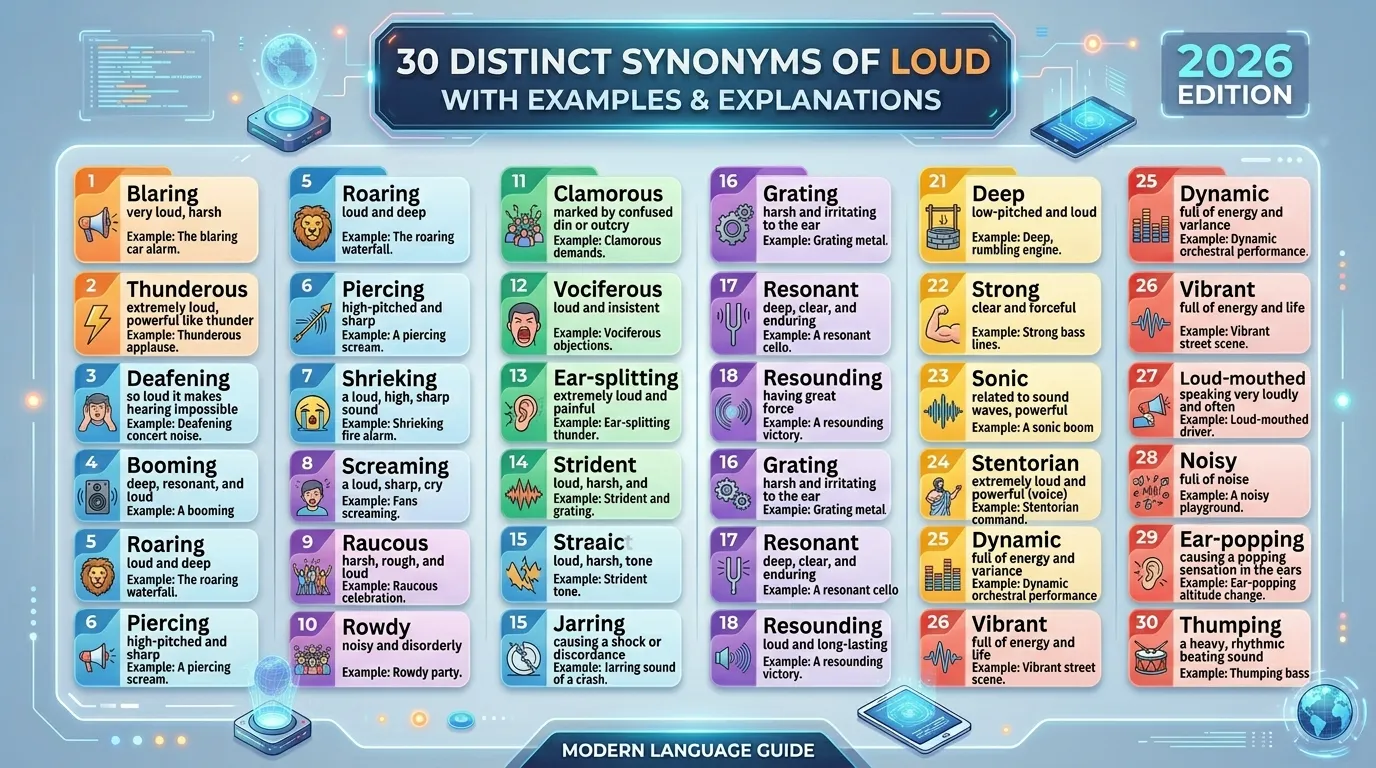
30 Synonyms of Loud
1. Noisy (adjective)
US: /ˈnɔɪzi/ | UK: /ˈnɔɪzi/
Meaning: making a lot of unwanted sound
Examples:
- The classroom became noisy.
- The street is always noisy.
2. Deafening (adjective)
US: /ˈdɛfənɪŋ/ | UK: /ˈdefənɪŋ/
Meaning: extremely loud
Examples:
- The crowd gave a deafening cheer.
- The explosion was deafening.
3. Thunderous (adjective)
US: /ˈθʌndərəs/ | UK: /ˈθʌndərəs/
Meaning: very loud like thunder
Examples:
- The audience gave thunderous applause.
- We heard a thunderous crash.
4. Booming (adjective)
US: /ˈbuːmɪŋ/ | UK: /ˈbuːmɪŋ/
Meaning: deep and powerful in sound
Examples:
- He had a booming voice.
- The speakers sounded booming.
5. Blaring (adjective)
US: /ˈblerɪŋ/ | UK: /ˈbleərɪŋ/
Meaning: loudly unpleasant
Examples:
- The radio was blaring all night.
- We heard blaring sirens.
6. Raucous (adjective)
US: /ˈrɔːkəs/ | UK: /ˈrɔːkəs/
Meaning: rough and noisy
Examples:
- The crowd became raucous.
- They laughed in a raucous way.
7. Ear-Splitting (adjective)
US: /ˈɪr ˌsplɪtɪŋ/ | UK: /ˈɪə ˌsplɪtɪŋ/
Meaning: painfully loud
Examples:
- The alarm was ear-splitting.
- We heard an ear-splitting scream.
8. Shrill (adjective)
US: /ʃrɪl/ | UK: /ʃrɪl/
Meaning: high-pitched and loud
Examples:
- She gave a shrill cry.
- The whistle sounded shrill.
9. Piercing (adjective)
US: /ˈpɪrsɪŋ/ | UK: /ˈpɪəsɪŋ/
Meaning: sharp and very loud
Examples:
- A piercing sound woke me up.
- The baby gave a piercing scream.
10. Vociferous (adjective)
US: /voʊˈsɪfərəs/ | UK: /vəʊˈsɪfərəs/
Meaning: expressing feelings loudly
Examples:
- The fans were vociferous.
- She became vociferous during the debate.
11. Rowdy (adjective)
US: /ˈraʊdi/ | UK: /ˈraʊdi/
Meaning: noisy and disorderly
Examples:
- The party became rowdy.
- The students acted rowdy.
12. Clamorous (adjective)
US: /ˈklæmərəs/ | UK: /ˈklæmərəs/
Meaning: making continuous loud noise
Examples:
- The crowd grew clamorous.
- We heard clamorous shouting.
13. Obstreperous (adjective)
US: /əbˈstrɛpərəs/ | UK: /əbˈstrepərəs/
Meaning: noisily difficult to control
Examples:
- The children became obstreperous.
- The audience was obstreperous.
14. Resonant (adjective)
US: /ˈrɛzənənt/ | UK: /ˈrezənənt/
Meaning: deep, rich, and loud
Examples:
- He had a resonant voice.
- The bell sounded resonant.
15. Powerful (adjective)
US: /ˈpaʊərfəl/ | UK: /ˈpaʊəfəl/
Meaning: strong in sound or effect
Examples:
- She gave a powerful speech.
- The engine sounded powerful.
16. Explosive (adjective)
US: /ɪkˈsploʊsɪv/ | UK: /ɪkˈspləʊsɪv/
Meaning: sudden and very loud
Examples:
- We heard an explosive bang.
- His laughter was explosive.
17. Harsh (adjective)
US: /hɑːrʃ/ | UK: /hɑːʃ/
Meaning: unpleasantly loud or rough
Examples:
- Her voice sounded harsh.
- The machine made a harsh noise.
18. Tumultuous (adjective)
US: /tuːˈmʌltʃuəs/ | UK: /tjuːˈmʌltʃuəs/
Meaning: very noisy and excited
Examples:
- The stadium became tumultuous.
- We heard tumultuous applause.
19. Sonorous (adjective)
US: /ˈsɑːnərəs/ | UK: /ˈsɒnərəs/
Meaning: full, deep, and rich in sound
Examples:
- He spoke in a sonorous voice.
- The singer sounded sonorous.
20. Strident (adjective)
US: /ˈstraɪdənt/ | UK: /ˈstraɪdənt/
Meaning: loud and unpleasant
Examples:
- The advertisement sounded strident.
- She used a strident tone.
21. Uproarious (adjective)
US: /ʌpˈrɔːriəs/ | UK: /ʌpˈrɔːriəs/
Meaning: very noisy with laughter or excitement
Examples:
- The comedy caused uproarious laughter.
- The room became uproarious.
22. Barking (adjective)
US: /ˈbɑːrkɪŋ/ | UK: /ˈbɑːkɪŋ/
Meaning: sharp and loud
Examples:
- He gave barking orders.
- The dog made barking sounds.
23. Yelling (adjective)
US: /ˈjɛlɪŋ/ | UK: /ˈjelɪŋ/
Meaning: speaking very loudly
Examples:
- The coach was yelling loudly.
- We heard a yelling voice.
24. Shouting (adjective)
US: /ˈʃaʊtɪŋ/ | UK: /ˈʃaʊtɪŋ/
Meaning: using a raised voice
Examples:
- The crowd became shouting and excited.
- He used a shouting tone.
25. Blusterous (adjective)
US: /ˈblʌstərəs/ | UK: /ˈblʌstərəs/
Meaning: loud and aggressive
Examples:
- His speech sounded blusterous.
- The speaker became blusterous.
26. Resounding (adjective)
US: /rɪˈzaʊndɪŋ/ | UK: /rɪˈzaʊndɪŋ/
Meaning: echoing loudly
Examples:
- The hall filled with resounding applause.
- We heard a resounding cheer.
27. Full-Volume (adjective)
US: /fʊl ˈvɑːljuːm/ | UK: /fʊl ˈvɒljuːm/
Meaning: played at maximum sound level
Examples:
- The TV was on full-volume mode.
- Music played at full-volume.
28. High-Volume (adjective)
US: /haɪ ˈvɑːljuːm/ | UK: /haɪ ˈvɒljuːm/
Meaning: producing a large amount of sound
Examples:
- The club used high-volume speakers.
- We heard high-volume music.
29. Blatant (adjective)
US: /ˈbleɪtənt/ | UK: /ˈbleɪtənt/
Meaning: unpleasantly loud and obvious
Examples:
- The noise became blatant.
- His style was too blatant.
30. Roaring (adjective)
US: /ˈrɔːrɪŋ/ | UK: /ˈrɔːrɪŋ/
Meaning: making a very strong loud sound
Examples:
- We heard a roaring engine.
- The crowd became roaring with excitement.
Prototype Meaning
The most typical meaning of loud is producing a strong sound that can easily be heard. People usually imagine shouting voices, loud music, thunder, alarms, or cheering crowds when they hear this word.
Prototype Categorization
- Extremely loud sounds: deafening, ear-splitting, thunderous
- Deep powerful sounds: booming, resonant, sonorous
- Harsh unpleasant sounds: blaring, strident, shrill
- Excited noisy groups: rowdy, uproarious, tumultuous
Antonyms of Loud
Antonyms
- Quiet (adjective): making very little sound
- Silent (adjective): making no sound
- Soft (adjective): low in volume
- Calm (adjective): peaceful and not noisy
- Muted (adjective): reduced in sound
Short Questions and Answers
What does loud mean?
- Loud means making a strong or easily heard sound.
When should loud be used?
- Use it to describe strong sounds, voices, music, or noisy situations.
Is loud positive or negative?
- It can be positive for excitement or negative for disturbing noise.
How is it different from similar words?
- “Loud” is general, while words like “deafening” or “shrill” describe special types of loud sounds.
Conclusion
Learning synonyms of loud and synonyms of loud improves vocabulary and communication skills. It helps English learners describe sounds, emotions, and situations more accurately in speaking and writing. Using different synonyms also avoids repetition and makes language more expressive and natural. These words are useful in storytelling, conversations, academic work, and creative writing. Understanding sound-related vocabulary also builds stronger English confidence and improves listening and descriptive skills. Practice using new words daily in sentences and conversations. Small vocabulary habits can create big improvements in English fluency over time.

I’m Zahid Abbas, an educator, researcher, and digital publishing strategist with a passion for linguistics, grammar, and clear communication. As a content creator and SEO specialist, I craft research-driven, reader-focused content that empowers learners and makes knowledge accessible worldwide.