The word dumb is commonly used to describe someone who lacks understanding, makes poor decisions, or cannot speak. Imagine a student forgetting simple homework instructions after hearing them many times. Another student may jokingly call that mistake “dumb.” In modern English, the word is often used informally to describe foolish actions or ideas.
People use this word in daily conversations, movies, books, and online discussions. However, the word can sound rude or offensive in some situations. Learning synonyms of dumb helps English learners speak more politely and choose better words for formal and informal communication.
This article explains the meaning of synonyms of dumb, its pronunciation, grammar, history, and emotional tone. You will also learn 30 useful synonyms with meanings and examples to improve vocabulary, writing, and speaking skills.
Meaning of Dumb
Definition
Dumb (adjective): lacking intelligence, unable to speak, or showing poor judgment.
Examples
- That was a dumb mistake.
- He stayed dumb with surprise.
Connotative Meaning
- Positive tone: sometimes playful or humorous among friends
- Negative tone: insulting, rude, disrespectful
- Neutral tone: silent or unable to speak in older usage
Etymology
- From Old English dumb, meaning “mute” or “unable to speak”
- Related to old Germanic language roots
Short History:
- Old English (450–1100): meant unable to speak
- Middle English (1100–1500): continued to mean silent or mute
- Modern English (1500–Present): later gained the meaning “foolish” or “not intelligent”
Pronunciation (US & UK – IPA)
- US: /dʌm/
- UK: /dʌm/
Syllables
- dumb
Affixation Pattern of Dumb
- Root: dumb
- Prefix: none
- Suffix: none
Word Formation:
- dumbly (adverb)
- dumbness (noun)
- dumbfound (verb)
- dumbfounded (adjective)
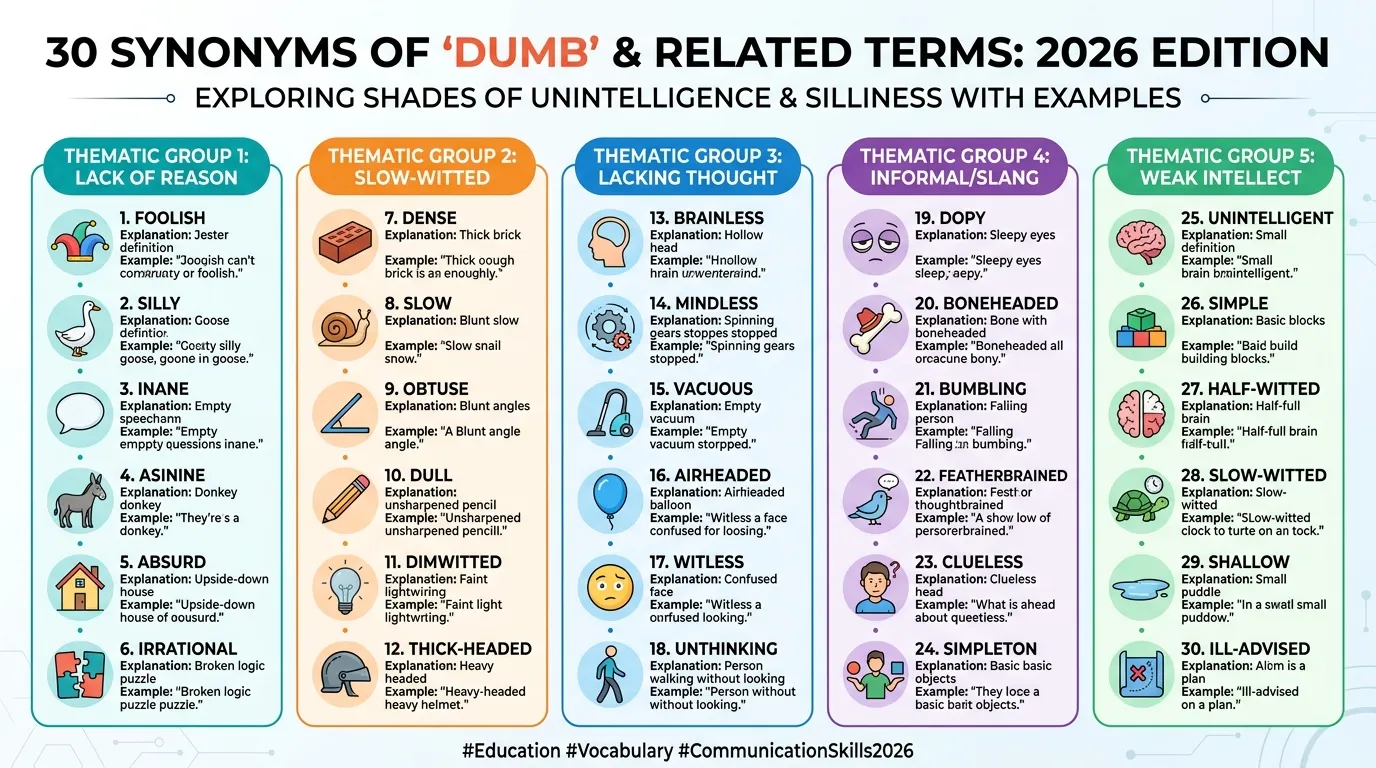
30 Synonyms of Dumb
1. Stupid (adjective)
US: /ˈstuːpɪd/ | UK: /ˈstjuːpɪd/
Meaning: lacking intelligence or common sense
Examples:
- That was a stupid idea.
- He made a stupid mistake.
2. Foolish (adjective)
US: /ˈfuːlɪʃ/ | UK: /ˈfuːlɪʃ/
Meaning: showing poor judgment
Examples:
- It was foolish to ignore the warning.
- She made a foolish choice.
3. Silly (adjective)
US: /ˈsɪli/ | UK: /ˈsɪli/
Meaning: lacking seriousness or good sense
Examples:
- The joke sounded silly.
- He asked a silly question.
4. Idiotic (adjective)
US: /ˌɪdiˈɑːtɪk/ | UK: /ˌɪdiˈɒtɪk/
Meaning: extremely foolish
Examples:
- That was an idiotic decision.
- They laughed at the idiotic plan.
5. Absurd (adjective)
US: /əbˈsɜːrd/ | UK: /əbˈsɜːd/
Meaning: completely unreasonable
Examples:
- His excuse sounded absurd.
- The idea seemed absurd.
6. Ridiculous (adjective)
US: /rɪˈdɪkjələs/ | UK: /rɪˈdɪkjələs/
Meaning: very silly or unreasonable
Examples:
- The price is ridiculous.
- She made a ridiculous comment.
7. Unwise (adjective)
US: /ʌnˈwaɪz/ | UK: /ʌnˈwaɪz/
Meaning: not showing good judgment
Examples:
- It was unwise to drive fast.
- His choice seemed unwise.
8. Dense (adjective)
US: /dens/ | UK: /dens/
Meaning: slow to understand things
Examples:
- He felt dense after missing the clue.
- Don’t be so dense.
9. Slow-Witted (adjective)
US: /ˌsloʊ ˈwɪtɪd/ | UK: /ˌsləʊ ˈwɪtɪd/
Meaning: slow in understanding
Examples:
- The character seemed slow-witted.
- He acted slow-witted in class.
10. Ignorant (adjective)
US: /ˈɪɡnərənt/ | UK: /ˈɪɡnərənt/
Meaning: lacking knowledge
Examples:
- She was ignorant of the rules.
- He sounded ignorant about history.
11. Clueless (adjective)
US: /ˈkluːləs/ | UK: /ˈkluːləs/
Meaning: having no understanding
Examples:
- I felt clueless during the lesson.
- He looked completely clueless.
12. Mindless (adjective)
US: /ˈmaɪndləs/ | UK: /ˈmaɪndləs/
Meaning: lacking careful thought
Examples:
- The movie had mindless action.
- He made a mindless error.
13. Brainless (adjective)
US: /ˈbreɪnləs/ | UK: /ˈbreɪnləs/
Meaning: extremely foolish
Examples:
- That was a brainless move.
- The plan sounded brainless.
14. Witless (adjective)
US: /ˈwɪtləs/ | UK: /ˈwɪtləs/
Meaning: lacking intelligence
Examples:
- He made a witless remark.
- The joke felt witless.
15. Vacant (adjective)
US: /ˈveɪkənt/ | UK: /ˈveɪkənt/
Meaning: showing no thought or understanding
Examples:
- She gave a vacant stare.
- His expression looked vacant.
16. Naive (adjective)
US: /naɪˈiːv/ | UK: /naɪˈiːv/
Meaning: lacking experience or judgment
Examples:
- He was too naive to notice the trick.
- Her naive trust caused problems.
17. Gullible (adjective)
US: /ˈɡʌləbl/ | UK: /ˈɡʌləbəl/
Meaning: easily fooled
Examples:
- The scam targeted gullible people.
- He sounded very gullible.
18. Childish (adjective)
US: /ˈtʃaɪldɪʃ/ | UK: /ˈtʃaɪldɪʃ/
Meaning: immature or silly
Examples:
- His behavior was childish.
- Stop making childish jokes.
19. Irrational (adjective)
US: /ɪˈræʃənl/ | UK: /ɪˈræʃənəl/
Meaning: not logical or reasonable
Examples:
- Fear made her irrational.
- The argument sounded irrational.
20. Senseless (adjective)
US: /ˈsensləs/ | UK: /ˈsensləs/
Meaning: without purpose or reason
Examples:
- The violence was senseless.
- It was a senseless act.
21. Reckless (adjective)
US: /ˈrekləs/ | UK: /ˈrekləs/
Meaning: careless about danger
Examples:
- He made a reckless decision.
- The driver acted reckless.
22. Empty-Headed (adjective)
US: /ˌempti ˈhedɪd/ | UK: /ˌempti ˈhedɪd/
Meaning: lacking intelligence
Examples:
- The character seemed empty-headed.
- That comment sounded empty-headed.
23. Half-Baked (adjective)
US: /ˌhæf ˈbeɪkt/ | UK: /ˌhɑːf ˈbeɪkt/
Meaning: poorly planned or thought out
Examples:
- It was a half-baked idea.
- Their plan felt half-baked.
24. Incompetent (adjective)
US: /ɪnˈkɑːmpɪtənt/ | UK: /ɪnˈkɒmpɪtənt/
Meaning: unable to perform properly
Examples:
- The worker seemed incompetent.
- His mistakes made him look incompetent.
25. Foolhardy (adjective)
US: /ˈfuːlhɑːrdi/ | UK: /ˈfuːlhɑːdi/
Meaning: dangerously foolish
Examples:
- It was foolhardy to climb alone.
- His actions were foolhardy.
26. Dim-Witted (adjective)
US: /ˌdɪm ˈwɪtɪd/ | UK: /ˌdɪm ˈwɪtɪd/
Meaning: not very intelligent
Examples:
- The character acted dim-witted.
- He gave a dim-witted answer.
27. Airheaded (adjective)
US: /ˈerhedɪd/ | UK: /ˈeəhedɪd/
Meaning: forgetful or not thoughtful
Examples:
- She sounded airheaded.
- His airheaded behavior annoyed others.
28. Moronic (adjective)
US: /məˈrɑːnɪk/ | UK: /məˈrɒnɪk/
Meaning: extremely stupid
Examples:
- That was a moronic idea.
- He made a moronic mistake.
29. Thoughtless (adjective)
US: /ˈθɔːtləs/ | UK: /ˈθɔːtləs/
Meaning: not considering others or consequences
Examples:
- Her comment was thoughtless.
- He made a thoughtless decision.
30. Unintelligent (adjective)
US: /ˌʌnɪnˈtelɪdʒənt/ | UK: /ˌʌnɪnˈtelɪdʒənt/
Meaning: lacking intelligence
Examples:
- The answer sounded unintelligent.
- He appeared unintelligent in the interview.
Prototype Meaning
The most typical meaning of dumb today is someone acting foolishly or lacking good judgment. People often imagine silly mistakes, poor decisions, or someone not understanding something simple.
Prototype Categorization
- Lack of intelligence: stupid, unintelligent, dim-witted
- Poor judgment: foolish, reckless, unwise
- Lack of knowledge: ignorant, clueless, naive
- Extreme foolishness: idiotic, moronic, brainless
Antonyms of Dumb
Antonyms
- Intelligent (adjective): having strong understanding
- Wise (adjective): showing good judgment
- Smart (adjective): quick to learn and understand
- Brilliant (adjective): extremely intelligent
- Thoughtful (adjective): careful and considerate
Short Questions and Answers
What does dumb mean?
- It means lacking intelligence, good judgment, or the ability to speak.
When should dumb be used?
- Use it carefully in informal situations because it may sound rude or offensive.
Is dumb positive or negative?
- It is usually negative because it can insult someone’s intelligence.
How is it different from similar words?
- “Dumb” is more informal and sometimes harsher than words like “unwise” or “naive.”
Conclusion
Learning synonyms of dumb and synonyms of dumb improves vocabulary and communication skills. It helps English learners describe intelligence, behavior, and judgment more clearly in speaking and writing. Using different synonyms also avoids repetition and makes language more natural and expressive. Understanding these words helps writers choose polite, formal, or informal language depending on the situation. It also builds stronger confidence in conversations, storytelling, essays, and professional communication. Practice learning and using new vocabulary every day. Small daily improvements can make your English richer, clearer, and more powerful over time.

I’m Zahid Abbas, an educator, researcher, and digital publishing strategist with a passion for linguistics, grammar, and clear communication. As a content creator and SEO specialist, I craft research-driven, reader-focused content that empowers learners and makes knowledge accessible worldwide.