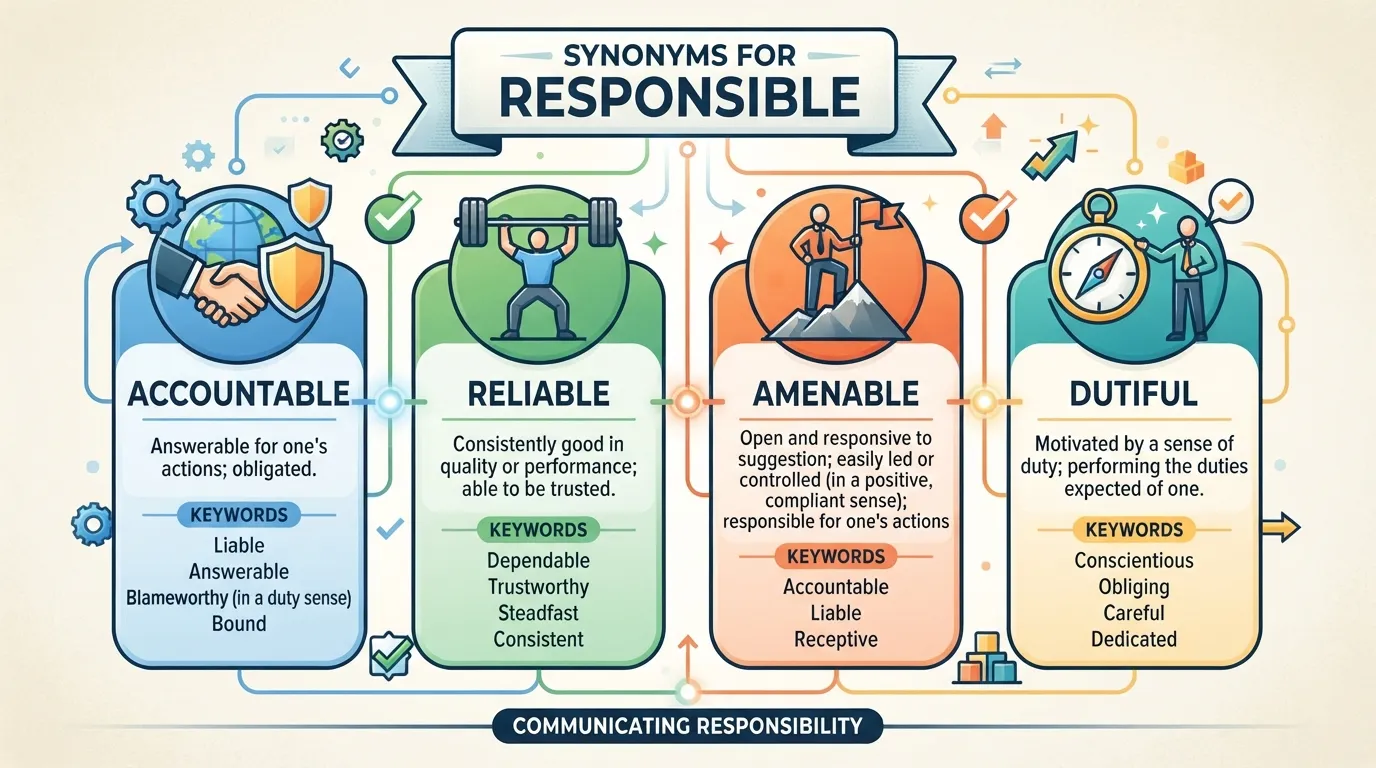
Responsible means being trusted to do what is right, complete a duty, or take care of something properly. Imagine a student who always finishes homework on time and helps keep the classroom clean. The teacher may say, “She is very responsible.” The word is common because it describes people, actions, jobs, and duties in a simple way. Still, using the same word many times can make your English sound repetitive. Learning synonyms gives you more ways to express responsibility, care, trust, and good judgment. This is useful for English learners, students, and content writers. In this article, you will learn the meaning, grammar, pronunciation, history, tone, and word formation of responsible. You will also learn 30 useful synonyms with simple meanings, examples, and semantic categories to help you choose the right word.
Meaning of Responsible
Definition
Responsible (Adjective): having a duty to take care of something or being trusted to act in a sensible way.
Examples:
- Ali is responsible for the project.
- She is responsible and always keeps her promises.
Connotative Meaning
- Positive tone: Suggests trust, maturity, care, reliability, and good judgment.
- Negative tone: In some contexts, it may suggest blame, duty, or fault, as in “Who is responsible for the mistake?”
- Neutral tone: Can simply describe a person’s duty or role without praise or blame.
Etymology
- Source: Latin respondere, meaning “to answer” or “to reply.”
- It developed through French and later entered English.
- Its modern sense is linked to being answerable for an action or duty.
Short History of Responsible
- Old English (450–1100): Responsible was not used in Old English. Related ideas were expressed through native words for duty, care, and obligation.
- Middle English (1100–1500): French and Latin-based vocabulary became more common in English, creating the foundation for responsible.
- Modern English (1500–Present): Responsible developed its current meanings related to duty, accountability, trust, and careful behavior.
Pronunciation (US & UK – IPA)
US: /rɪˈspɑːnsəbəl/
UK: /rɪˈspɒnsəbəl/
Syllables
re-spon-si-ble
Affixation Pattern of Responsible
- Root: respond
- Prefix: none
- Suffix: -ible
- Word formation: Responsible is an adjective. Related forms include responsibility (noun), responsibly (adverb), irresponsible (adjective), and irresponsibility (noun).
Also read more abouthttps://synonymspot.com/synonyms-for-beneficial/
Synonyms of Responsible
1. Reliable (Adjective)
US: /rɪˈlaɪəbəl/ | UK: /rɪˈlaɪəbəl/
Meaning: Able to be trusted to do what is expected.
Examples:
- She is a reliable employee.
- He is reliable and always arrives on time.
2. Dependable (Adjective)
US: /dɪˈpendəbəl/ | UK: /dɪˈpendəbəl/
Meaning: Someone or something that can be trusted to work or act well.
Examples:
- He is a dependable friend.
- We need a dependable team member.
3. Trustworthy (Adjective)
US: /ˈtrʌstwɜːrði/ | UK: /ˈtrʌstwɜːði/
Meaning: Deserving trust and confidence.
Examples:
- She is a trustworthy person.
- We need someone trustworthy for this job.
4. Accountable (Adjective)
US: /əˈkaʊntəbəl/ | UK: /əˈkaʊntəbəl/
Meaning: Required to explain or accept responsibility for an action.
Examples:
- Managers are accountable for their teams.
- He is accountable for the final decision.
5. Dutiful (Adjective)
US: /ˈduːtɪfəl/ | UK: /ˈdjuːtɪfəl/
Meaning: Doing your duties carefully and faithfully.
Examples:
- She is a dutiful daughter.
- He remained dutiful throughout the difficult time.
6. Dependable (Adjective)
US: /dɪˈpendəbəl/ | UK: /dɪˈpendəbəl/
Meaning: Reliable and trustworthy.
Examples:
- She is a dependable worker.
- His advice is dependable.
7. Conscientious (Adjective)
US: /ˌkɑːnʃiˈenʃəs/ | UK: /ˌkɒnʃiˈenʃəs/
Meaning: Careful to do your work and duties properly.
Examples:
- He is a conscientious student.
- She is conscientious about her work.
8. Careful (Adjective)
US: /ˈkerfəl/ | UK: /ˈkeəfəl/
Meaning: Giving attention to avoid mistakes or harm.
Examples:
- She is careful with company money.
- Be careful when handling the equipment.
9. Trusting (Adjective)
US: /ˈtrʌstɪŋ/ | UK: /ˈtrʌstɪŋ/
Meaning: Showing a willingness to trust others.
Examples:
- He has a trusting nature.
- She is trusting but not careless.
10. Mature (Adjective)
US: /məˈtʃʊr/ | UK: /məˈtjʊə/
Meaning: Showing good judgment and emotional development.
Examples:
- She is mature for her age.
- He gave a mature response.
11. Sensible (Adjective)
US: /ˈsensəbəl/ | UK: /ˈsensəbəl/
Meaning: Showing good judgment and practical thinking.
Examples:
- She made a sensible choice.
- It is sensible to save some money.
12. Dependable-minded (Adjective)
US: /dɪˈpendəbəl ˌmaɪndɪd/ | UK: /dɪˈpendəbəl ˌmaɪndɪd/
Meaning: Having a reliable and steady approach to duties.
Examples:
- He has a dependable-minded attitude.
- She is dependable-minded at work.
13. Conscientious (Adjective)
US: /ˌkɑːnʃiˈenʃəs/ | UK: /ˌkɒnʃiˈenʃəs/
Meaning: Careful and serious about doing duties well.
Examples:
- He is conscientious about deadlines.
- She is a conscientious worker.
14. Responsible-minded (Adjective)
US: /rɪˈspɑːnsəbəl ˌmaɪndɪd/ | UK: /rɪˈspɒnsəbəl ˌmaɪndɪd/
Meaning: Showing a strong sense of duty and care.
Examples:
- He has a responsible-minded approach.
- She is responsible-minded about her work.
15. Accountable (Adjective)
US: /əˈkaʊntəbəl/ | UK: /əˈkaʊntəbəl/
Meaning: Expected to accept responsibility for results.
Examples:
- The director is accountable for the decision.
- Every employee is accountable for their work.
16. Answerable (Adjective)
US: /ˈænsərəbəl/ | UK: /ˈɑːnsərəbəl/
Meaning: Required to explain or justify an action.
Examples:
- The manager is answerable to the board.
- He is answerable for the team’s results.
17. Obliged (Adjective)
US: /əˈblaɪdʒd/ | UK: /əˈblaɪdʒd/
Meaning: Required or expected to do something.
Examples:
- We are obliged to follow the rules.
- She felt obliged to help.
18. Committed (Adjective)
US: /kəˈmɪtɪd/ | UK: /kəˈmɪtɪd/
Meaning: Willing to give time and effort to a duty or goal.
Examples:
- She is committed to her work.
- He is committed to helping the team.
19. Dedicated (Adjective)
US: /ˈdedɪkeɪtɪd/ | UK: /ˈdedɪkeɪtɪd/
Meaning: Giving a lot of time and effort to something important.
Examples:
- She is a dedicated teacher.
- He is dedicated to his students.
20. Professional (Adjective)
US: /prəˈfeʃənəl/ | UK: /prəˈfeʃənəl/
Meaning: Showing skill, care, and proper behavior at work.
Examples:
- She has a professional attitude.
- He is professional and reliable.
21. Disciplined (Adjective)
US: /ˈdɪsəplɪnd/ | UK: /ˈdɪsəplɪnd/
Meaning: Able to control behavior and follow rules or plans.
Examples:
- He is disciplined about his work.
- A disciplined student meets deadlines.
22. Organized (Adjective)
US: /ˈɔːrɡənaɪzd/ | UK: /ˈɔːɡənaɪzd/
Meaning: Able to plan and manage tasks well.
Examples:
- She is organized and never misses a deadline.
- An organized worker saves time.
23. Punctual (Adjective)
US: /ˈpʌŋktʃuəl/ | UK: /ˈpʌŋktʃuəl/
Meaning: Arriving or happening at the expected time.
Examples:
- He is always punctual for meetings.
- Punctual workers are often trusted.
24. Prompt (Adjective)
US: /prɑːmpt/ | UK: /prɒmpt/
Meaning: Done quickly and without delay.
Examples:
- She gave a prompt reply.
- His prompt action solved the problem.
25. Prudent (Adjective)
US: /ˈpruːdənt/ | UK: /ˈpruːdənt/
Meaning: Careful and wise when making decisions.
Examples:
- Saving money is a prudent choice.
- He made a prudent investment.
26. Vigilant (Adjective)
US: /ˈvɪdʒələnt/ | UK: /ˈvɪdʒələnt/
Meaning: Carefully watching for danger or problems.
Examples:
- Security guards must remain vigilant.
- She stayed vigilant during the trip.
27. Accountable-minded (Adjective)
US: /əˈkaʊntəbəl ˌmaɪndɪd/ | UK: /əˈkaʊntəbəl ˌmaɪndɪd/
Meaning: Focused on accepting responsibility for actions and results.
Examples:
- The team needs an accountable-minded leader.
- She has an accountable-minded approach to work.
28. Caretaking (Adjective)
US: /ˈkerˌteɪkɪŋ/ | UK: /ˈkeəˌteɪkɪŋ/
Meaning: Involving the care and protection of people or things.
Examples:
- He has a caretaking role at the center.
- Her caretaking duties take time.
29. Attentive (Adjective)
US: /əˈtentɪv/ | UK: /əˈtentɪv/
Meaning: Giving careful attention to people, tasks, or details.
Examples:
- She is attentive to customer needs.
- An attentive worker notices small problems.
30. Ethical (Adjective)
US: /ˈeθɪkəl/ | UK: /ˈeθɪkəl/
Meaning: Following accepted ideas of what is right and fair.
Examples:
- Responsible leaders make ethical choices.
- The company follows ethical business practices.
Prototype Meaning
The most typical meaning of responsible is being trusted to handle duties and make sensible choices. When people hear this word, they often imagine someone who keeps promises, completes tasks on time, cares for others, and accepts the results of their actions. It often suggests maturity, trust, and good judgment.
Prototype Categorization
- Trust and reliability: reliable, dependable, trustworthy
- Duty and obligation: dutiful, obliged, answerable, accountable
- Care and attention: careful, conscientious, attentive, vigilant
- Good judgment: sensible, prudent, mature
- Work and commitment: committed, dedicated, professional
- Self-control and order: disciplined, organized, punctual, prompt
- Moral responsibility: ethical
Antonyms of Responsible
- Irresponsible (Adjective): Not showing proper care or duty.
- Careless (Adjective): Not giving enough attention to avoid mistakes.
- Reckless (Adjective): Acting without thinking about danger or results.
- Unreliable (Adjective): Not able to be trusted to do what is expected.
- Negligent (Adjective): Failing to give proper care or attention.
- Immature (Adjective): Not showing the judgment expected from a mature person.
- Untrustworthy (Adjective): Not deserving trust.
- Disorganized (Adjective): Not planned or arranged in an effective way.
Short Questions and Answers
What does responsible mean?
- Responsible means having a duty or being trusted to act with care and good judgment.
- It can also mean being accountable for an action or result.
When should responsible be used?
- Use responsible when talking about duties, behavior, work, or accountability.
- It works well in both formal and informal English.
- Example: “She is responsible for managing the team.”
Is responsible positive or negative?
- Responsible is usually positive when it describes good behavior.
- It can be neutral when describing a duty.
- It may relate to blame when used with “responsible for” a negative event.
How is it different from similar words?
- Responsible is a broad word for duty, care, and accountability.
- Reliable focuses on being trusted.
- Accountable focuses on accepting responsibility for results.
- Conscientious focuses on careful and thorough work.
- Prudent focuses on wise decisions.
- Dependable focuses on consistent trustworthiness.
Conclusion
Synonyms for Responsible can greatly improve your English vocabulary. These words help you describe trust, duty, care, good judgment, and professional behavior with greater accuracy. Reliable and dependable show that someone can be trusted, while accountable highlights ownership of results. Words such as prudent, conscientious, and disciplined add more specific meaning. Using these alternatives also helps you avoid repeating responsible in your writing and speech. This makes your English clearer, stronger, and more natural. English learners and content writers can practice these words in short sentences every day. Try using two or three new synonyms in real conversations or writing tasks. With regular practice, you will build a richer vocabulary, communicate your ideas better, and feel more confident when using English.

I’m Zahid Abbas, an educator, researcher, and digital publishing strategist with a passion for linguistics, grammar, and clear communication. As a content creator and SEO specialist, I craft research-driven, reader-focused content that empowers learners and makes knowledge accessible worldwide.