The word states has different meanings in English. It can mean countries or regions with governments. It can also mean conditions, situations, or expressions of information. Imagine a teacher saying, “The United States has many states,” or a scientist explaining the “state of matter.” In both cases, the word states is important but used differently.
People use this word often in conversations, education, politics, law, and writing. Because it has many meanings, learning synonyms of states helps English learners understand context better and improve communication skills. Writers also benefit because synonyms make sentences more varied and natural. In this article, you will learn the meaning of states, its pronunciation, history, grammar, and 30 useful synonyms with examples. You will also explore categories, antonyms, and simple explanations to strengthen your English vocabulary.
Meaning of States
Definition
States (noun/verb): regions with governments, conditions or situations, or the act of expressing information clearly.
Examples
- The country has many states.
- The report states the problem clearly.
Connotative Meaning
(Connotation means the feeling or emotion a word suggests beyond its basic meaning.)
- Positive tone: organized, official, informative
- Negative tone: formal, political, controlling
- Neutral tone: geographical area, condition, or statement
Etymology
- From Latin status meaning “condition” or “position”
- Entered English through Old French and Latin influence
Short History:
- Old English (450–1100): related words meant condition or standing
- Middle English (1100–1500): state became common in politics and society
- Modern English (1500–Present): states became widely used for regions, governments, and expressions
Pronunciation (US & UK – IPA)
- US: /steɪts/
- UK: /steɪts/
Syllables
- states
Affixation Pattern of States
- Root: state
- Prefix: none
- Suffix: -s
Word Formation:
- state (noun/verb)
- states (noun/verb)
- stated (verb/adjective)
- stating (verb)
- statement (noun)
- statewide (adjective/adverb)
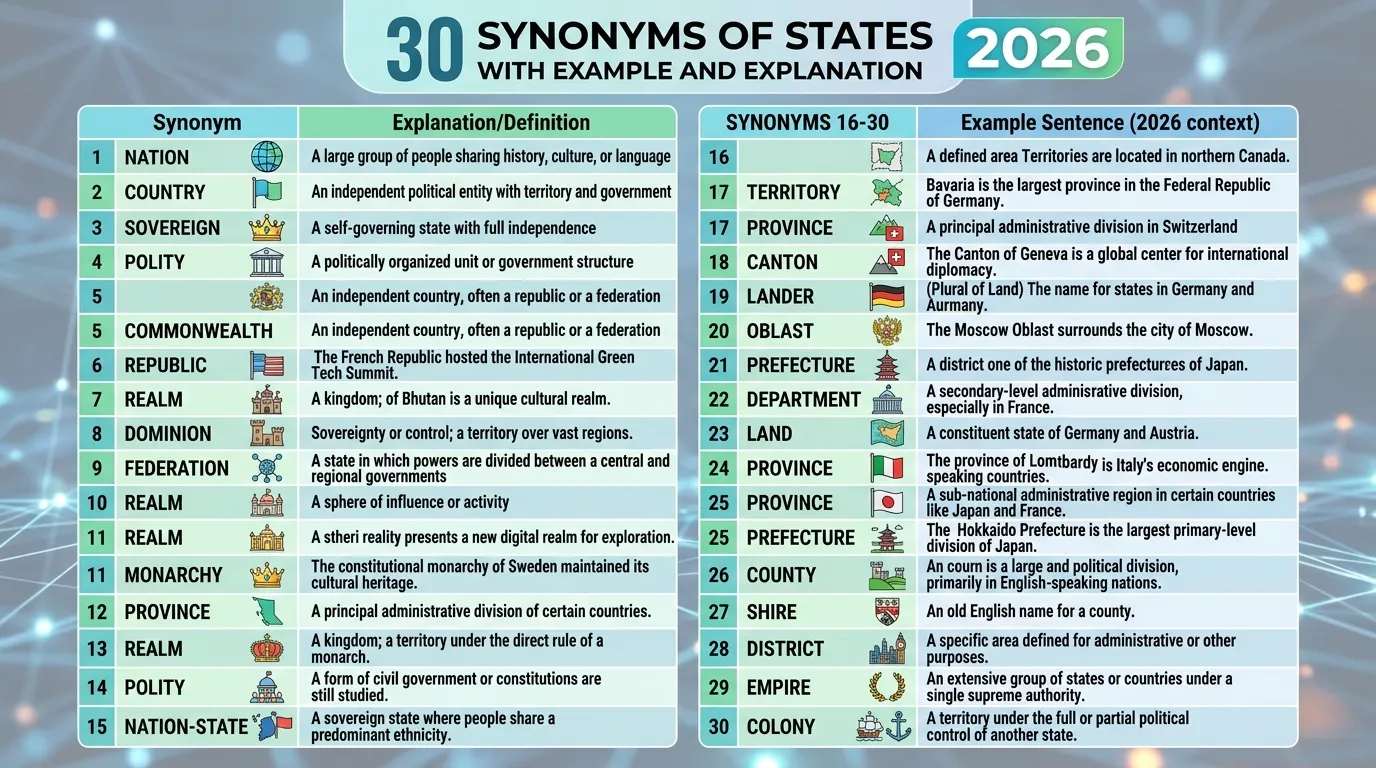
30 Synonyms of States
1. Declares (verb)
US: /dɪˈklɛrz/ | UK: /dɪˈkleəz/
Meaning: says something clearly and officially
Examples:
- The document declares the new rule.
- She declares her opinion confidently.
2. Says (verb)
US: /sɛz/ | UK: /sez/
Meaning: expresses words or ideas
Examples:
- He says hello every morning.
- The teacher says the answer slowly.
3. Explains (verb)
US: /ɪkˈspleɪnz/ | UK: /ɪkˈspleɪnz/
Meaning: makes something easy to understand
Examples:
- She explains the lesson clearly.
- The guide explains the rules.
4. Mentions (verb)
US: /ˈmɛnʃənz/ | UK: /ˈmenʃənz/
Meaning: refers to something briefly
Examples:
- He mentions the issue often.
- The article mentions climate change.
5. Announces (verb)
US: /əˈnaʊnsɪz/ | UK: /əˈnaʊnsɪz/
Meaning: shares information publicly
Examples:
- The company announces new products.
- She announces the winner.
6. Reports (verb)
US: /rɪˈpɔːrts/ | UK: /rɪˈpɔːts/
Meaning: gives official information
Examples:
- The news reports the event.
- He reports the problem quickly.
7. Affirms (verb)
US: /əˈfɜːrmz/ | UK: /əˈfɜːmz/
Meaning: states strongly that something is true
Examples:
- She affirms her support.
- The witness affirms the story.
8. Proclaims (verb)
US: /proʊˈkleɪmz/ | UK: /prəˈkleɪmz/
Meaning: announces publicly and proudly
Examples:
- The king proclaims peace.
- He proclaims his success.
9. Expresses (verb)
US: /ɪkˈsprɛsɪz/ | UK: /ɪkˈspresɪz/
Meaning: communicates thoughts or feelings
Examples:
- She expresses her ideas well.
- The poem expresses sadness.
10. Communicates (verb)
US: /kəˈmjuːnɪkeɪts/ | UK: /kəˈmjuːnɪkeɪts/
Meaning: shares information with others
Examples:
- He communicates clearly.
- The manager communicates updates daily.
11. Reveals (verb)
US: /rɪˈviːlz/ | UK: /rɪˈviːlz/
Meaning: makes something known
Examples:
- The report reveals new facts.
- She reveals the surprise.
12. Indicates (verb)
US: /ˈɪndɪkeɪts/ | UK: /ˈɪndɪkeɪts/
Meaning: points out or shows
Examples:
- The sign indicates danger.
- The data indicates growth.
13. Notes (verb)
US: /noʊts/ | UK: /nəʊts/
Meaning: mentions carefully
Examples:
- The author notes the difference.
- She notes important points.
14. Asserts (verb)
US: /əˈsɜːrts/ | UK: /əˈsɜːts/
Meaning: states confidently
Examples:
- He asserts his rights.
- The lawyer asserts innocence.
15. Claims (verb)
US: /kleɪmz/ | UK: /kleɪmz/
Meaning: says something is true
Examples:
- She claims victory.
- The company claims better results.
16. Declares Officially (verb)
US: /dɪˈklɛrz əˈfɪʃəli/ | UK: /dɪˈkleəz əˈfɪʃəli/
Meaning: announces formally
Examples:
- The judge declares officially the decision.
- The president declares officially a holiday.
17. Regions (noun)
US: /ˈriːdʒənz/ | UK: /ˈriːdʒənz/
Meaning: areas of land
Examples:
- Different regions have different climates.
- The map shows many regions.
18. Provinces (noun)
US: /ˈprɑːvɪnsɪz/ | UK: /ˈprɒvɪnsɪz/
Meaning: divisions within a country
Examples:
- Canada has many provinces.
- The laws differ between provinces.
19. Territories (noun)
US: /ˈtɛrɪˌtɔːriz/ | UK: /ˈterɪtəriz/
Meaning: areas controlled by a government
Examples:
- The nation protects its territories.
- New territories were discovered.
20. Nations (noun)
US: /ˈneɪʃənz/ | UK: /ˈneɪʃənz/
Meaning: independent countries
Examples:
- Many nations joined the meeting.
- Powerful nations trade globally.
21. Conditions (noun)
US: /kənˈdɪʃənz/ | UK: /kənˈdɪʃənz/
Meaning: situations or states of being
Examples:
- Weather conditions changed quickly.
- The patient’s conditions improved.
22. Situations (noun)
US: /ˌsɪtʃuˈeɪʃənz/ | UK: /ˌsɪtjʊˈeɪʃənz/
Meaning: sets of circumstances
Examples:
- Difficult situations require patience.
- She handles stressful situations well.
23. Circumstances (noun)
US: /ˈsɜːrkəmstænsɪz/ | UK: /ˈsɜːkəmstənsɪz/
Meaning: surrounding conditions
Examples:
- The decision depends on the circumstances.
- Unusual circumstances delayed the event.
24. Declamations (noun)
US: /ˌdekləˈmeɪʃənz/ | UK: /ˌdekləˈmeɪʃənz/
Meaning: formal public statements
Examples:
- The speech included strong declamations.
- His declamations impressed the audience.
25. Utters (verb)
US: /ˈʌtərz/ | UK: /ˈʌtəz/
Meaning: speaks words aloud
Examples:
- She utters the answer softly.
- He utters a warning.
26. Voices (verb)
US: /ˈvɔɪsɪz/ | UK: /ˈvɔɪsɪz/
Meaning: expresses opinions openly
Examples:
- She voices concern about safety.
- He voices his ideas clearly.
27. Articulates (verb)
US: /ɑːrˈtɪkjəleɪts/ | UK: /ɑːˈtɪkjʊleɪts/
Meaning: expresses clearly and effectively
Examples:
- He articulates his thoughts well.
- She articulates every idea carefully.
28. Specifies (verb)
US: /ˈspesɪfaɪz/ | UK: /ˈspesɪfaɪz/
Meaning: gives exact details
Examples:
- The contract specifies the rules.
- She specifies the meeting time.
29. Details (verb)
US: /ˈdiːteɪlz/ | UK: /ˈdiːteɪlz/
Meaning: describes fully
Examples:
- The report details the accident.
- He details the process carefully.
30. Clarifies (verb)
US: /ˈklærəfaɪz/ | UK: /ˈklærɪfaɪz/
Meaning: makes something clear
Examples:
- The teacher clarifies the topic.
- She clarifies the misunderstanding.
Prototype Meaning
The most common meaning of states is official regions within a country or the act of expressing information clearly. People often imagine countries like the United States or formal statements in reports and speeches.
Prototype Categorization
- Communication words: says, explains, clarifies
- Official expressions: declares, proclaims, asserts
- Geographical meanings: regions, provinces, territories
- Situational meanings: conditions, situations, circumstances
Categorization helps writers choose the best synonym depending on meaning, tone, and context.
Antonyms of States
Antonyms
- Hides (verb): keeps information secret
- Conceals (verb): prevents something from being known
- Denies (verb): says something is not true
- Disorganizes (verb): removes order or structure
- Confuses (verb): makes something unclear
Short Questions and Answers
What does states mean?
- It can mean regions, conditions, or expressing information clearly.
When should states be used?
- Use it in discussions about geography, situations, or official statements.
Is states positive or negative?
- It is usually neutral but can sound formal or official.
How is it different from similar words?
- “States” often sounds more formal than simple words like “says.”
Conclusion
Learning synonyms of states and synonyms of states improves vocabulary and communication skills. It helps English learners understand formal language, geography, and different types of expressions more clearly. Using synonyms also avoids repetition and makes writing more professional and natural. These words are useful in conversations, essays, reports, politics, and academic writing. They help writers describe ideas, situations, and official statements accurately. Practice using new vocabulary daily in speaking and writing. Small learning habits can greatly improve English confidence and fluency over time.

I’m Zahid Abbas, an educator, researcher, and digital publishing strategist with a passion for linguistics, grammar, and clear communication. As a content creator and SEO specialist, I craft research-driven, reader-focused content that empowers learners and makes knowledge accessible worldwide.